I’ve been to plenty of garage sales over the years, but hosting one yourself is a completely different experience. There’s a lot more that goes into it than dragging a few tables into the driveway and hoping people show up.
My mom and I recently decided it was time to seriously clear things out. We went through closets, cabinets, the garage, and storage spaces and pulled together everything from furniture and vintage finds to toys, clothing, books, kitchenware, tools, seasonal decorations, and random household items we simply weren’t using anymore.
I wasn’t expecting anything crazy. I figured we’d make a little extra money, clear some space, and call it a successful day. Instead, we made $1,032 in a single day.
Most of that money didn’t come from one expensive item, either. It was the steady stream of smaller purchases that added up surprisingly fast.
After seeing what worked and what I’d change next time, these are the things I believe made the biggest difference.

We Had a Lot to Sell
One of the biggest advantages we had was simply having plenty of merchandise. When people drove past, they could immediately see tables, furniture, clothing, boxes, and enough variety to make stopping worthwhile.
Before your sale, go through more than the obvious places. Check kitchen cabinets, closets, kids’ rooms, the garage, storage bins, bookshelves, and anywhere else forgotten belongings tend to collect.
We Sold a Little Bit of Everything
There wasn’t one category responsible for our $1,032. We sold furniture, clothing, toys, kitchen items, books, tools, home décor, vintage pieces, seasonal items, and plenty of miscellaneous things.
That variety helped because every shopper seemed to be looking for something different. The item you’re convinced nobody will want may end up being exactly what someone came searching for.
We Priced Things to Actually Sell
I think this is where garage sale sellers sometimes get themselves into trouble. It’s tempting to think about what you originally paid for something, but the person standing in your driveway is thinking about what they’re willing to pay for it secondhand.
Our goal was to get things out of the house, not squeeze every possible dollar out of every item. Lower prices also encouraged people to grab several things instead of debating whether one item was worth buying.
We Expected People to Negotiate
If you’re hosting a garage sale, someone is eventually going to ask, “Would you take $5?” We went into the sale expecting people to negotiate, which made those conversations much easier. If an offer was reasonable, especially when someone was buying several things, we were usually willing to make a deal.
Bundling can work especially well. Someone holding five inexpensive items may happily take another two or three if you offer one price for everything.
We Advertised the Sale Online
We didn’t rely entirely on people happening to drive past our house. Posting the sale online helped people know where we were, when we were opening, and what kinds of things they could expect to find.
Facebook Marketplace, neighborhood Facebook groups, Craigslist, and Nextdoor are all places worth considering. Photos are especially helpful because serious garage sale shoppers often decide which sales they’ll visit before leaving home.
Related: Best Garage Sale Finder Apps and Websites
We Used Signs to Catch Drive-By Shoppers
Online advertising brought people in, but good old-fashioned garage sale signs still mattered. Some shoppers weren’t looking for our sale at all; they saw a sign while driving and decided to stop.
Next time, I’d go even bigger with the signs. Large lettering, bright colors, and obvious arrows are much easier to understand from a moving car than a sign crowded with tiny details.
Related: 13 Yard Sale Finds Men Grab Before Someone Else Does
We Made the Sale Easy to Shop
We had a huge amount of stuff, and one lesson I learned quickly was that presentation matters. People are more likely to browse when they can actually see what you have rather than digging through a completely disorganized pile.
I’d group kitchen items together, give clothing its own area, keep toys together, and place furniture and other attention-grabbing pieces closer to the street. I’d also avoid overcrowding tables because merchandise disappears visually when too much is piled together.
We Put Prices Where People Could See Them
Some shoppers will happily ask what something costs, but others won’t bother. If they can’t quickly figure out the price, they may simply put the item down and move along.
Price stickers made buying easier and also helped us keep track when several people were shopping at once. For large groups of inexpensive items, one sign such as “Everything on This Table $1” can save a tremendous amount of time.
If you’re planning your own sale, I also put together a Garage Sale Printable Bundle with price tags, signs, promotional flyers, trackers, and other printables so you don’t have to create everything from scratch.
We Accepted More Than Just Cash
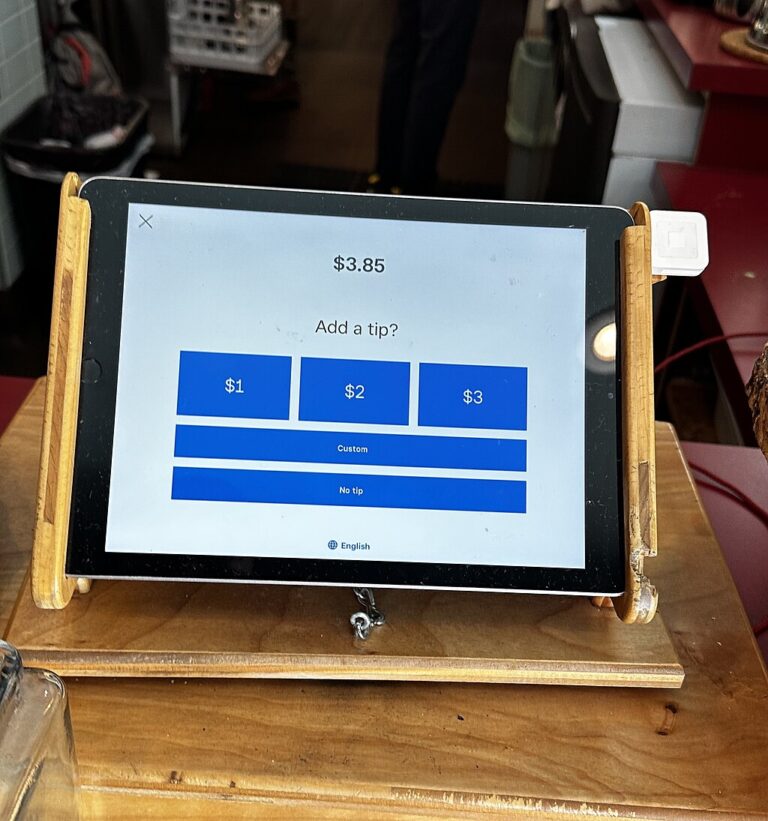
Plenty of people still arrived with cash, but several shoppers wanted to pay digitally. Having options like Venmo or Cash App meant we didn’t have to lose a sale simply because someone wasn’t carrying enough cash.
For cash purchases, having plenty of small bills was equally important. Someone will inevitably hand you a $20 bill for a $2 purchase, so starting with plenty of $1s and $5s makes checkout much easier.
We Put Furniture Where Drivers Could See It
Larger pieces can essentially advertise the sale for you. Furniture placed near the front of the driveway gives someone passing by a reason to slow down and see what else you have.
It also makes pickup considerably easier once something sells. You don’t want to carry a bulky dresser through a driveway packed with shoppers and merchandise.
We Started Early—and Shoppers Started Even Earlier
This surprised me more than almost anything else. We advertised an 8 a.m. start, but people began showing up while we were still setting everything out.
The first few hours ended up being our busiest time of the entire sale. If I did it again, I would have absolutely everything outside, priced, organized, and ready before the advertised start time.
Most of Our Money Was Made Early
We originally planned to stay open from 8 a.m. until 4 p.m., thinking shoppers would continue coming throughout the afternoon. In reality, most of the action happened between roughly 8 a.m. and 11 a.m., with traffic dropping significantly afterward.
Next time, I’d probably run the sale from about 8 a.m. until 2 p.m. Once you’ve been outside for six hours, those occasional late-afternoon $2 sales don’t necessarily justify keeping everything open.
What I’d Do Differently Next Time
Making $1,032 in one day was absolutely worth the work, but I came away with a much better idea of how I’d run the next one.
I’d start advertising earlier, finish setup before shoppers arrive, make the signs larger, clearly price more merchandise, move our cars away from the house to free up parking, and spend more time organizing the displays before opening.
I’d also ask neighbors whether they wanted to participate. A multi-family or neighborhood garage sale gives shoppers an even bigger reason to make the trip and could bring considerably more traffic to everyone involved.
The $1,032 Was Great, but So Was Getting the Stuff Out
Obviously, walking away with more than $1,000 after one day felt pretty good. But there was another payoff I hadn’t really considered beforehand: an enormous amount of stuff was finally gone.
Instead of spending weeks photographing individual $5 and $10 items, listing them online, answering messages, arranging pickups, and dealing with people who never show up, we moved a huge amount of merchandise in a matter of hours.
And when the sale was over, we didn’t drag everything back inside.
We kept aside the few remaining things that were valuable enough to sell separately online and donated most of what was left. After putting that much work into clearing the house, the last thing I wanted to do was recreate the clutter we had just spent all day getting rid of.