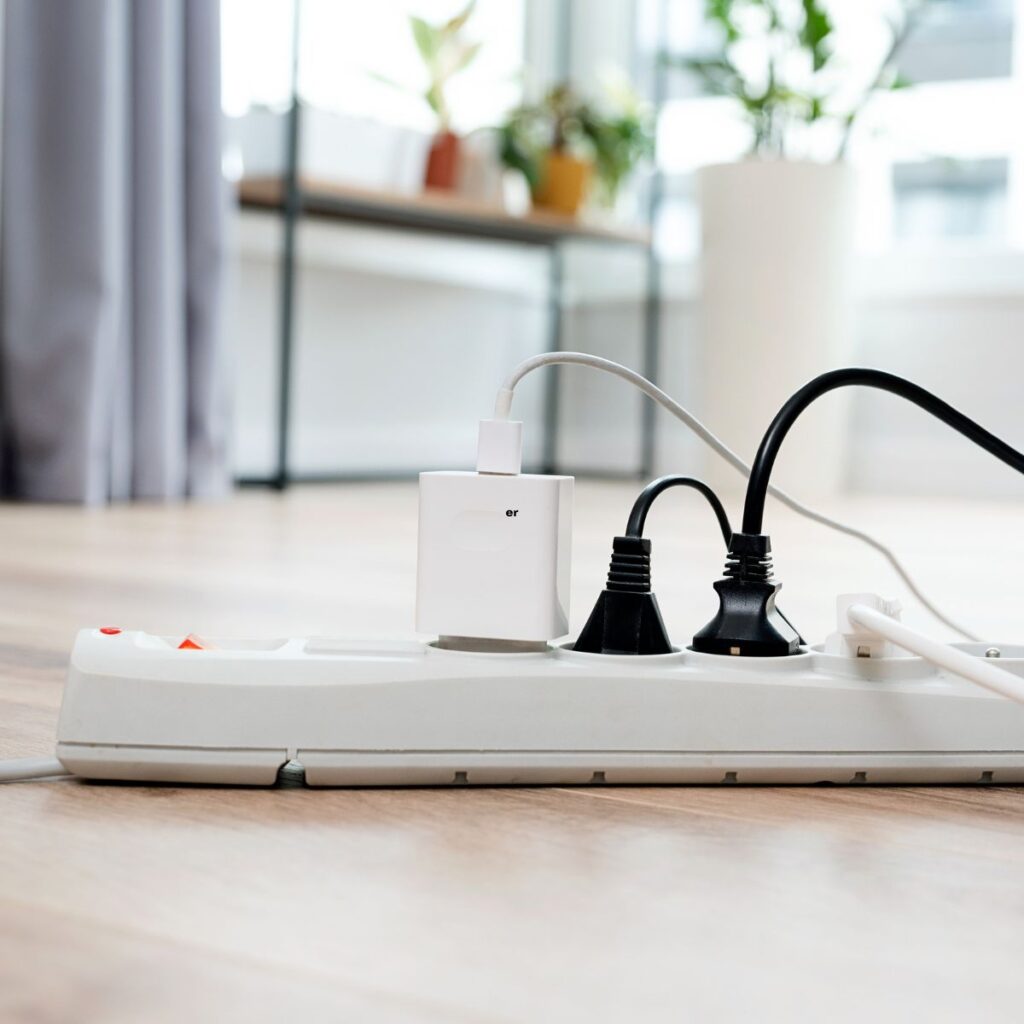
Power strips make it easy to turn one wall outlet into several places to plug things in, but those extra spaces can create a false sense that anything with a plug is fair game. A power strip still has an electrical limit, and appliances that produce heat, run powerful motors, or draw large amounts of electricity can demand far more power than everyday electronics like lamps and chargers.
The problem isn’t necessarily how many outlets you’re using. A strip with only one or two appliances connected can still be overloaded if those appliances draw enough power, potentially causing the strip or plug to overheat and creating an electrical or fire hazard.
As a general rule, connect high-powered household appliances directly to an appropriate wall outlet rather than a standard power strip. Here are 10 things you shouldn’t plug into one, even when there are plenty of empty spaces left.
Refrigerators and Freezers
Refrigerators and freezers cycle on and off throughout the day, and their compressors can draw extra electricity when they start. Plugging them into a power strip also introduces another potential point of failure that could shut off the appliance without you realizing it, leaving you with spoiled food.
Portable Space Heaters
Space heaters turn electricity directly into heat, which makes them particularly demanding compared with many other household devices. Plug them directly into an appropriate wall outlet rather than a power strip, which can overheat under a heavy electrical load.
Air Conditioners
Portable and window air conditioners use powerful compressors that can require a significant amount of electricity, particularly when the compressor starts. A standard power strip isn’t an appropriate substitute for the outlet and circuit specified for the unit, so follow the manufacturer’s electrical requirements and plug it directly into a suitable wall receptacle.
Related: 10 Ways to Stay Cool This Summer Without Running the Air Conditioner All Day
Hair Dryers and Heat-Styling Tools
Hair dryers may be relatively small, but their heating elements can use a surprising amount of electricity while they’re running. High-wattage styling appliances such as hair dryers should go directly into the proper wall outlet rather than sharing a power strip with other devices.
Sump Pumps
A sump pump is one appliance you don’t want losing power when heavy rain or rising groundwater hits. Connecting it through a power strip adds another component that could trip, fail, or be accidentally switched off, so connect it according to the manufacturer’s instructions and applicable electrical requirements.
Washing Machines and Clothes Dryers
Laundry appliances have substantial electrical requirements, and electric clothes dryers typically require a dedicated higher-voltage circuit and receptacle. Neither belongs on an ordinary household power strip; use the outlet and circuit intended for the appliance.
Related: I Stopped Using Dryer Sheets in the Dryer—Here’s Where I Use Them Instead
High-Powered Tools
Saws, sanders, and other motor-driven power tools can pull considerably more electricity when their motors first start or when they’re working under a heavy load. Instead of grabbing an ordinary household power strip for convenience, use the power source and any cord or distribution equipment specifically rated for the tool and its operating environment.
Another Power Strip or Extension Cord
It may seem like an easy way to reach farther or gain a few more outlets, but plugging one power strip into another, often called daisy-chaining, can create an unsafe setup and make overloading easier. If you regularly don’t have enough outlets where you need them, adding more permanent receptacles through a qualified electrician is a safer solution than creating a chain of strips and cords.
Slow Cookers, Pressure Cookers and Other Countertop Appliances
Countertop cooking appliances can run for long periods and often contain heating elements that draw substantial power. Slow cookers, electric pressure cookers, air fryers, and similar high-wattage appliances are best connected directly to a suitable wall outlet, following the manufacturer’s instructions.
Microwaves and Toaster Ovens
Microwaves and toaster ovens pack a lot of power into relatively small countertop appliances, particularly because they need to generate heat quickly. Plugging either into a standard power strip can put a heavy load on equipment that wasn’t intended to power major kitchen appliances, so use an appropriate wall outlet instead.
Other posts you might like:
- Banana Peels Might Be the Most Underrated Natural Boost for Your Garden
- Stop Throwing Away Orange Peels — Some Call Them Trash, Others Call Them Kitchen Gold
- Simple DIY Fixes for the Most Annoying Problems Around the House
- 14 Practical Uses for Windex
- 15 Incredible Ways to Repurpose Used Coffee Grounds