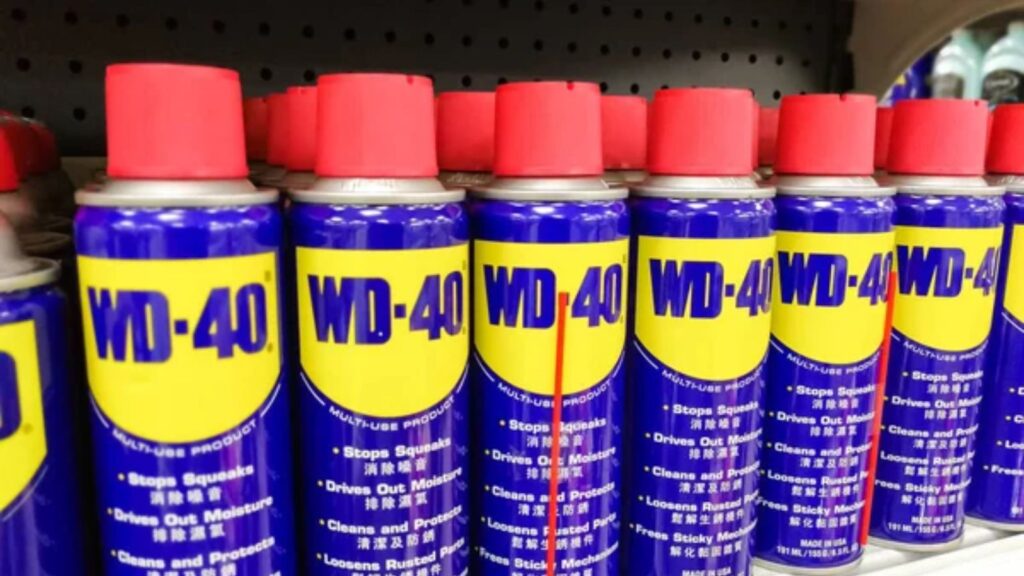
Most people keep a can of WD-40 tucked away in the garage or under the kitchen sink and only think about it when a door starts squeaking. That’s probably its most well-known use, but it’s far from the only one. Once you start using it for everyday household jobs, you’ll likely find yourself reaching for it far more often.
WD-40 was originally created to push moisture away from metal surfaces, which is where its name comes from. Over the years, people discovered it also works well for loosening grime, breaking down sticky residue, freeing rusted parts, and making all sorts of small household repairs easier.
Here are 10 practical ways to put WD-40 to work around your home.
Break Down Grease and Oil Stains
Grease can be one of the hardest messes to clean, especially in the garage or workshop. WD-40 helps loosen oily buildup so it’s easier to wipe away before washing the area with soap and water. It can save a lot of scrubbing on stubborn spots.
Related: 10 Uncommon Uses for Mouthwash That Are Surprisingly Useful
Remove Old Stickers and Decals
Peeling off old labels often leaves behind a sticky mess that’s harder to remove than the sticker itself. Spray a small amount of WD-40 over the adhesive, let it sit for a minute or two, then wipe it away with a cloth. It works well on glass, metal, and many plastic surfaces.
Remove Chewing Gum
Stepping in chewing gum can quickly ruin your day. A light spray of WD-40 helps loosen the gum from shoes, sidewalks, or other hard surfaces, making it much easier to lift away without endless scraping.
Remove Sticky Residue
Tape, price tags, and labels often leave behind stubborn glue that regular cleaners struggle to remove. WD-40 helps soften the adhesive so you can wipe it away with far less effort. It also works well on residue left by packing tape.
Related: 17 Clever Band-Aid Uses You’ll Wish You Knew Sooner
Clean Stainless Steel Appliances
Fingerprints seem to appear almost instantly on stainless steel refrigerators, ovens, and dishwashers. Spraying a little WD-40 onto a soft cloth and wiping the surface can remove smudges while leaving behind a clean, polished appearance. Avoid spraying it directly onto areas where food is prepared.
Remove Crayon Marks From Walls
If little artists have decorated the walls with crayons, WD-40 can help. Spray a small amount onto a clean cloth rather than directly onto the wall, gently wipe away the marks, then clean the area afterward with mild soap and water to remove any remaining residue.
Remove Permanent Marker
Permanent marker doesn’t always have to be permanent. WD-40 can help lift marks from whiteboards, countertops, and other hard, non-porous surfaces. Apply a small amount, let it sit briefly, then wipe the surface clean with a soft cloth.
Related: The Hidden Uses of Bobby Pins You’ve Probably Never Tried
Loosen Rusty Tools
Tools stored in damp garages or sheds often develop rust over time. WD-40 helps loosen surface rust, making it easier to scrub away with a wire brush or steel wool. It can also leave behind a light protective coating that helps slow future rust.
Related: 14 Items in Your Garage That Deserve the Boot
Remove Scuff Marks From Floors
Black scuff marks on vinyl, tile, or laminate floors can be surprisingly difficult to remove. A small spray of WD-40 on a cloth is often enough to lift the marks without heavy scrubbing. Once the mark is gone, wipe the area with a household cleaner to remove any remaining film.
Free a Stuck Zipper
A zipper that refuses to move doesn’t always mean the item is ruined. Spray a tiny amount of WD-40 onto a cotton swab or cloth and apply it carefully along the zipper teeth. Work the zipper back and forth until it slides freely again, taking care to avoid getting the product on nearby fabric.