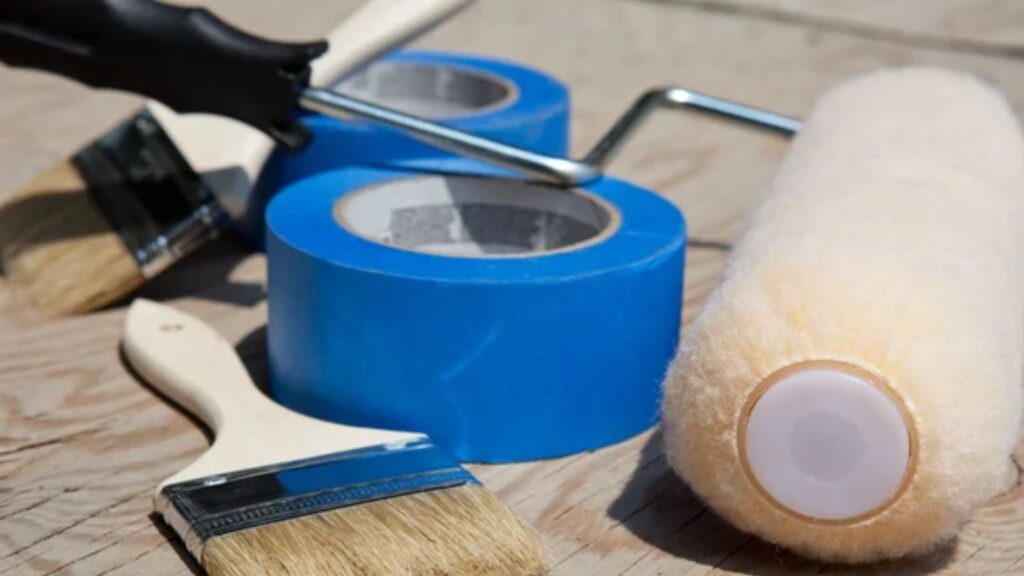
Painter’s tape usually comes out when it’s time to paint a room, but that’s only a small part of what it’s good for. If you have a roll sitting in your toolbox or junk drawer, you may be surprised by how often it comes in handy for everyday jobs around the house.
Because it sticks well without leaving behind sticky residue, it’s perfect for temporary fixes, organizing, and small DIY projects. Once you start using it outside of painting, you’ll probably find yourself reaching for it more often than you expected.
Here are some clever ways to put painter’s tape to work.
Create Clean Caulk Lines
Painter’s tape can help you get a neat bead of caulk around sinks, bathtubs, backsplashes, and windows. Apply tape on both sides of the seam before caulking, smooth the caulk into place, then peel the tape away while it’s still wet. The result looks much cleaner with very little extra effort.
Protect Floors While Moving Furniture
If you’re sliding lightweight furniture across hardwood or laminate floors, a few strips of painter’s tape around the bottoms of the legs can help reduce scuffs during quick moves. It’s not meant for heavy lifting, but it works well for small adjustments around the room.
Keep Cords Under Control
Television stands, desks, and entertainment centers often end up with a mess of tangled cords. Painter’s tape can temporarily secure cables against a wall or the back of furniture, making everything look tidier until you’re ready for a more permanent cable management solution.
Map Out Wall Art Before Hanging It
It’s easy to misjudge where pictures or shelves should go.
Instead of guessing, use painter’s tape to outline the size of each frame directly on the wall. You can step back, rearrange the layout, and make changes before putting a single hole in the wall.
Label Cords
Unplugging the wrong cable is an easy mistake.
Wrap a small piece of painter’s tape around each cord and write what it belongs to. Whether it’s your Wi-Fi router, printer, computer, or TV, you’ll know exactly which plug you’re reaching for next time.
Make Temporary Labels
Painter’s tape makes an excellent temporary label.
Use it on pantry containers, storage bins, moving boxes, leftovers, or anything else that needs a quick description. When you no longer need the label, it peels away cleanly.
Hold Cabinets Closed for Young Children
If you need a quick way to keep curious little hands out of cabinets or drawers, painter’s tape can help for a short time.
It’s no substitute for proper childproof locks, but it can work during visits, vacations, or while waiting to install permanent hardware.
Leave Notes That Stay Put
Painter’s tape sticks better than many sticky notes and works on a wide range of surfaces.
Write reminders, grocery lists, or project notes directly on the tape and place them where you’ll actually see them.
Check Furniture Placement Before Buying
Wondering whether a new table, sofa, or rug will fit?
Use painter’s tape to mark the item’s dimensions on the floor. Walking around the outline gives you a much better sense of how much space it will occupy before spending any money.
Pick Up Pet Hair
If you don’t have a lint roller nearby, painter’s tape works surprisingly well.
Wrap a strip around your hand with the sticky side facing out and dab it over clothing, pillows, or furniture to lift loose pet hair and lint.
Related: Keep The Pet, Not The Odor: 20 Ways To Reduce Pet Smells In Your House
Help Keep Small Rugs in Place
Small rugs can slide around on hardwood or tile floors.
A few strips of painter’s tape underneath the corners can help reduce movement until you’re able to add a proper rug pad.
Mark the Right Drill Depth
Before drilling into a wall, wrap painter’s tape around the drill bit at the depth you need.
Once the tape reaches the surface, you’ll know it’s time to stop drilling, helping you avoid making the hole deeper than necessary.
Related: One Roll of Duct Tape Can Solve More Problems Than You Think
Measure Curved or Odd-Shaped Objects
Some objects are difficult to measure with a standard ruler.
Wrap painter’s tape around the item, make a mark where the ends meet, then remove the tape and lay it flat. Measuring the tape gives you an easy way to find the object’s circumference or other awkward dimensions.
Other posts you might like:
- Everyday Problems You Can Solve With Dental Floss (That Have Nothing to Do With Teeth)
- Banana Peels Might Be the Most Underrated Natural Boost for Your Garden
- I Stopped Using Dryer Sheets in the Dryer—Here’s Where I Use Them Instead
- Stop Throwing Away Orange Peels — Some Call Them Trash, Others Call Them Kitchen Gold