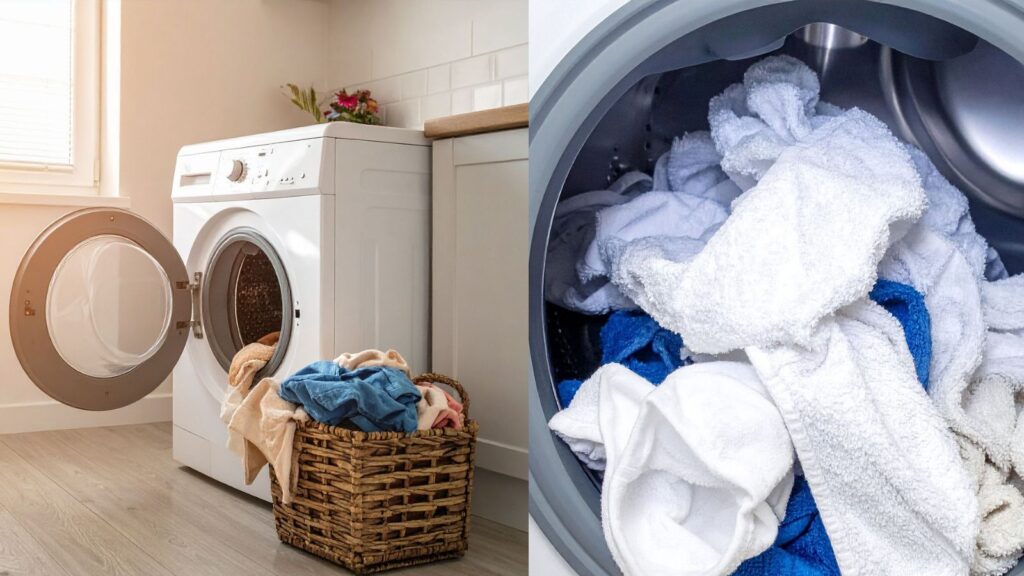
It’s easy to treat the washing machine like a catch-all for anything dirty. If it fits in the drum, most people assume it can probably handle the cycle. But some household items can cause a lot more damage than you’d think, either to the item itself or to the machine over time.
Sometimes the problem shows up right away with shrinking, tearing, or ruined fabric. Other times, the damage happens slowly in the background. Heavy items can strain the motor, loose materials can clog drains, and certain fabrics break down faster than people realize.
A lot of these mistakes happen simply because the washer feels convenient. But keeping a few items out of the machine can save you from expensive repairs, worn-out clothes, and plenty of frustration later on.
Here are the common household items you should never put in your washing machine and what to do with them instead.
Rubber Items
Rubber doesn’t always play nicely with washing machines. Items like rubber mats, shoes, or cushions can be difficult for the machine to clean properly and may trap water as they move around the drum. Over time, this can lead to filter clogs or strain on the pump. If possible, rubber items are better hand-washed or cleaned in a larger, commercial machine designed to handle heavier loads.
Fabric Softener
Fabric softener smells great, but regular use can cause buildup inside your washing machine. Over time, it can coat pipes, clog dispensers, and reduce the efficiency of your washer. Many people skip it altogether and use wool dryer balls instead, adding a few drops of essential oil for a light scent without the residue.
Using Too Much Detergent
More detergent doesn’t mean cleaner clothes. Excess soap can leave residue behind, interfere with sensors, and create too many suds for the machine to drain properly. It can also make clothes smell musty instead of fresh. Sticking to the recommended amount, especially with high-efficiency washers, helps your machine last longer, and your clothes rinse clean.
Pet Hair–Covered Clothing
Pet hair has a way of clinging to everything, including the inside of your washer. When washed in large amounts, hair can clump together and clog the drain pump or filters. Shaking off clothing, using a lint roller, or running items through the dryer first can help reduce buildup before washing.
Oversized Items
Comforters, heavy blankets, and rugs may fit inside your washer, but once they’re wet, they can become extremely heavy. This puts extra strain on the drum and motor, often preventing the items from getting fully clean. These bulky loads are best washed in a commercial-sized machine at a laundromat.
Memory Foam Pillows
Even if the care label says “washable,” memory foam pillows don’t always fare well in standard washing machines. The foam can lose its shape or break down, and limited movement means they’re rarely cleaned thoroughly. Hand washing or using a large commercial washer is a safer option.
Cashmere and Wool
Delicate fabrics like wool and cashmere can shrink, stretch, or lose their softness when washed improperly. Handwashing in cold water, or using a gentle cycle with a mesh bag, helps preserve their texture and shape.
Keys and Jewelry
Everyone forgets to check pockets once in a while, but metal items like keys or jewelry can scratch the drum or damage internal components. Making a habit of checking pockets before starting a load can prevent expensive repairs later.
Coins
Coins often slip through unnoticed, but they can easily end up lodged in filters or pumps. Over time, this can affect how well your washer drains and lead to avoidable maintenance issues.
Waterproof Items
Waterproof clothing and household items can trap water, causing the load to become unbalanced during the spin cycle. This can make the machine shake violently and put stress on internal parts. When in doubt, hand washing is the safer choice.
Open Zippers
Unzipped clothing can snag other fabrics and scratch the inside of the washer. Zipping garments closed before washing protects both your clothes and the machine.
Heavily Embellished Clothing
Beads, sequins, lace, and other decorative elements are easily damaged in a washing machine and can also catch on internal parts. Hand washing or using a mesh laundry bag helps prevent snags and breakage.