One thing I’ve learned from thrifting is that the brand name on the tag doesn’t always tell you whether something is worth buying. I’ve found lesser-known pieces that were beautifully made and recognizable brands that weren’t worth bringing home.
I also try not to write off an entire brand just because it’s considered fast fashion. Sometimes an inexpensive piece is surprisingly well made and holds up for years, while something with a much higher original price can show wear almost immediately.
That’s why I pay more attention to the individual garment than the label attached to it. When I’m standing in the thrift store deciding whether something deserves a spot in my cart, these are the things I check first.
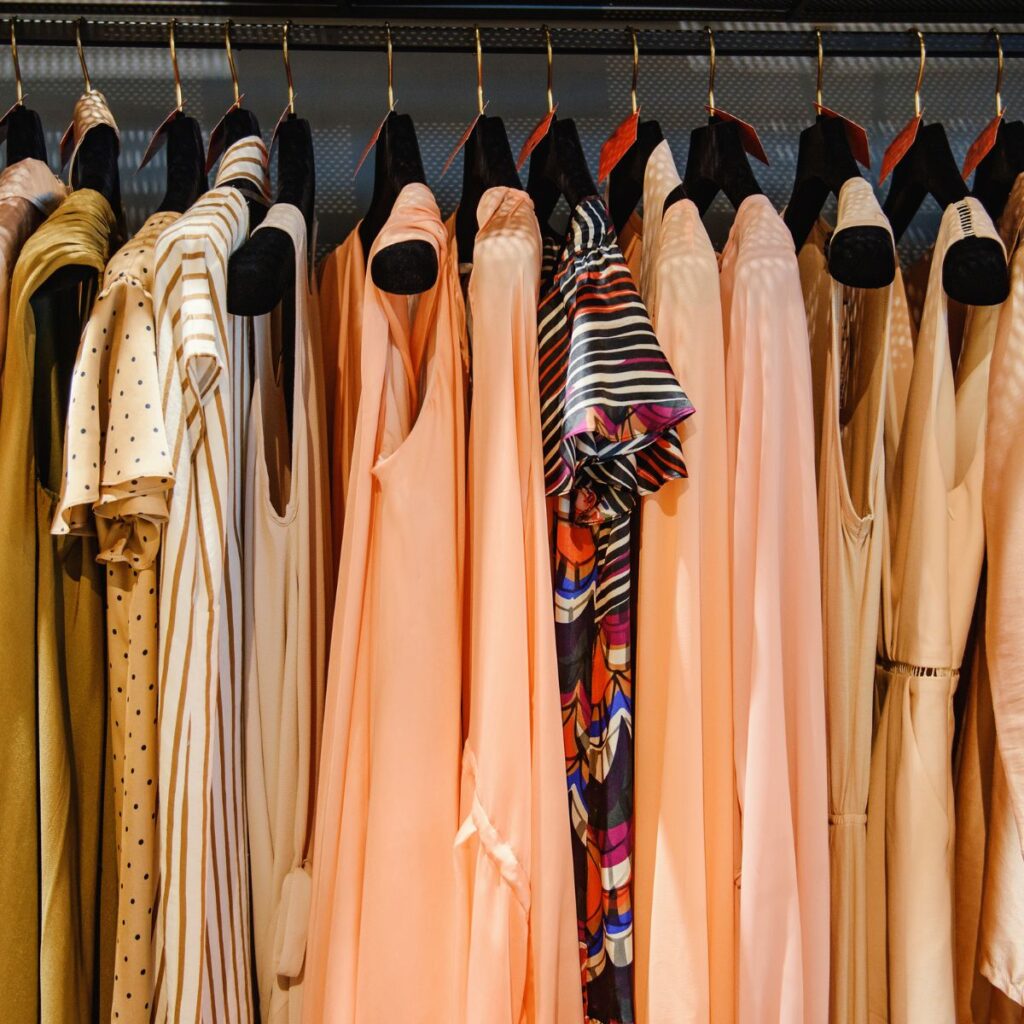
Check the Fabric Tag
The fabric tag is one of the first places I look because it tells you what you’re actually buying. Cotton, linen, wool, silk, cashmere, denim, and leather are materials I tend to pay closer attention to because quality versions can wear beautifully for years.
That doesn’t mean anything containing polyester, acrylic, rayon, or another synthetic fiber should automatically go back on the rack. The important part is whether the fabric makes sense for the garment and whether it has already held up well enough to make it to the thrift store in good condition.
Feel the Fabric With Your Hands
Don’t be afraid to actually touch the clothes while you’re browsing. Quality fabric often feels substantial and consistent rather than overly thin, scratchy, stretched out, or flimsy.
I also like to hold certain garments up to the light, especially shirts, dresses, and sweaters. If something that’s supposed to be substantial suddenly looks paper-thin or you notice areas that have worn significantly thinner than others, I usually leave it behind.
Turn It Inside Out
The outside may catch your attention, but the inside can tell you how well the garment was actually made. Flip it inside out and look for straight stitching, neatly finished edges, reinforced seams, and construction that looks just as intentional on the inside.
Messy seams, unraveling threads, puckering, and unfinished edges aren’t always deal breakers, but they’re worth considering. If the garment is already coming apart while sitting on the thrift store rack, imagine what another year of washing and wearing might do.
Look Closely at the Seams
Give the seams a gentle tug and see what happens. You shouldn’t immediately see large gaps between the stitches or fabric pulling away from the seam.
Flat-felled, bound, French, double-stitched, and other reinforced seams can be especially nice thrift-store finds because they often indicate more attention to construction. Even without knowing the names of different sewing techniques, you can usually recognize stitching that looks neat, strong, and intentional.
Check the Buttons and Zippers
This is one of those tiny details that’s easy to overlook when you’re excited about finding something you love. Zip every zipper, button a few buttons, check the snaps, and look for missing hardware before heading to the register.
Quality clothing often has sturdy hardware, securely attached buttons, reinforced buttonholes, and sometimes even spare buttons sewn inside. A missing button is an easy fix, but a broken specialty zipper or unusual piece of hardware can turn your bargain into a repair project.
Look at the Lining and Hems
A lining isn’t required for good quality, but it’s something I appreciate in structured garments like coats, blazers, skirts, and dresses. A properly constructed lining can help clothing hang better, maintain its shape, and feel more finished.
Take a look at the hem while you’re there. A clean, even, securely finished hem is another small clue that more attention went into making the garment.
See If the Patterns Line Up
If you’re looking at stripes, plaid, checks, or another obvious repeating pattern, look where the fabric pieces meet. On a thoughtfully constructed garment, you’ll often see the pattern continuing relatively smoothly across seams, pockets, or the front closure.
Matching patterns requires additional planning and can require more fabric, so manufacturers trying to produce clothing as cheaply and quickly as possible may skip it. It’s one of my favorite little clues when I’m deciding between two similar thrifted pieces.
Look for Pilling, Stretching and Thinning
The great thing about thrifted clothing is that someone else has essentially started the wear test for you. Look around the underarms, cuffs, collar, elbows, thighs, knees, seat, and anywhere else that experiences frequent friction.
A sweater covered in pills, leggings with stretched knees, or a shirt that’s already thinning under the arms probably isn’t going to improve once you bring it home. On the other hand, an older garment that still looks fantastic after years of wear can be a very good sign that you’ve found something worth buying.
Inspect It for Repairs, Stains and Damage
Before buying anything, I give it one last inspection under the brightest light I can find. Look for stains around the collar and underarms, tiny holes, snags, missing buttons, broken zippers, fading, previous repairs, stretched elastic, and uneven alterations.
Some flaws are absolutely worth fixing, especially on an otherwise exceptional piece. But I try to be realistic about whether I’m actually going to make the repair because a $5 bargain isn’t a bargain if it spends the next three years sitting in my “I’ll fix this eventually” pile.
Ignore the Brand for a Minute
This may be the most useful thrift-shopping trick of all: pretend you don’t recognize the label. Ask yourself whether you’d still think the garment was worth buying based solely on the fabric, construction, condition, fit, and price.
Ultimately, the best thrifted clothing isn’t necessarily the piece with the fanciest label or the highest original retail price. It’s the piece you’ll actually wear, that still looks good after someone else has already worn it, and that has enough life left to stay in your closet for years.