Step into a Baby Boomer’s garage and you might find that it has very little to do with parking a car. For many families, the garage became a workshop, storage area, gardening station, and the place where anything useful was kept for another day.
A lot of Boomers grew up with the idea that if something could be fixed, reused, or saved for a future project, there was little reason to throw it away. That mindset can still be seen in garages filled with old tools, leftover building materials, spare hardware, and containers that found a second life.
Some of these things may seem outdated now, but many have lasted for decades because they still work.
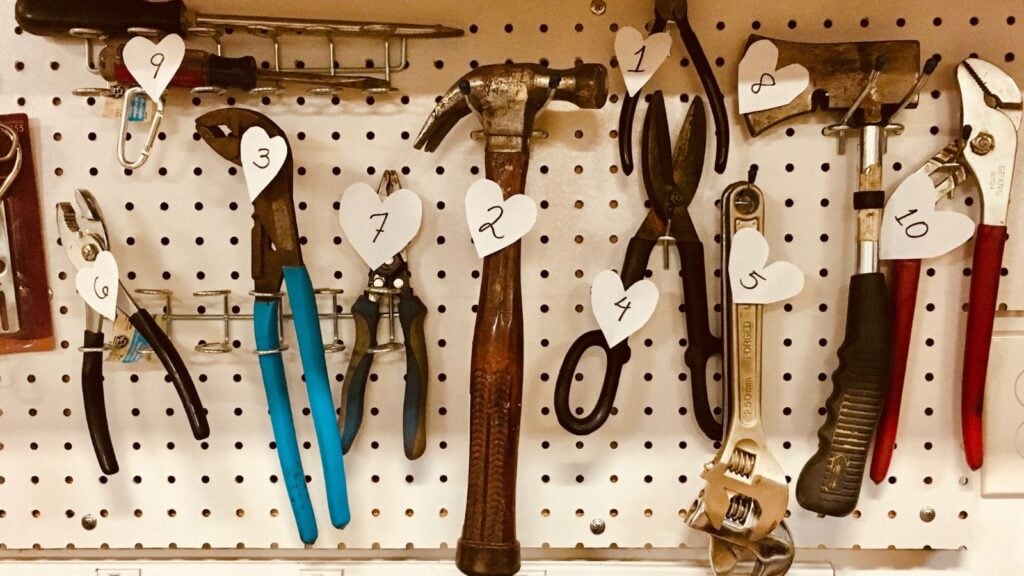
Pegboard Tool Walls
A pegboard covered with tools is a classic sight in an older garage. Hammers, screwdrivers, pliers, wrenches, and other hand tools could each have their own spot, making it easy to grab what was needed for a repair.
For many homeowners, the pegboard was more than storage. It was a way to keep the workbench from becoming buried under tools and to make sure nothing disappeared into a drawer.
Paint Cans With Dried-Out Lids
Old paint cans are another garage staple. After finishing a room or tackling an outdoor project, many homeowners kept the leftover paint for future touch-ups.
Years later, those cans may still be sitting along the wall, even if the paint inside has long since dried out. Some people keep them because they remember exactly which room the paint was used in, while others simply never got around to throwing them away.
Related: 14 Tools You Need to Paint Your Home’s Exterior
WD-40 Spray Cans
A can of WD-40 has earned its place in plenty of garages. It has been used over the years to loosen rusty parts, protect metal, deal with squeaky hinges, and help with countless little household repairs.
Finding an old can on a garage shelf isn’t unusual. For many people, it’s one of those products they reach for without giving it much thought.
Related: 15 Surprising Uses for WD-40 Around the House
Old License Plates
Old license plates often end up on garage walls after a car has been sold or retired. Some people keep them because they remember the vehicle they came from, while others simply like the look of older plates.
Over time, a few plates can turn into a small collection representing cars, road trips, or different periods of a family’s life.
Extension Cords That Are Older Than Some Cars
There always seems to be at least one old extension cord in a garage that has been around for years. It may have been used for a lawn mower, power tool, holiday lights, or some other project.
If it still works and the cord is in good condition, many people see no reason to replace it. Of course, damaged cords with cracked insulation, exposed wires, or other safety problems should be discarded rather than kept for another project.
Lawn and Garden Tools From Decades Ago
Old rakes, shovels, hoes, pruning shears, and hedge clippers can stay in service for decades. A well-made hand tool doesn’t become obsolete just because it’s old.
Some homeowners have used the same garden tools since they were young. A worn handle or faded finish may show its age, but that doesn’t necessarily make the tool less useful.
Leftover Lumber From Long-Finished Projects
A stack of scrap wood is easy to spot in a garage. Pieces left over from a shelf, fence, deck, or home repair often get saved because someone figures they’ll eventually be useful.
And sometimes they are. A short board can become a small shelf, a support for a garden project, or a quick fix when something breaks.
The trouble starts when every tiny piece gets saved and the pile grows larger than the projects that could realistically use it.
Old Coolers and Camping Gear
Old coolers, folding chairs, lanterns, sleeping bags, and camping supplies can stick around long after newer gear has been purchased.
There’s often a reason for keeping them. An older cooler might still work perfectly for a backyard barbecue, while an extra folding chair can come in handy when family visits. Garage storage makes it easy to keep these items around without thinking much about them.
Workbenches Covered With History
A well-used workbench can tell you a lot about its owner. Scratches, paint marks, dents, stains, and worn edges are signs of years spent repairing furniture, building shelves, fixing tools, or working on household projects.
For many Boomers, the workbench was a regular part of home life. It was where broken items got another chance instead of immediately ending up in the trash.
A Collection of “Just in Case” Items
This may be the biggest giveaway of all.
A Boomer’s garage can contain spare screws, bits of rope, old brackets, pieces of wire, leftover hardware, random hinges, extra hooks, and parts from projects finished years ago.
The reasoning is familiar: “I might need that someday.”
Sometimes that prediction turns out to be right. Other times, the item sits untouched for another 20 years.
Related: How to Clear Out “Just in Case” Clutter Without the Guilt
Coffee Cans Filled With Screws
Before inexpensive plastic organizers became a common sight in every workshop, empty coffee cans made handy storage containers.
A coffee can could hold screws, nails, bolts, washers, or whatever small pieces needed a home. Since the cans were sturdy and easy to stack or place on a shelf, there was little reason to throw them away after the coffee was gone.
Glass Jars Full of Bolts and Washers
Empty jars have also been put to good use in garages for generations. Pickle jars, mason jars, and other glass containers make it easy to see what’s inside without opening the lid.
One jar might contain nuts and bolts, another washers, and another a collection of small screws. It isn’t fancy storage, but it works, and that has always been the point.
A garage filled with these familiar items can feel like a snapshot of an older style of home maintenance. Rather than replacing something at the first sign of trouble, many homeowners learned to keep a few tools and spare parts nearby and figure out how to fix the problem themselves.