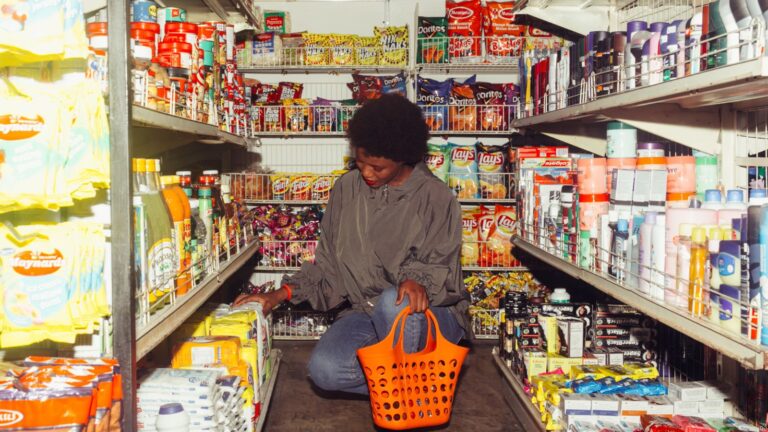
You can clean the house, put everything back where it belongs, and still look around and wonder why the room somehow feels cluttered. Nothing is necessarily messy, but there’s still a lot going on.
Sometimes the problem isn’t that you own too much. It’s that you’re seeing too much at once.
Think about the kitchen counter lined with appliances, the mail sitting by the door, cords hanging around the TV, a coffee table covered with remotes and candles, or shelves where every inch has something on it. None of those things seem like a big deal on their own, but together they can make a room feel busier than you’d like.
That’s essentially what people mean by visual noise. Once you start noticing it, you may realize your home doesn’t need another massive decluttering session at all. A few small changes to what stays visible and what gets put away can make a room feel calmer without getting rid of half your belongings.

What Is Visual Noise?
Visual noise is anything in your surroundings that unnecessarily competes for your attention. Think of it as background noise for your eyes: the more colors, objects, patterns, labels, cords, papers, and other details you’re looking at, the more information there is for your brain to process.
This explains why two rooms containing roughly the same amount of stuff can feel completely different. One may have most everyday items contained or tucked away with some empty space between objects, while the other has nearly everything sitting out where you can see it.
Why Visual Noise Can Feel Like Clutter
Decluttering usually focuses on quantity: Do I own too much? Visual noise is more about presentation: How much am I looking at?
You might actually use every appliance sitting on your kitchen counter. But when the coffee maker, toaster, blender, air fryer, utensil crock, knife block, paper towels, fruit bowl, and mail are all competing for space, the counter can still look cluttered.
The same thing happens throughout the house. A packed bookshelf, tangled charging station, crowded bathroom counter, refrigerator covered with papers, or entryway full of shoes and bags can make an otherwise organized home feel unfinished.
Start With the Surfaces You See Most
Before tackling another closet or drawer, look at the surfaces you see throughout the day. Kitchen counters, coffee tables, bathroom vanities, nightstands, dressers, desks, and entryway tables tend to collect everyday objects quickly.
Try removing everything from one surface and putting back only what genuinely needs to stay there. Even creating one mostly clear countertop or table can give the room a noticeable visual break.
Put Everyday Items Behind Closed Doors
Not everything you use regularly needs to remain visible. Small appliances, toiletries, cleaning products, extra kitchen supplies, office materials, and other necessities can often be moved into cabinets, drawers, baskets, or closets.
This isn’t about hiding a mess somewhere else. Give frequently used items an actual home so they’re easy to retrieve and, more importantly, easy to put away again.
Give Small Items Somewhere to Land
Keys, remotes, chargers, sunglasses, receipts, and other little objects have a way of spreading across a room. Instead of letting them accumulate individually, contain them in a bowl, tray, basket, or drawer.
Grouping several small objects together immediately makes them read as one visual element instead of several separate distractions.
Give Open Shelves Some Breathing Room
Open shelving can look beautiful until every available inch becomes storage. Books, framed photos, plants, candles, baskets, souvenirs, and decorative objects can eventually make the entire shelf feel heavy.
You don’t necessarily have to get rid of anything. Try removing a few pieces, grouping similar objects, and intentionally leaving open space between arrangements.
Hide the Cords
Charging cables, extension cords, power strips, television wires, and computer cables are small details that can make an otherwise tidy room look messy. Bundle cords together, route them behind furniture, use cable-management boxes, or create a dedicated charging drawer or station.
It’s a relatively small change, but it’s particularly noticeable around televisions, desks, nightstands, and kitchen counters.
Related: Exposed Cords Making Your Room Look Messy? Here’s What to Do
Reduce the Number of Things on Your Refrigerator
The refrigerator often becomes a household bulletin board covered with magnets, calendars, invitations, school papers, artwork, coupons, photos, and reminders. If yours feels crowded, keep only the things you currently need and move sentimental papers or children’s artwork somewhere else.
You don’t need a completely bare refrigerator. The goal is simply to keep it from becoming another surface your eyes have to sort through every time you walk into the kitchen.
Watch Out for Busy Product Packaging
Food boxes, cleaning supplies, toiletries, laundry products, and other packaged goods introduce dozens of colors, logos, and labels into a room. This becomes especially noticeable when products are stored on open shelves or countertops.
Keeping products inside cabinets or grouping frequently used items in simple containers can make kitchens, bathrooms, and laundry areas feel noticeably less busy.
Don’t Decorate Every Empty Space
An empty corner of a shelf doesn’t automatically need another candle, vase, or framed picture. Leaving some areas intentionally empty gives your eye somewhere to rest and helps the things you genuinely love stand out.
This doesn’t mean embracing a completely minimalist home. It simply means recognizing that empty space can be part of the design, not something that needs to be filled.
Be Careful With Competing Patterns and Colors
Visual noise doesn’t only come from physical clutter. Multiple bold patterns, colors, textures, wall art, rugs, pillows, curtains, and decorative pieces can compete with one another even when the room is perfectly clean.
You don’t need to make everything beige or remove your personality. Instead, decide which elements you want to stand out and let the surrounding pieces be simpler.
Create a Home for Mail and Paperwork
Paper is one of the fastest ways to make a surface look cluttered. Mail, receipts, school papers, catalogs, coupons, and forms can turn a clean kitchen counter into a pile within days.
Create one designated place for incoming papers and regularly recycle, file, or deal with what’s inside. Keeping paper contained prevents it from spreading from one surface to another.
Related: 15 Important Documents You Should Never Throw away
Keep the Entryway Simple
The entryway has to handle a lot; shoes, bags, coats, keys, packages, umbrellas, and whatever else comes through the door. Unfortunately, it’s also one of the first things you see when you enter your home.
Use hooks, baskets, shoe storage, or a small drop zone to contain everyday necessities. Even if the rest of the house stays exactly the same, a calmer entrance can change how the entire home feels when you walk inside.
Edit Before You Declutter Again
Before filling another donation bag, walk through your home and notice what catches your eye. Ask yourself whether the room actually contains too much stuff or whether too many things are simply visible at once.
You may discover that you don’t need to get rid of nearly as much as you thought. Clearing a few surfaces, containing smaller items, hiding everyday necessities, and leaving a little more empty space may be enough to make your home feel calmer and less cluttered.