Most people know Epsom salt as the stuff you add to a warm bath when your muscles are sore, and you need a little time to unwind. It has been a staple in bathroom cabinets for years, usually tucked away for those days when a long soak sounds like exactly what you need.
But Epsom salt has plenty of other uses outside the bathtub.
Gardeners keep it around for their plants, homesteaders have found ways to use it around the property, and plenty of DIY fans have put it to work for everyday cleaning and household chores.
Some of these uses might sound strange at first. Still, many have stuck around because they’re easy to try, inexpensive, and can come in handy when you’re in a pinch.
So before you write off that bag of Epsom salt as a bath-only item, check out these 16 ways you can use it around your home, garden, and even your self-care routine.
1. Natural Fertilizer
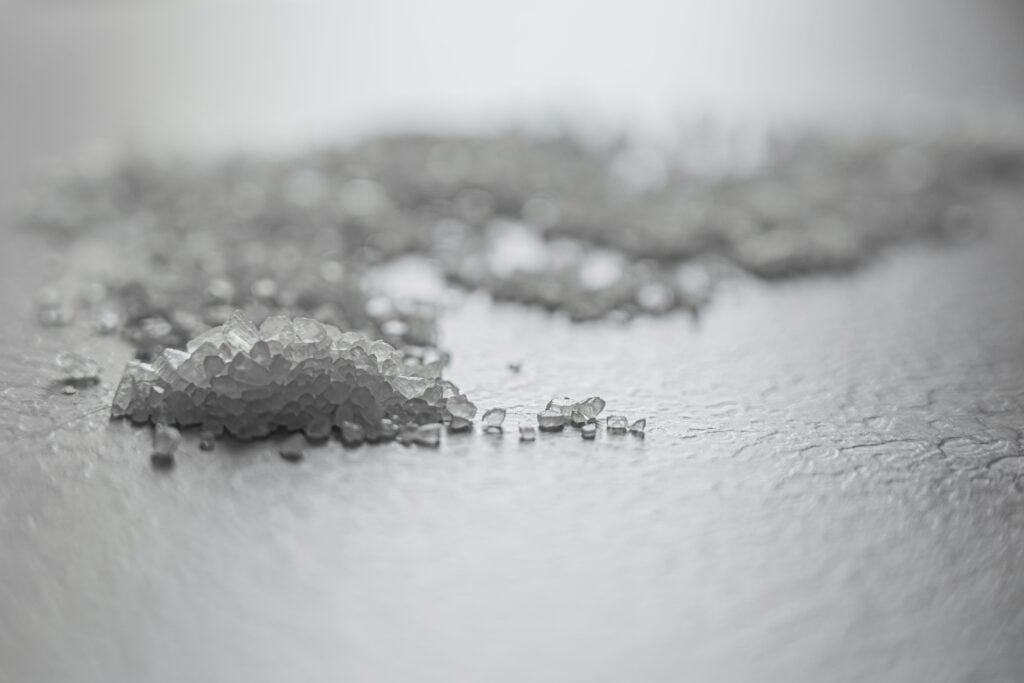
Epsom salt contains magnesium, a nutrient plants need for healthy growth. Some gardeners use it with plants such as tomatoes, peppers, and roses, especially when their soil is lacking magnesium. You can sprinkle a small amount around the base of a plant or dissolve it in water and use it as a soil treatment. It won’t fix every plant problem, but if a magnesium deficiency is the issue, it may give your plants the extra boost they need.
2. Compost Booster
Yes, Epsom salt can even make its way into the compost pile. Magnesium is involved in the activity of microorganisms that break down organic material. Some people add a small amount of Epsom salt to their compost to support that process.
Just keep the amount modest. More isn’t necessarily better, especially in a garden where you want to keep the soil balanced.
3. Abrasive Cleaner
Using something you normally toss into your bath to clean the kitchen might seem a little unusual, but the coarse crystals can make a useful scrub. Mix Epsom salt with a little dish soap and use it on areas that need some extra scrubbing, such as soap scum or stubborn grime. The texture gives you a bit more scrubbing power without reaching for a heavy-duty cleaner.
Test it on a small area first, since gritty cleaners aren’t suitable for every surface.
4. Body Scrub
Epsom salt can also be turned into a quick homemade body scrub. Mix it with coconut oil or olive oil, then gently massage it over your skin to help remove dry, flaky skin. It’s a simple recipe that doesn’t require a long list of ingredients.
If you like making your own body-care products, you might also enjoy these 23 Nourishing DIY Sugar Scrub Recipes for Face, Body, and Lips.
5. Splinter Soak
Got a stubborn splinter that doesn’t want to come out? A warm soak with dissolved Epsom salt can soften the skin around the splinter, which may make it easier to remove. Give the area some time to soak before trying to gently remove the splinter with clean tweezers.
If the area becomes increasingly red, swollen, painful, or shows signs of infection, it’s better to get medical advice rather than keep treating it at home.
6. Stain Treatment
Greasy stains can be some of the most annoying ones to get out of clothing and fabric. Some people use a mixture of Epsom salt and warm water as a pre-treatment before washing. It may help loosen some oily residue before the item goes into the washing machine.
Before trying it on clothing, test the mixture on a hidden spot. Dark or delicate fabrics can react differently to homemade treatments.
7. Pest Deterrent
Slugs and snails can cause plenty of frustration in the garden, and some gardeners use Epsom salt around their plants as a deterrent. Because salt can irritate and dehydrate soft-bodied pests, it may discourage them from crossing treated areas. Still, too much salt can also affect the soil and nearby plants, so this isn’t something to dump generously around the garden.
Use a light hand, especially if you’re applying anything directly to soil.
8. Grout Cleaner
Dirty grout can make an otherwise clean bathroom or kitchen look dingy. Epsom salt can give you a little extra scrubbing power when mixed with dish soap. The gritty texture helps loosen dirt from grout lines, making it easier to scrub away buildup without reaching for harsh cleaners.
If you’re dealing with really dirty grout, here’s another option to try: How to Make Your Own Homemade Grout Cleaner.
9. Natural Degreaser
If you’ve ever dealt with a pan covered in baked-on grease, you know how much scrubbing it can take. Epsom salt can be used as a gritty scrubbing agent to help loosen stubborn grease and residue from some pots and pans. It can work well on materials such as stainless steel and ceramic.
Skip this method on non-stick cookware. The abrasive texture can scratch or damage the coating.
10. Soothing Foot Soak
A warm foot soak is one of the easiest ways to wind down after spending the day on your feet. Add some Epsom salt to a basin of warm water and let your feet soak for a while. It can soften rough skin and calluses, and the warm water alone can feel pretty relaxing after a busy day. There’s no complicated recipe here. Just warm water, Epsom salt, and a few quiet minutes.
11. Livestock Care
Epsom salt also has a place on some homesteads and farms. Some livestock owners use diluted Epsom salt soaks as supportive care for minor skin issues or areas such as small abscesses. The idea is to use the warm soak to help soften the area and keep it clean. Animal health problems can become serious quickly, though, so Epsom salt shouldn’t replace proper veterinary care. For anything severe, persistent, or painful, a veterinarian should take a look.
12. Fabric Softener Alternative
Some people add Epsom salt to their laundry as a homemade alternative to commercial fabric softeners. The idea is that the salt can help soften clothes during the rinse cycle. You’ll find plenty of different DIY laundry recipes that combine Epsom salt with other ingredients, including essential oils for fragrance.
If you try it, start with a small amount and see how your clothes and washing machine respond. Essential oils can also stain some fabrics, so use them carefully.
13. Rust Treatment
Have a small patch of surface rust on an old tool? Epsom salt and lemon juice can make a gritty paste for scrubbing it. The lemon juice provides acidity while the Epsom salt adds some texture for scrubbing. Work the paste over the rusty area, then rinse and dry the metal well. This is better suited to light surface rust than heavily corroded tools. If the rust has eaten deeply into the metal, you’ll need something stronger.
14. Hand Scrub
Gardening without gloves can leave your hands looking like you’ve spent the afternoon digging for buried treasure. A little Epsom salt mixed with your regular hand soap can help scrub away dirt that seems determined to stay under your fingernails and in every crease of your hands.
It’s especially handy after gardening, cleaning, or other messy outdoor projects. Just be gentle if your skin is already dry, cracked, or irritated.
15. Leaf Curl Support
Curling or stressed leaves can sometimes be linked to a magnesium deficiency, and that’s where Epsom salt may have a role. A diluted Epsom salt solution can provide supplemental magnesium to plants when a deficiency has actually been identified. It may help in those cases, but it won’t fix every cause of curled or unhealthy leaves.
Before treating a struggling plant, it helps to look at other possible causes too, such as watering problems, pests, poor soil, or insufficient light. Here are some more houseplant hacks that actually work, even if you’ve killed every plant before.
16. Relaxing Bath Soak
And, of course, we can’t leave out the classic. Add Epsom salt to a warm bath, settle in, and let yourself relax for a while. A warm soak can feel especially good after a long day or a workout, and the ritual itself can be a nice way to slow down.
There’s been plenty of discussion about whether Epsom salt itself provides the muscle-relief benefits people often associate with it. Regardless, a warm bath can certainly be relaxing, and sometimes that’s reason enough to keep a bag of Epsom salt nearby.
Other posts you might like:
- Banana Peels Might Be the Most Underrated Natural Boost for Your Garden
- I Stopped Using Dryer Sheets in the Dryer—Here’s Where I Use Them Instead
- Stop Throwing Away Orange Peels — Some Call Them Trash, Others Call Them Kitchen Gold
- Simple DIY Fixes for the Most Annoying Problems Around the House
- 14 Practical Uses for Windex
- 15 Incredible Ways to Repurpose Used Coffee Grounds