Few things can make a freshly cleaned bathroom look dirty faster than a ring around the toilet bowl. It might look rusty, dark, or chalky depending on the cause, but the result is usually the same: a stain that seems to come back no matter how often you clean.
Most toilet bowl rings aren’t as difficult to deal with as they look. Once you figure out what’s causing the stain, you can choose a cleaning method that suits the type of buildup you’re dealing with. A few simple habits can also help keep the ring from returning.
What’s Actually Causing That Ring?
Toilet bowl rings can come from several different sources. Hard water is common, especially in areas where the water contains high levels of calcium, magnesium, or iron. Over time, those minerals can settle around the waterline and leave behind a stubborn stain.
A ring can also develop from bacteria, mold, mildew, or a toilet that doesn’t get flushed very often. Guest bathrooms and other toilets that sit unused for days at a time can be more likely to develop buildup because the same water remains in the bowl.
Knowing what you’re dealing with makes the cleaning job much easier. A light mineral stain may respond to vinegar, while thick deposits may require a cleaner made for hard water or a little extra scrubbing.
Related: 12 Cheap Ways to Fill Raised Garden Beds
Give Your Cleaner Time to Work
One common mistake is reaching for the toilet brush as soon as the cleaner goes in. Most cleaners need some time to loosen the stain before you start scrubbing.
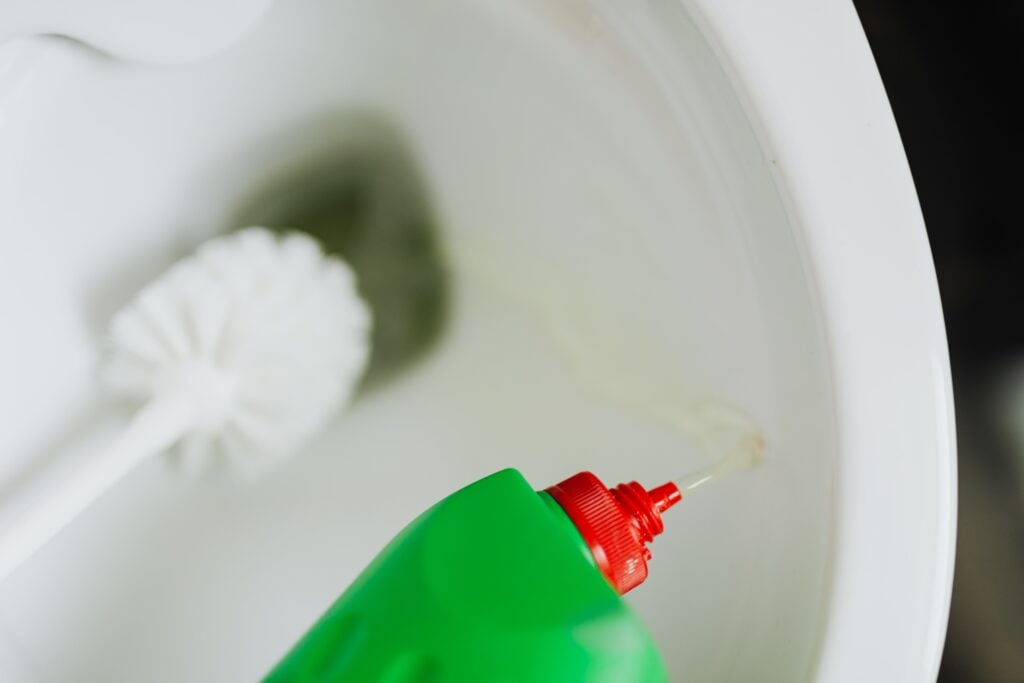
Apply the cleaner around the affected area and follow the wait time listed on the product. For stubborn mineral deposits, a longer treatment may be needed, but don’t leave a cleaner sitting for hours or overnight unless the product instructions specifically say that’s safe.
Once the cleaner has had enough time to work, scrub the ring with a toilet brush and flush. You may find that the stain comes away much more easily than it did when you started scrubbing right away.
Try White Vinegar for Light Mineral Stains
For a newer or lighter ring, white vinegar can be a handy place to start. Its acidity can help loosen some mineral deposits without requiring a specialty cleaner.
Pour about one to two cups of white vinegar into the bowl and let it sit for a while before scrubbing. If the stain is above the waterline, use a cloth or toilet brush to spread vinegar over the affected area so it stays in contact with the buildup.
Vinegar won’t remove every type of toilet stain, so don’t keep repeating the same treatment if the ring isn’t budging. A hard mineral deposit may need a cleaner made for that type of buildup.
Related: 15 everyday things frugal people rarely throw away
Use a Mineral Cleaner for Stubborn Buildup
Older hard water stains can be much harder to remove. When a ring has been sitting there for months, a mild household treatment may not be enough to break it down.
A toilet cleaner formulated to remove mineral deposits, or a product containing citric acid, can be a better choice. Read the label and follow the recommended amount and contact time rather than leaving the product on the porcelain longer than instructed.
Never mix different toilet cleaners or combine bleach with vinegar or other acidic cleaners. Some combinations can produce dangerous fumes, so use one product at a time and rinse the bowl before switching to another.
Use the Right Scrubbing Tool
A regular toilet brush works well for fresh buildup, but older mineral deposits can become hard enough to need something more abrasive. A pumice stone designed for cleaning toilets can help remove stubborn deposits from porcelain.
Keep both the pumice stone and the porcelain wet while you work. Use gentle pressure and check your progress often, rather than aggressively grinding away at the stain. If you’re unsure whether the surface is suitable for a pumice stone, check the toilet manufacturer’s care instructions first.
Related: 9 things that make buyers walk away from an open house
Why Does the Ring Keep Coming Back?
Removing the stain is one part of the job. If the same conditions persist, another ring can appear after you’ve cleaned it.
Hard water keeps leaving minerals behind each time the toilet is used. A toilet that sits unused for long stretches can also develop buildup because the water remains in the bowl without much movement.
Take a minute to figure out which situation applies to your bathroom. That can save you from repeatedly treating the same stain without dealing with what’s causing it.
Flush Toilets That Don’t Get Used Often
A guest bathroom or spare bathroom can go days without anyone using it. During that time, the water in the bowl sits in place, giving minerals and other buildup more time to settle around the waterline.
Give rarely used toilets a quick flush at least once a week. It takes only a few seconds and keeps fresh water moving through the bowl.
If a bathroom stays unused for long periods, regular cleaning is still helpful. A quick check every week or two can keep a small stain from turning into a hard ring that’s much harder to remove.
Related: 12 Clever Ways to Put Windex to Work Beyond Windows and Mirrors
Clean the Bowl Before Buildup Gets Hard
A quick weekly toilet cleaning can save you from a much bigger scrubbing job later. Fresh mineral buildup is usually easier to remove than a thick ring that’s been sitting on the porcelain for months.
After cleaning the bowl, pay a little attention to the waterline and the area underneath the rim. Catching a faint stain early is much easier than waiting until it becomes dark, crusty, or difficult to scrub away.
If hard water is the main problem in your home, regular cleaning may still leave some mineral buildup over time. In that case, keeping up with short cleaning sessions and using a product made for mineral deposits can make toilet rings much less of a recurring problem.