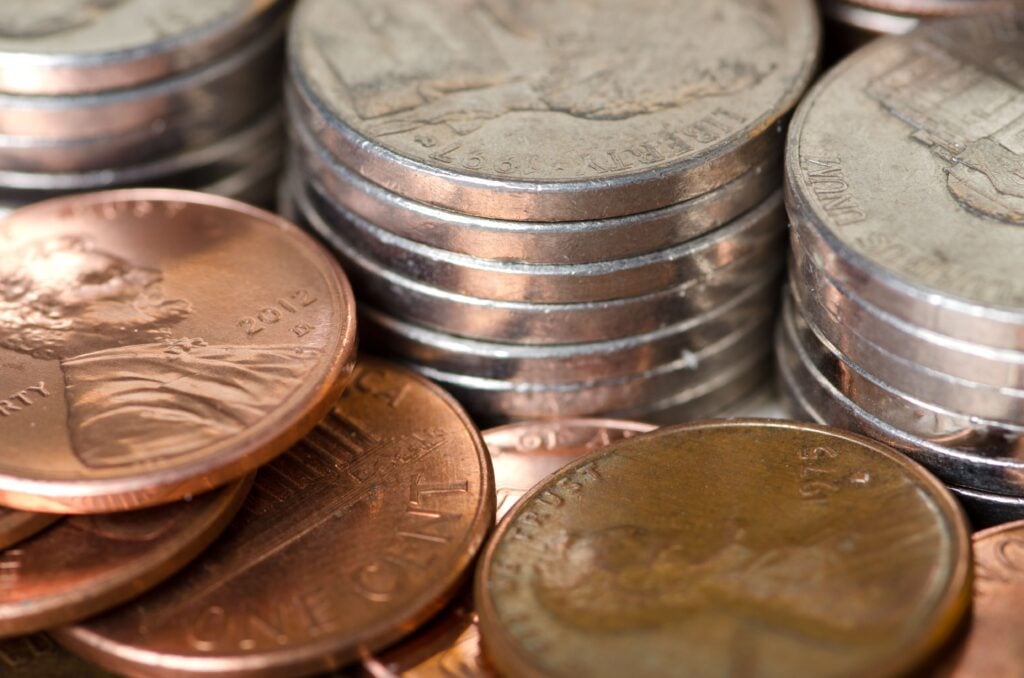
Most people probably wouldn’t give an old penny a second look. It’s easy to toss one into a jar or leave it sitting in the bottom of a drawer without wondering whether it could be worth more than its face value.
Wheat Pennies are a little different. Most are common and worth modest amounts, but certain dates, mint marks, and striking errors are highly sought after by collectors. Some of the rarest Lincoln cents have sold for very high prices, though those prices usually apply to particularly rare examples in strong condition or to coins with a well-documented error.
If you have an old jar of pennies, an inherited coin collection, or a handful of Wheat Pennies tucked away somewhere, it can be worth checking the dates before spending them. These are 10 coins and varieties that deserve a closer look.
1909-S Lincoln Cent
The 1909-S Lincoln cent was made during the first year of the Lincoln cent series, and its San Francisco mint mark makes it much more interesting to collectors than a common 1909 Philadelphia issue. The 1909-S is one of the key dates in the Wheat Penny series, particularly when found in better condition.
The date and mint mark are the first things to check, but condition matters a lot too. A heavily worn example and a well-preserved coin can have very different values, so finding the right date is only the beginning.
Related: 16 Things Grandma Left Behind That Could Be Worth a Pretty Penny
1922 No D Strong Reverse
The 1922 No D is one of the most famous Lincoln cent varieties. Denver was the only mint producing Lincoln cents that year, yet some surviving coins show no visible D mint mark because of an unusual die problem that removed or weakened the mark. PCGS identifies the Strong Reverse variety as one of the major rarities in the Lincoln cent series.
This is a coin where a little caution goes a long way. There are different 1922 No D varieties, and not every coin without an obvious D has the same collector value. If you think you have one, compare it with a trusted coin reference or have it examined by someone who specializes in Lincoln cents.
1955 Doubled Die Obverse
The 1955 Doubled Die is one of those coin errors that can be spotted without much imagination. Strong doubling appears on parts of the date and lettering, and the variety has become one of the best-known error coins in American collecting. PCGS lists it among the major Lincoln cent rarities.
Because this coin is famous, there are also plenty of altered or misidentified coins out there. If you find a 1955 penny with what looks like doubling, don’t assume you’ve found the valuable variety right away. Take a close look at the details and compare the coin with photographs from a reputable coin reference.
Take a closer look at your pennies: Some coin varieties are much easier to examine with magnification. A 10x coin loupe can help you inspect dates, mint marks, lettering, and possible doubling without having to squint at every little detail.
1944-S Steel Cent
The 1944 Lincoln cent was supposed to be made of copper after the Mint moved away from the steel cents used in 1943. A small number of 1944 cents were mistakenly struck on leftover steel planchets from the previous year, creating an extremely unusual error. PCGS notes that these off-metal errors are among the rare Lincoln cent varieties collectors seek.
A genuine 1944-S steel cent is exceptionally rare, so a coin that appears to fit the description deserves careful examination. Weight, composition, mint mark, and authentication all matter with a coin this unusual. A magnet test may be a useful first check, but it isn’t enough to prove that a coin is genuine.
Related: The Most Valuable Pennies Still Hiding in Circulation Today
1943-D Bronze Cent
The 1943 Lincoln cent is famous for its steel composition, which was introduced while copper was needed for the war effort. A small number of bronze planchets from the previous year’s production were struck as 1943 cents, creating some of the rarest Lincoln cents known. PCGS records the 1943-D bronze cent as a unique example in its population report.
That rarity is why stories about 1943 bronze cents tend to get so much attention. Still, an old penny that looks copper-colored isn’t automatically one of them. Copper plating, discoloration, altered dates, and other issues can make an ordinary coin look unusual, so professional authentication is especially important with a supposed 1943-D bronze cent.
1931-S Lincoln Cent
The 1931-S is another major key date in the Wheat Penny series. Its mintage was just 866,000 coins, making it one of the lower-mintage regular issues in the series, and PCGS lists the 1931-S among the major key dates collectors pursue.
Finding one doesn’t automatically mean you’ve struck it rich, though. Many examples show significant wear from circulation, while coins preserved in much better condition can command much more attention from collectors. If you find a 1931-S, keep it separate from your ordinary pennies and have the condition and value checked before doing anything to it.
Related: 16 Valuable Items People Are Accidentally Giving Away for Pennies When Decluttering
1909-S Over Horizontal S
The 1909-S Over Horizontal S is a fascinating example of a minting variety. The San Francisco mint mark was punched into a die and then corrected, leaving evidence of the earlier positioning beneath the final S. PCGS specifically lists the 1909-S with the S over a previous horizontal S among the unusual Lincoln cent varieties.
The detail can be difficult to see without magnification, especially on a circulated coin. This is another situation where a loupe and a good reference image can save you from either overlooking the variety or mistaking normal wear for a minting error.
1917 Doubled Die Obverse
The 1917 Doubled Die Obverse is another Lincoln cent variety that collectors watch for. Doubling can be seen on parts of the date and lettering, and examples with strong, clear details are especially interesting to collectors.
Condition plays a major role with older Wheat Pennies. A coin that spent decades in circulation may have plenty of scratches and wear, while a well-preserved example can look dramatically different. If you think you’ve found a doubled die, compare the details carefully rather than relying on a quick glance.
Collectors also pay close attention to other unusual dates and varieties, so it’s worth getting familiar with the common markers before sorting through a large collection.
1914-D Lincoln Cent
The 1914-D is one of the key dates of the Wheat Penny series and can be particularly interesting in better condition. PCGS includes the 1914-D among the major Lincoln cent key dates.
Many Wheat Pennies from this period spent years in circulation, so finding a clean, well-preserved 1914-D can be much more exciting than finding a heavily worn one. Look for the small D beneath the date and avoid cleaning the coin if you think you’ve found one.
Keep your old pennies protected: Cleaning or polishing an old coin can leave scratches and alter its original surface, which can hurt its appeal to collectors. If you find a Wheat Penny you want to keep, place it in a PVC-free coin holder rather than rubbing it with a cloth or household cleaner.
1909-S V.D.B. Lincoln Cent
The 1909-S V.D.B. is probably the Wheat Penny most people recognize when they hear about valuable Lincoln cents. Only 484,000 were produced at the San Francisco Mint before the initials of designer Victor David Brenner were removed from the reverse.
Those three initials, V.D.B., appear near the bottom of the reverse, beneath the wheat ears. The combination of the 1909 date, S mint mark, and V.D.B. makes this a particularly important coin to check for if you’re sorting through an old collection.
As with the other coins on this list, condition can make a huge difference in value. A genuine example should be handled carefully and evaluated using current market information rather than an old price guide or a random online listing.
Helpful Tools for Checking Your Old Pennies
You don’t need a huge collection or an expensive setup to start looking through old coins. A few inexpensive supplies can make it easier to read small mint marks, spot unusual details, and keep the coins you want to research from getting scratched or mixed together.
10x coin magnifier: A small loupe can make dates, mint marks, lettering, and possible errors much easier to inspect. Shop coin magnifiers.
U.S. coin reference guide: A reference book can help you learn about dates, mint marks, varieties, and the details collectors look for when identifying older coins.
PVC-free coin holders: These can help keep individual coins separated while you sort through a collection and research what you have.
Finding an old Wheat Penny can be fun even when it turns out to be worth only a small amount. The interesting part is that you never know what might be hiding in an old jar, inherited collection, or forgotten drawer until you actually check the dates and mint marks.
If you think you’ve found one of the rare varieties on this list, resist the urge to clean it or sell it immediately. Take clear photos, record the date and mint mark, compare it with trusted references, and consider getting a rare-looking coin authenticated before making any decisions about its value.