There’s a difference between loving books and having more books than you know what to do with. Your shelves are packed two rows deep, stacks sit on the nightstand, and you’re still holding onto novels you bought years ago.
Getting rid of books can feel harder than decluttering almost anything else. Here’s how to decide which ones deserve a place on your shelves and what to do with the rest.
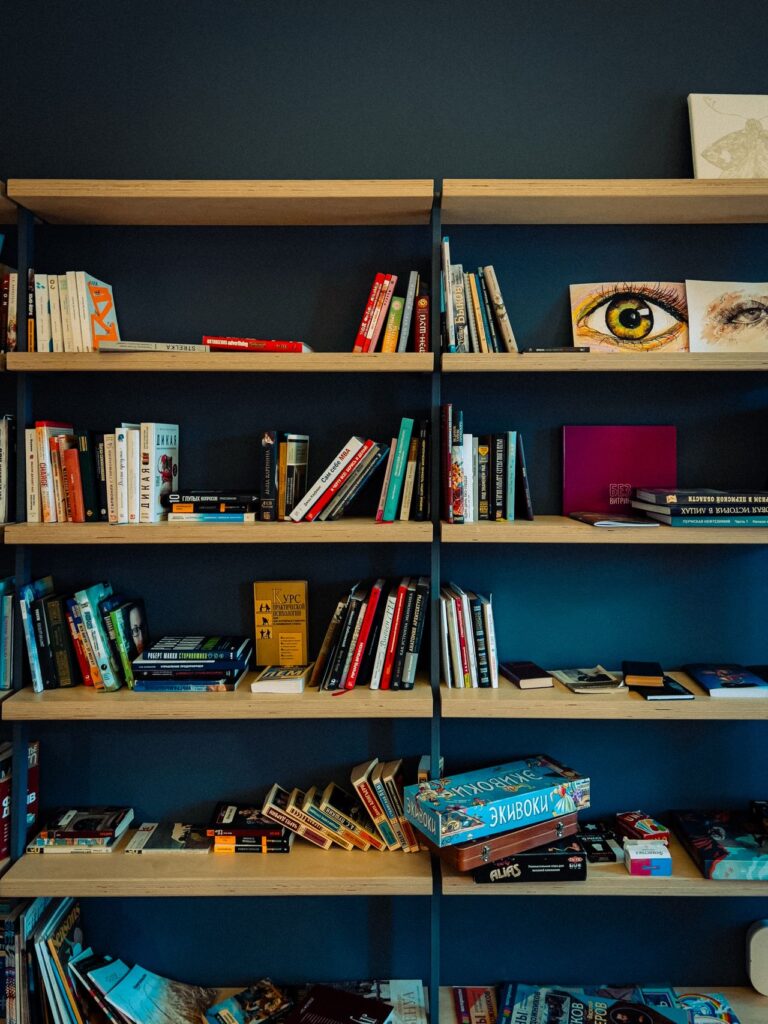
Start with the books you already know you don’t want
Don’t begin with your favorite novels or the books that have sentimental value. Start with the easy decisions: outdated reference books, duplicate copies, books you didn’t enjoy, and titles you know you won’t read again.
Pull those off the shelves first and set them aside. Seeing how much space you can clear without making any difficult decisions may give you the momentum to tackle the rest of your collection.
Be realistic about your unread books
An unread book can feel like an unfinished task, especially when you remember how excited you were to buy it. But if it’s been sitting on your shelf for years and you’re no longer interested in the subject or story, you don’t have to keep it out of obligation.
Ask yourself whether you would choose that book to read today, knowing all the other books available to you. If the answer is no, it may be time to let someone else enjoy it.
Give yourself permission to let go of books you didn’t finish
Not every book will hold your attention, and there’s no reason to keep one just because you made it halfway through. If you’ve tried to read it several times and still can’t get into it, consider that your sign to move on.
You can always borrow it from the library if you change your mind. In the meantime, it doesn’t need to occupy space on your shelf as a reminder of something you haven’t finished.
Keep the books that mean something to you
Decluttering your collection doesn’t mean getting rid of everything you’ve already read. A childhood favorite, a book signed by its author, or a novel given to you by someone special may be worth keeping even if you never open it again.
The goal is to make room for the books you genuinely value, not to force yourself to part with meaningful possessions. When you’re selective, the books you keep have more room to stand out.
Stop saving books for a version of yourself that no longer exists
Maybe you once planned to learn guitar, start a vegetable garden, or work your way through an entire shelf of business books. If your interests have changed, it’s okay for your book collection to change with them.
Keep the titles that still support hobbies and goals you care about. Let go of the ones you’re holding onto only because you feel guilty about abandoning an old plan.
Set a limit for your book collection
If books have taken over your shelves, closets, and every available side table, decide how much space you want to dedicate to them. That might mean keeping your collection to one bookcase, a few designated shelves, or whatever comfortably fits in your home.
A physical limit makes future decisions easier because you’re choosing which books matter most to you. It also gives you a reason to reconsider what you already own before bringing home another stack.
Make a separate pile for books you want to pass along
As you sort, place unwanted books into groups for donating, selling, giving to friends, and recycling. Keeping them separate from the books you plan to keep prevents you from putting everything back on the shelf when you get tired of decluttering.
Don’t let the donation pile sit in a corner for months, either. Choose where the books are going and make a plan to get them out of the house.
Related: 15 Donation Rules Most People Don’t Know
Offer books to friends and family
Before dropping everything off at a donation center, think about whether someone you know would enjoy a particular title. A friend who loves mysteries might appreciate a novel you’ve finished, while a relative who has taken up gardening could use your extra gardening books.
Offer books individually rather than handing someone an entire box they may feel obligated to accept. The idea is to find them a new home, not transfer the clutter to someone else.
Donate books where they’ll be useful
Charitable thrift stores are an option for books in good condition, but they aren’t the only places to consider. Depending on their needs and donation policies, local libraries, schools, shelters, senior living communities, and other organizations may also accept certain books.
Call or check the organization’s website before showing up with several boxes. Some locations accept only particular genres, age groups, or quantities, and others may not be taking book donations at all.
Sell books that may have resale value
If you have collectible editions, signed copies, recent textbooks, or other books that may be worth something, check their resale value before donating them. Look at completed sales for comparable copies on resale marketplaces rather than relying on what sellers are asking.
You can also contact a local used bookstore to find out what it buys. Keep in mind that selling books takes time, so decide whether the potential return is worth photographing, listing, packing, and shipping them.
Recycle books that are no longer usable
Books with missing pages, extensive damage, or other problems may not be suitable for donation. Check your local recycling rules before putting them in the bin, since paperback and hardcover books may need to be handled differently.
Don’t donate moldy or heavily water-damaged books in the hope that someone else can use them. If a book is beyond saving, disposing of it properly is better than passing the problem along.