Microfiber cloths are one of those cleaning supplies you can easily overlook. You buy a pack, use them to wipe down kitchen counters or dust a table, and the rest inevitably end up stuffed under the sink.
But they’re useful for a lot more than everyday wiping and dusting.
The tiny fibers are especially good at picking up dust, lint, hair, and surface grime, making these cloths handy for some of the annoying cleaning jobs around the house. You can also wash and reuse them, so you don’t have to reach for a paper towel every time something needs a quick wipe.
If you already have a stack sitting around, put them to work. Here are 14 places where a simple microfiber cloth can come in handy.
Clean between air vents
Dust loves to settle between vent slats where a regular duster can’t quite reach. Fold a microfiber cloth into a thin edge and run it between the openings to grab the buildup hiding inside.
Wipe down baseboards
Baseboards collect an impressive amount of dust for something most of us barely notice. A slightly damp microfiber cloth picks up the dirt along the top and gets into the little grooves without spreading dust around.
Pick up pet hair from furniture
Before dragging out the vacuum, try running a dry microfiber cloth over a couch or upholstered chair covered in pet hair. The cloth can grab loose hair and lint from the surface, making it useful for quick touch-ups between deeper cleanings.
Freshen up upholstery
Couches and fabric chairs can collect dust and lint even when they don’t look particularly dirty. A microfiber cloth can help lift surface debris between vacuuming or more thorough upholstery cleaning.
Remove fingerprints from electronics
Phones, tablets, televisions, and other screens seem to collect fingerprints almost immediately after they’re cleaned. A clean, dry microfiber cloth removes everyday dust and smudges without leaving the lint you may get from paper towels.
Wipe down shower doors
Keeping a microfiber cloth in the bathroom makes it easy to give shower doors a quick wipe after use. Removing water and residue regularly can help keep buildup from becoming a much bigger cleaning job later.
Related: How to Clean Shower Doors with Vinegar
Dust the car dashboard
Your car is another good place to stash an extra microfiber cloth. A quick pass over the dashboard, console, cupholders, and other hard surfaces can pick up the layer of dust that seems to appear out of nowhere.
Clean window blinds
Running a cloth across individual blind slats can grab the dust that accumulates on both sides. Fold the cloth around a slat to wipe the top and bottom at the same time, and finish faster.
Related: The Biggest Mistakes People Make When Cleaning Window Blinds
Polish stainless steel
Stainless steel appliances show fingerprints, water marks, and smudges incredibly easily. After cleaning the surface with an appliance-appropriate product, a clean microfiber cloth can help buff away remaining streaks.
Clean mirrors
A microfiber cloth is handy for mirrors because it doesn’t leave behind the little pieces of lint that paper towels sometimes do. Use it with your usual mirror-cleaning method and finish with a clean, dry section of the cloth if streaks remain.
Wipe down ceiling fan blades
Ceiling fans can collect a surprising amount of dust, especially when they haven’t been cleaned for a while. A slightly damp microfiber cloth grabs dust from each blade instead of sending more of it floating around the room.
Clean cabinet fronts
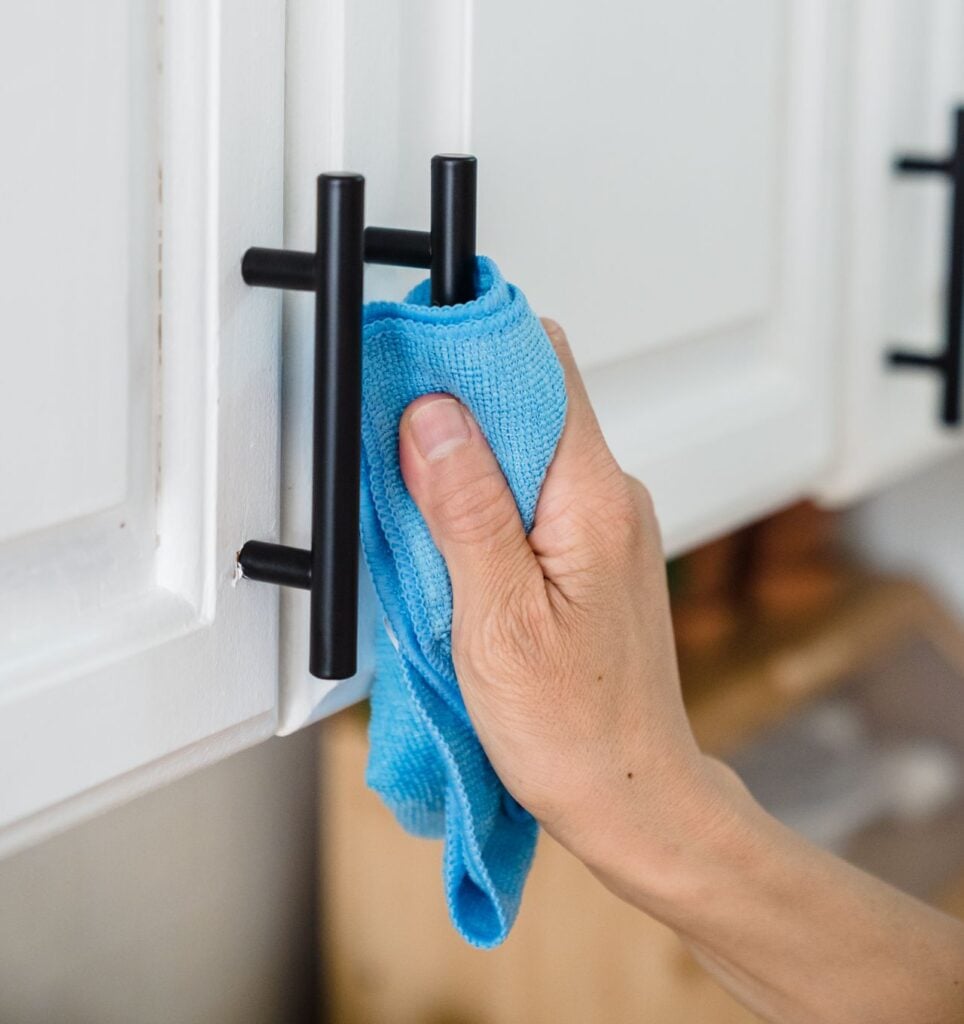
Kitchen and bathroom cabinets gradually collect fingerprints, splatters, dust, and grime around handles and frequently touched areas. A microfiber cloth paired with a cleaner that’s safe for the cabinet finish makes quick touch-ups easy.
Related: How to Clean Sticky Grease Off Your Kitchen Cabinets
Tackle dusty door frames and trim
The tops of doors, window trim, and door frames are easy to miss during regular cleaning. Run a microfiber cloth over these surfaces every so often and you’ll probably be surprised by how much dust it picks up.
Wipe down light switches and door handles
Light switches and door handles are touched constantly but can easily get skipped during a normal cleaning routine. Use a microfiber cloth with a cleaner that’s appropriate for the surface to wipe away fingerprints and everyday grime.