It always feels like bananas go from perfect to overripe overnight. You bring home a fresh bunch, they look great for a few days, and then suddenly they’re covered in brown spots.
Bananas naturally ripen because they release ethylene gas, which speeds up the process. Where you keep them, what they’re sitting next to, and how much warmth they get can all affect how quickly they ripen.
The good news is that a few small changes can buy you more time. You don’t need anything complicated, either. A better spot on the counter or a little extra space between the bananas can make a difference.
If you’re tired of throwing out bananas because they ripened before you could eat them, try these simple storage tricks.
Wrap the Stems
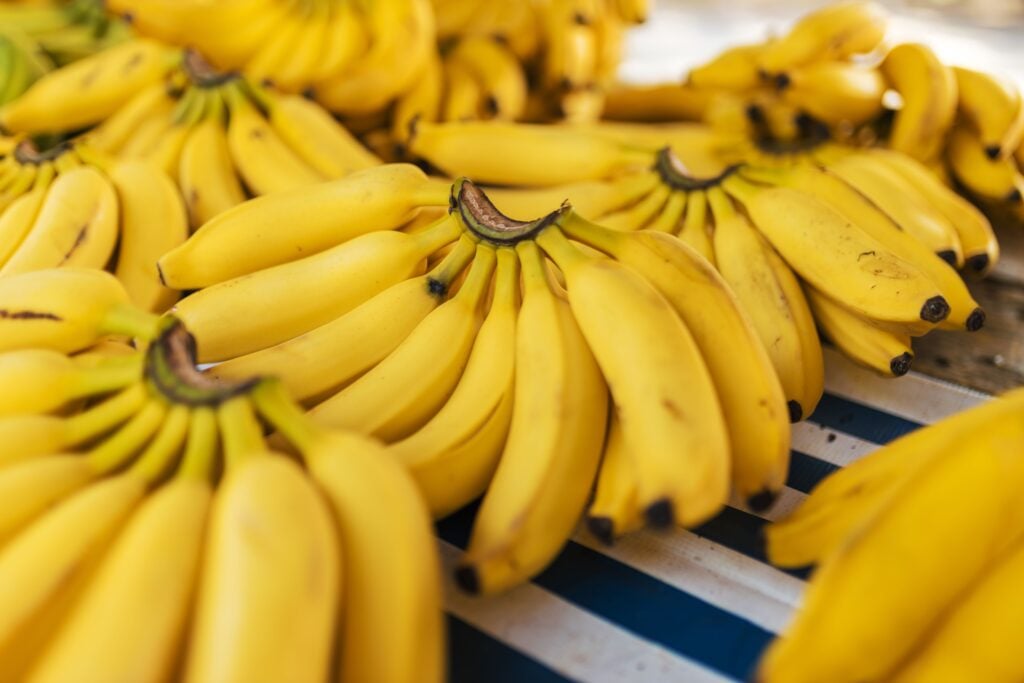
Banana stems release a lot of the ethylene gas that helps the fruit ripen. Wrapping the top of the bunch with plastic wrap or aluminum foil can help slow that process down.
It’s an easy trick that takes almost no time. If your bananas always seem to ripen all at once, wrapping the stems is worth trying.
Separate the Bananas
A whole bunch of bananas sitting together can ripen faster than individual bananas.
Try separating them once you get home. For an extra step, wrap the stem of each banana on its own. Spacing them out can help keep ethylene from building up around the fruit as quickly.
It also makes it easier to grab one banana at a time without disturbing the rest of the bunch.
Keep Them Away From Other Fruit
Bananas aren’t the only fruit that gives off ethylene. Apples, avocados, pears, peaches, and tomatoes produce it too.
When all of that fruit sits together in one bowl, the ethylene can speed up ripening across the whole group. That’s why a fruit bowl can sometimes turn into a pile of overripe produce faster than expected.
Give your bananas their own spot instead of keeping them mixed in with other ripening fruit.
Keep Them Out of Direct Sunlight
A sunny countertop may seem like a convenient place to keep bananas, but the extra heat can make them ripen faster.
Find a cooler, shaded spot in the kitchen instead. Keep them somewhere with decent airflow and away from sunny windows, the stove, or other sources of heat.
Hang Them Instead of Setting Them Down
Bananas can bruise pretty easily when they’re left sitting on a counter. The weight of the fruit creates pressure spots, and those areas tend to turn brown first.
A banana hanger or a simple hook keeps the fruit off the counter and lets air move around it. It also means there are fewer spots pressing against the surface.
You don’t need a special banana hanger, either. Any clean hook or setup that keeps the bananas supported and off the counter can work.
Avoid the Fridge — Until They’re Ripe
Putting green or barely ripe bananas in the refrigerator can interfere with the ripening process. The peel may turn dark while the fruit inside is still firm.
Once your bananas have reached the ripeness you like, the fridge can actually help them last longer. The peel will usually turn very dark, but that doesn’t mean the inside has gone bad. The fruit can stay at a good eating stage for several more days.
Related: 13 Hidden Dangers in Your Fridge That Seem Minor — But Can Lead to Bigger Problems
Use Citrus on Peeled Bananas
Once a banana has been peeled or sliced, the exposed surface starts reacting with oxygen. That’s what causes those familiar brown spots.
A little lemon or lime juice can slow the browning. Brush a little lemon over the cut surface before storing the banana.
This works especially well for sliced bananas you’re saving for oatmeal, smoothies, fruit bowls, or lunch. You don’t need much juice, and too much can change the flavor.