There’s a reason some people seem to walk into a thrift store and immediately find the good stuff. It’s not always luck. After you thrift long enough, you start figuring out which areas other shoppers overlook and where employees tend to put things that don’t have an obvious home.
I’ve learned not to limit myself to the obvious aisles. Some of my favorite finds have been above racks, buried on bottom shelves, mixed into seasonal merchandise, or sitting in a completely different section from where they belonged. If you want to find the things everyone else seems to miss, these are the places worth checking first.
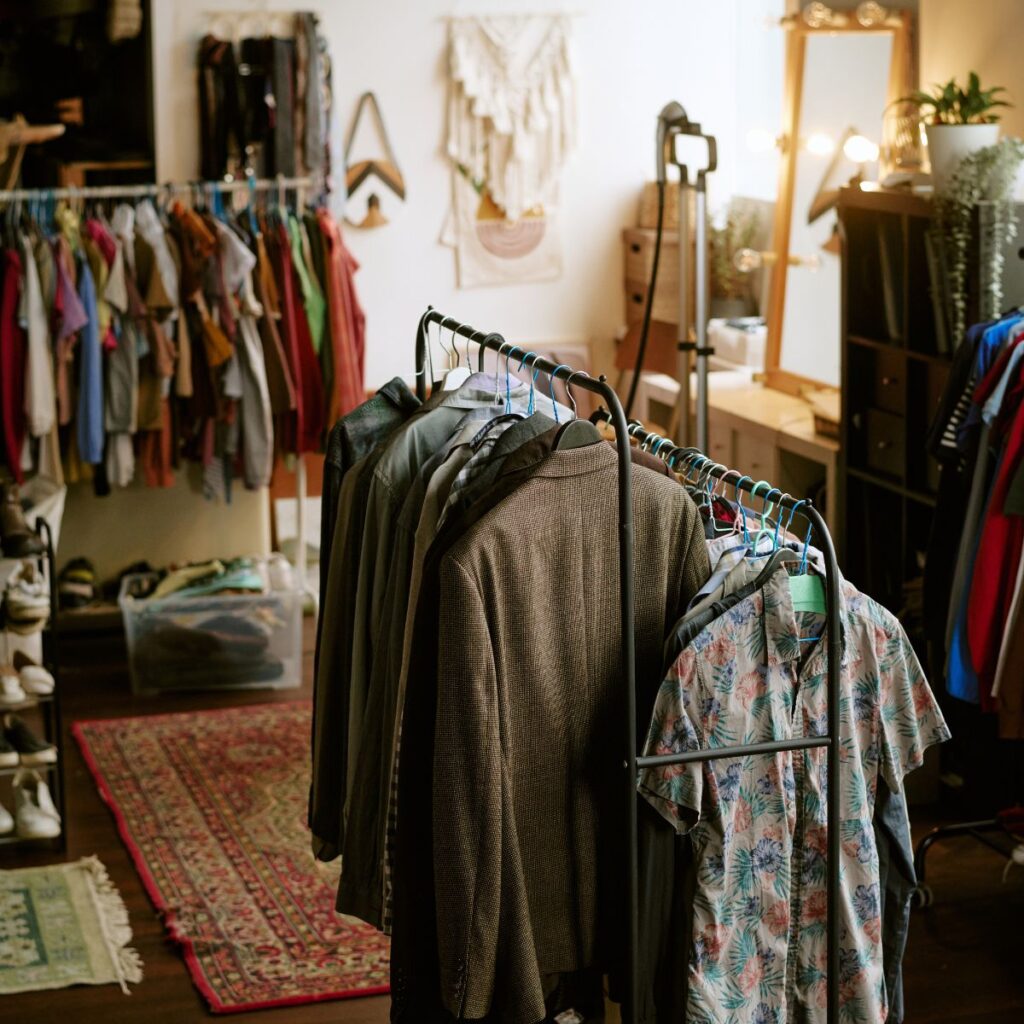
The Tops of Clothing Racks
This is one of the first places I look because so many shoppers never bother looking up. Thrift stores often place baskets, decor, accessories, bags, vintage pieces, and other random merchandise on top of clothing racks when there isn’t an obvious place for them elsewhere.
The Very Bottom Shelves
Everyone naturally looks at what’s directly in front of them, which means the lowest shelves can get surprisingly little attention. Crouch down, and you may find cast iron, baskets, pottery, planters, serving pieces, storage containers, and other heavier items tucked underneath everything else.
The Seasonal Section
Don’t wait until November to check Christmas or October to look for Halloween. Seasonal sections can be especially good for vintage ornaments, old holiday dishes, candlesticks, linens, baskets, wreaths, and decorations that are much harder to find once everyone starts shopping for them.
The Picture Frame and Art Section
I rarely pay full price for picture frames anymore because thrift stores usually have plenty for a fraction of retail. Look beyond the dated family photos and generic prints because solid wood frames, unusual artwork, vintage prints, mirrors, and surprisingly expensive frames can all be hiding in the mix.
The Linens
Sheets, pillowcases, tablecloths, curtains, quilts, blankets, and fabric remnants don’t necessarily look exciting piled together on a shelf. But this section can be a gold mine for vintage textiles, quality natural fabrics, sewing material, table linens, and inexpensive fabric for DIY projects.
The Craft and Sewing Aisle
Someone else’s abandoned hobby can become your incredibly cheap craft supply haul. Yarn, embroidery hoops, fabric, sewing patterns, knitting needles, buttons, ribbon, unfinished craft kits, and even unopened supplies frequently show up for just a few dollars.
The Glassware Shelves
Glassware is one section where I slow down instead of scanning from a distance. Vintage glass, crystal, Pyrex, serving dishes, pottery, candlesticks, collectible pieces, and quality kitchenware can easily disappear into a shelf filled with ordinary cups and mismatched dishes.
The Furniture Area — Including Under the Furniture
Don’t just look at the dresser, table, or bookshelf in front of you. Check underneath, behind, and on top of furniture because smaller decor, baskets, lamps, frames, stools, and miscellaneous pieces are often tucked into whatever available space employees can find.
The New Carts and Restocking Areas
If your thrift store rolls newly priced merchandise onto the floor throughout the day, pay attention. You’re essentially getting a first look before dozens of other shoppers have picked through those items, which can make this one of the best places to spot something good.
Just don’t hover over employees or grab things they’re still trying to put away. Give them space and wait until merchandise is available to shop.
The Section That Makes Absolutely No Sense
This might be the most important thrift store rule of all: never assume something will be where it belongs. A vintage vase might be beside office supplies, a great basket could be in the toy section, and a beautiful piece of decor might somehow end up with kitchenware.
That’s also why experienced thrifters tend to walk more of the store instead of heading straight for one department. The best find of the day might be sitting in an aisle you had absolutely no reason to visit.