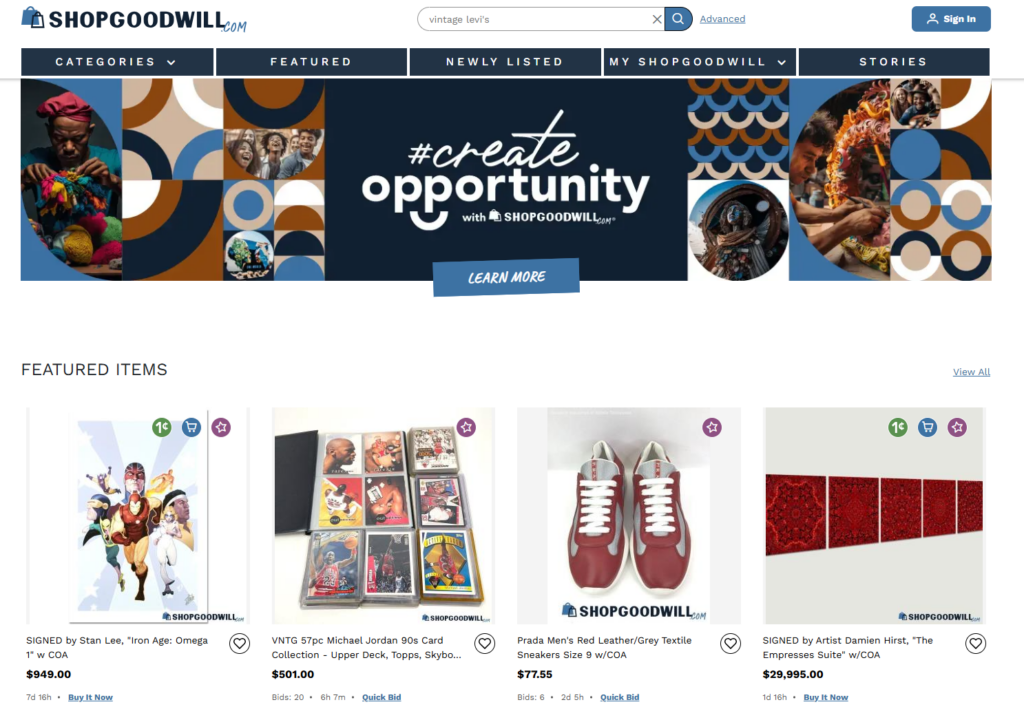
Goodwill’s online marketplace, ShopGoodwill.com, just had its strongest year on record. After more than two decades online, the platform reached $450 million in total merchandise sales last year, marking a 22% increase over the year before, according to Modern Retail. This a clear sign that online thrifting is no longer a side note in retail; it’s becoming part of the everyday shopping routine for a growing number of people.
For a long time, thrifting lived mostly in physical spaces. You showed up, you dug through racks, you hoped for something good. Online thrifting felt secondary, almost experimental. But that balance is shifting. Shoppers are getting more comfortable buying secondhand online, not just because it’s convenient, but because it fits the moment we’re in.

Why Resale Fits the Moment
Prices are higher. Budgets feel tighter. And people are thinking more carefully about what they buy and where it comes from. In that environment, resale makes sense. It offers access to quality items at lower prices and gives shoppers something new retail often doesn’t: variety with a history.
How ShopGoodwill.com Scaled Up
ShopGoodwill.com sits at the center of that change. The platform pulls inventory from more than 2,500 Goodwill thrift stores across the country, creating a marketplace that’s far larger than any single physical location could ever be.
Items that might have gone unnoticed in one store can now find the right buyer somewhere else entirely. A designer handbag, a vintage jacket, a collectible piece, things that benefit from a wider audience perform especially well online.
That focus on higher-value goods has helped fuel growth. Online listings make it easier to highlight condition, brand, and uniqueness in a way that crowded racks sometimes can’t. For shoppers who know what they’re looking for, or who enjoy the search from a distance, online thrifting offers structure without losing the element of discovery.
Goodwill Doesn’t Want You to Donate These Items
The Role of Younger Shoppers
There’s also a generational shift happening alongside it. Gen Z has embraced thrifting not as an alternative, but as a preference.
Secondhand shopping fits naturally with how younger shoppers approach style-mixing pieces, rejecting sameness and valuing individuality over trends. Online platforms make that easier, allowing people to browse widely, save searches, and shop on their own time.
Online and In-Store Thrifting Can Coexist
Even with its growth, Goodwill’s online marketplace still represents only a portion of the organization’s overall sales. Physical stores remain central. But the rise of ShopGoodwill.com shows how secondhand shopping is expanding rather than replacing itself. In-store and online thrifting now serve different needs, and many shoppers move between the two.
Where the Revenue Goes
What sets ShopGoodwill.com apart from other resale sites is its purpose. Every purchase on the platform directly contributes to Goodwill’s mission, providing life-changing workforce development and job placement programs for people in communities across the U.S.
Over the past 25 years, Goodwill has generated more than $2.5 billion in revenue to fund these programs, supporting more than 5 million people in developing valuable skills and securing stable employment.
Revenue from online sales continues to support job training programs, employment services, and community-based initiatives run by local Goodwill organizations. Each transaction feeds back into the nonprofit’s mission, tying retail activity to something broader than shopping alone.
People Donate the Wildest Things, and Goodwill Is Begging Them to Stop
What This Shift Signals Going Forward
The success of ShopGoodwill.com isn’t just about numbers. It reflects how people are adjusting their habits in response to the world around them, looking for value, flexibility, and meaning in what they buy. Online thrifting isn’t a trend fueled by novelty. It’s growing because it works.
Other posts you might like:
- 16 Best Online Thrift Stores for Furniture and Home Decor
- The Best Way to Find Garage Sales and Score the Best Deals
- 27 Online Thrift Stores for the Best Second-Hand Shopping
- 20 Collectibles in Your Parents’ House That Could Be Worth a Fortune
- 13 Random Items in Your Home That Could Be Worth Thousands
- From Oil Lamps to Porcelain Pigs, These Are the Strangest Things People Collect