Most people have a box of cotton swabs sitting somewhere in the bathroom. They’re cheap, easy to find, and usually thought of as something you use for your ears, even though doctors generally advise against putting them inside the ear canal.
But cotton swabs can do a lot more around the house.
The basic cotton swab has been around since 1923, when Leo Gerstenzang came up with the idea after seeing his wife wrap cotton around a small stick for cleaning. The design has changed very little since then, and there’s a good reason for that. The small cotton tip makes it easy to work in tight spaces, clean small areas, or apply a little bit of product without getting it everywhere.
Here are 12 useful cotton swab tricks that are worth keeping in mind.
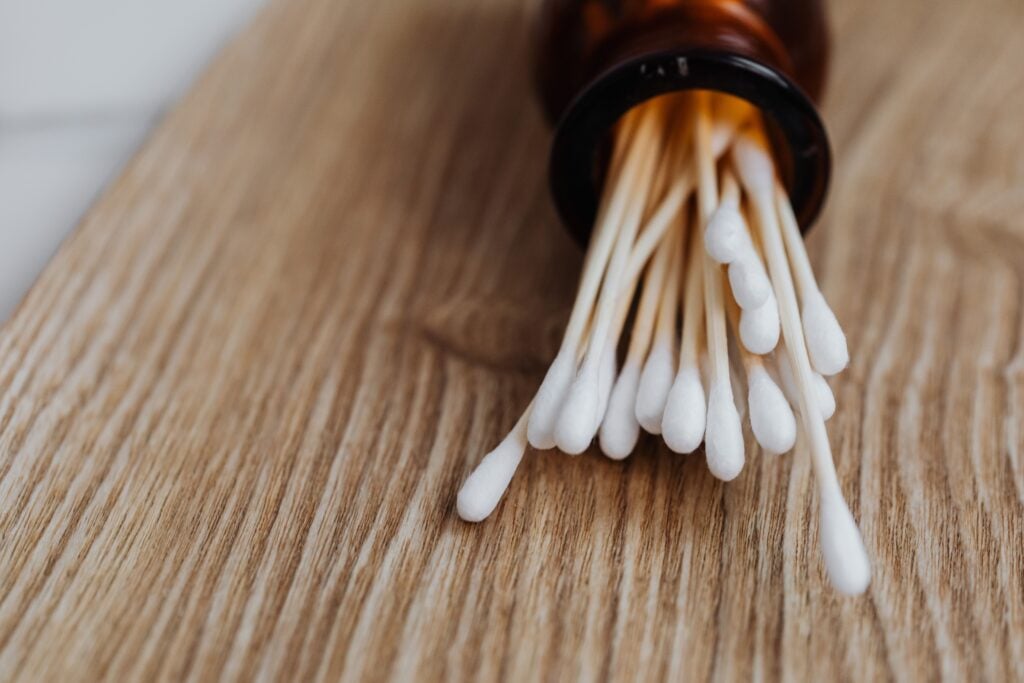
Clean Tight Electronic Spaces
Dust has a way of finding its way into keyboards, remote controls, charging ports, camera edges, and other small spaces.
A dry cotton swab can help loosen dust and debris from areas that are hard to reach with a regular cloth. For some surfaces, you can lightly dampen the tip with isopropyl alcohol, but keep liquids away from openings and make sure the device is powered off first.
The small tip gives you much more control than trying to squeeze a corner with a paper towel.
Related: 10 Things Frugal People Use Instead of Paper Towels
Tidy Up Makeup Mistakes
A cotton swab can save your makeup when eyeliner smears or mascara ends up somewhere it shouldn’t.
Dampen the tip with micellar water or makeup remover and gently clean up the mistake. It’s especially handy around the eyes, where using a larger cotton pad can make the mess even worse.
There’s no need to redo your whole makeup look because of one tiny smudge.
Apply Spot Treatments Without Waste
Cotton swabs are useful for applying skincare products to small areas. Instead of putting your fingers into a jar of acne cream or another treatment, use a clean swab to pick up a small amount and apply it where needed.
This can help keep your fingers out of the container and prevent you from using more product than necessary.
It’s also handy for applying products to individual blemishes rather than spreading them over your whole face.
Related: 10 Things You Should Never Hang on Your Front Door
Clean Delicate Jewelry
Jewelry can collect dirt in some surprisingly small spaces. Rings, earrings, chains, and pendants often have areas around the settings that are difficult to reach with a regular cloth.
A cotton swab dipped in an appropriate jewelry cleaner or mild soapy water can help clean those spots. Be careful with delicate stones and finishes, since not every piece of jewelry should be cleaned with soap or commercial cleaners.
Once you’re done, use a dry swab to pick up moisture from small crevices.
Touch Up Nail Polish
Painting your nails at home almost always comes with a little cleanup.
If polish gets onto the skin around your nails, dip a cotton swab in nail polish remover and carefully wipe away the excess. The small tip makes it easier to clean around the edges without messing up the polish you actually want to keep.
Cotton swabs can also come in handy for tiny nail art details.
Related: The Handy Things That Help Solve Problems Before They Get Bigger
Detail Clean Your Car Interior
Car interiors have plenty of small spaces where dust collects. Think about air vents, window buttons, door handles, gear shifts, and the grooves around your dashboard controls.
A dry or slightly damp cotton swab can pick up dust from those spots without requiring you to take anything apart. For areas around electronics, stick with a dry swab and avoid getting moisture into openings.
A few minutes of quick cleaning can make a dusty car interior look much better.
Remove Hair Dryer Lint
Lint buildup around a hair dryer’s rear vent can restrict airflow and contribute to overheating.
Before cleaning it, unplug the dryer and let it cool completely. Then use a dry cotton swab to loosen dust and lint around the vent. A small brush or the cleaning method recommended by the manufacturer can also help with heavier buildup.
It’s a quick chore that’s easy to forget, but keeping the vent clear is part of taking care of the appliance.
Lubricate a Stuck Zipper
A stubborn zipper doesn’t always mean the item is ruined.
For a zipper that’s sticking, a cotton swab can help you apply a very small amount of lip balm, petroleum jelly, or another suitable lubricant directly to the zipper teeth.
Move the zipper back and forth gently rather than forcing it. The cotton tip helps keep the lubricant where you need it instead of spreading it over the surrounding fabric.
Related: 12 Things You’re Probably Overpaying for at the Grocery Store
Touch Up Small Paint Scuffs
You don’t need to pull out a paintbrush for every little mark on a wall or piece of trim.
For tiny chips and scuffs, dip a cotton swab into a small amount of matching paint and carefully dab the spot. It gives you better control than a larger brush and means you won’t have to clean a whole painting setup afterward.
This works best for very small touch-ups where the goal is simply to cover a noticeable mark.
Help With Seed Planting
Tiny seeds can be annoying to handle, especially when you’re trying to space them out in a seed tray.
A slightly damp cotton swab can pick up some small seeds and help you place them where you want them. You can then use the tip to gently press them into the soil at the depth recommended for that particular plant.
It’s a simple trick for anyone who has ever dropped a tiny seed and then spent five minutes trying to find it.
Related: I Stopped Buying Plants From Home Depot After Years of Gardening and You Might Want To, Too
Assist With Hand Pollination
Some flowers need a little help with pollination, especially when there aren’t many natural pollinators around.
A clean cotton swab can be used to gently transfer pollen from one flower to another. Lightly touch the pollen-producing part of one flower, then transfer it to the appropriate part of another flower.
This works best with plants where hand pollination is recommended. Be gentle, since flower parts can be surprisingly delicate.
Apply Ointments to Small Areas
A clean cotton swab can make it easier to apply a small amount of ointment to a minor area without using your fingers.
It can also help when applying a product around the edge of a small scrape or when you need to spread a little ointment in a precise spot. Use a fresh swab for each application, and follow the directions that came with the product.
For deeper wounds, serious burns, or anything that needs medical attention, skip the household tricks and follow proper first-aid guidance.
Cotton swabs may have started as a simple personal-care item, but their small size makes them useful for all kinds of little jobs. Keeping a box around means you always have something handy for those places and tasks that are just too small for a regular cloth or brush.
Other posts you might like:
- Banana Peels Might Be the Most Underrated Natural Boost for Your Garden
- I Stopped Using Dryer Sheets in the Dryer—Here’s Where I Use Them Instead
- Stop Throwing Away Orange Peels — Some Call Them Trash, Others Call Them Kitchen Gold
- 14 Practical Uses for Windex
- 15 Incredible Ways to Repurpose Used Coffee Grounds