Most homes don’t become cluttered overnight. It usually happens one small decision at a time. A new shirt gets added to the closet, another kitchen gadget gets squeezed into a cabinet, and something gets shoved into a drawer because there isn’t time to figure out where it belongs.
Eventually, those little decisions start catching up with you. Drawers become difficult to close, closets are packed with clothes you barely wear, and cabinets are so full that finding one item means moving five others.
If your home has started to feel cramped or harder to keep tidy, these signs may mean you have more belongings than your storage space can comfortably handle.
Your Drawers Barely Close
If you have to push down on a drawer just to get it shut, it probably has too much inside.
Overstuffed drawers also make it harder to find anything. Items get buried, tangled, or pushed toward the back, where they may sit untouched for months.
A drawer should make finding things easier, not turn into a daily wrestling match.
Related: Planning to Declutter? These 13 Items Probably Aren’t Donation-Worthy
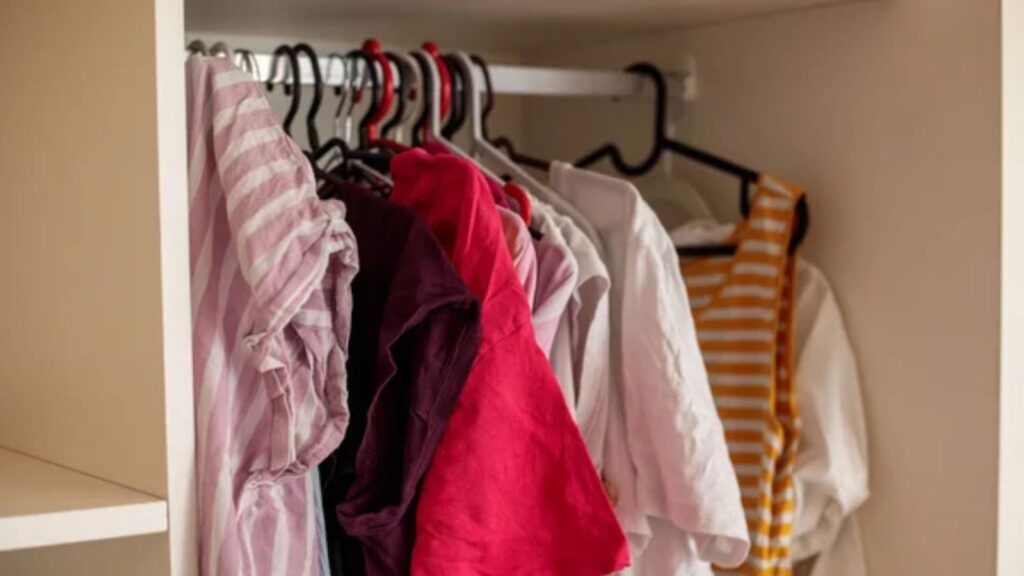
Your Closet Is Packed, but You Keep Wearing the Same Clothes
A full closet can give you the strange feeling that you have nothing to wear.
When clothes are packed tightly together, it’s harder to see what you actually own. You may end up grabbing the same few outfits simply because they’re easy to reach.
Take a closer look and you may find clothes with tags still attached, pieces you forgot about, or items you haven’t worn in years.
You Keep Buying More Storage Bins
Storage containers can be useful, but buying another bin every time your stuff doesn’t fit can hide the real problem.
If your basement, closet, garage, or cabinets are filled with containers that are themselves overflowing, adding another organizer probably won’t solve much.
Sometimes the home needs fewer belongings rather than more places to put them.
Related: How to Declutter When You Don’t Know Where to Start
You Own Several Versions of the Same Thing
Duplicates are easy to accumulate.
You might have five pairs of scissors, several phone chargers, three can openers, or enough reusable shopping bags to fill an entire drawer. Often, buying another one feels easier than searching through a crowded space for the one you already own.
Too much clutter makes it harder to keep track of your belongings, which can lead to even more unnecessary purchases.
Your Flat Surfaces Are Always Covered
Look at the kitchen counters, dining table, dresser, coffee table, and entryway.
If every open surface has something sitting on it, your storage spaces may already be full. Once cabinets, drawers, and closets run out of room, belongings have to go somewhere, so they end up on tables and counters.
Those piles can make a room feel messy even when you’ve recently cleaned it.
Cleaning Takes Much Longer Than It Used To
Cleaning a mostly empty surface is pretty quick. Cleaning a surface covered with belongings is another story.
Before you can wipe the counter, you have to move everything. Before you can vacuum the floor, you have to pick things up. Before you can dust a shelf, you have to clear it first.
If cleaning feels like a constant process of moving stuff from one place to another, you may have more belongings than your home can comfortably handle.
Related: It’s Time to Declutter—9 Things in Your Home You Should Actually Donate
You Are Always Looking for Things
Can’t find your keys? Searching for a charger? Have you checked three drawers for the scissors you know you own?
Clutter makes everyday objects much easier to lose. Items get buried beneath other belongings or placed somewhere random because their usual storage spot is already full.
A home with fewer things often means fewer places for important items to disappear.
Your Garage Has Become a Storage Room
A garage is useful for storing cars, tools, outdoor equipment, and seasonal belongings. But if you can barely walk through yours, it’s probably doing a different job now.
Old furniture, boxes, decorations, toys, unused appliances, and miscellaneous household items can slowly take over.
If your car has been sitting in the driveway for years because the garage is packed with stuff, that’s a pretty clear sign that the clutter has gone too far.
You Have a Catch-All Spot in Every Room
One junk drawer is pretty normal. A junk drawer, junk basket, junk shelf, and junk corner in every room is another story.
Catch-all spaces usually start innocently. Something doesn’t have a proper home, so you put it in a basket or drawer. Then another item goes there, followed by another.
Before long, those temporary storage spots become permanent clutter zones.
Your Home Still Looks Cluttered After You Clean
Sometimes a house can be clean and still look messy.
If shelves are packed, counters are covered, furniture is surrounded by belongings, and every wall has something hanging on it, the amount of stuff may be the issue rather than the cleanliness of the room.
Open space can make a room feel calmer. You don’t necessarily need to clean more; you may just need fewer things competing for attention.
You Keep Things “Just in Case”
Keeping a few backups makes sense. Keeping dozens of items for situations that may never happen is different.
Old cords, clothes that no longer fit, duplicate containers, outdated electronics, craft supplies for projects you never started, and kitchen gadgets you rarely use can all fall into this category.
Ask yourself how often you actually use the item. If the answer is almost never, keeping it may be taking up space for a future that probably won’t happen.
You Keep Shopping Without Getting Rid of Anything
A home can only hold so much.
If new clothes, décor, kitchen items, gadgets, and other purchases keep coming through the door while almost nothing leaves, your storage spaces will eventually fill up.
You don’t have to get rid of something every time you buy something new, but regularly looking through your belongings can prevent the pile from growing indefinitely.
Being at Home Feels Mentally Draining
Clutter can affect how a space feels.
If you walk into a room and immediately start thinking about everything that needs to be put away, cleaned, sorted, or dealt with, your home may be adding to your mental load instead of giving you a place to relax.
A crowded room can feel tiring before you’ve done anything at all.
Related: 12 Things You Should Declutter Now So Your Children Don’t Have To Later
You’re Paying for a Storage Unit
A storage unit can be useful during a move, renovation, or temporary life change.
But if you’re paying month after month to store things you rarely use, it may be time to look at what’s inside. Some belongings can spend years sitting in storage without ever being missed.
At some point, the monthly bill may cost more than the value those unused items bring to your life.
You Find Things You Forgot You Owned
Opening a cabinet and finding three unopened bottles of the same product is a pretty good clue that you have too much stuff.
The same thing can happen with clothing, toys, books, kitchen supplies, and household products.
When belongings disappear into packed storage spaces, they stop being useful. You can’t use something you can’t find, and forgotten items can lead you to buy replacements you don’t actually need.
You Organize Constantly, but the Mess Always Returns
This may be the biggest clue of all.
If you spend Saturday organizing your closet only to find it overflowing again two weeks later, the problem may not be your organizational system.
Sometimes the shelves, drawers, and closets are simply holding more than they were meant to hold.
No basket, label, or storage system can create unlimited space. If you’ve tried organizing the same area again and again without lasting results, owning less may be the change that finally makes the space easier to manage.