During the Great Depression, families had to make meals with whatever they could afford, grow, preserve, or stretch as far as possible. Ingredients people now see as everyday basics, like meat, butter, milk, and eggs, were often expensive or hard to get regularly. Home cooking became less about variety and more about making filling meals from simple pantry staples.
People learned how to turn inexpensive ingredients into meals that could feed a whole family without wasting anything. Potatoes, beans, bread, flour, canned goods, and scraps from previous meals were used in creative ways to make food last longer. Some recipes came from pure necessity, but many ended up becoming comfort foods people kept making long after hard times passed.
These Depression-era recipes may look simple, but a lot of them are still hearty, practical, and surprisingly good. They prove you don’t need expensive ingredients to put together a satisfying meal.
1. Hoover Stew
Named after President Hoover, this cheap, filling meal became a staple in soup kitchens and family homes during the Depression. A basic Hoover stew contains elbow macaroni, canned vegetables (such as corn, peas, or beans), and hot dogs. Depression-era families could stretch their food budget by adding whatever fresh vegetables were available.
2. Poor Man’s Meal
Poor Man’s Meal is a quick and easy
3. Chipped Beef on Toast
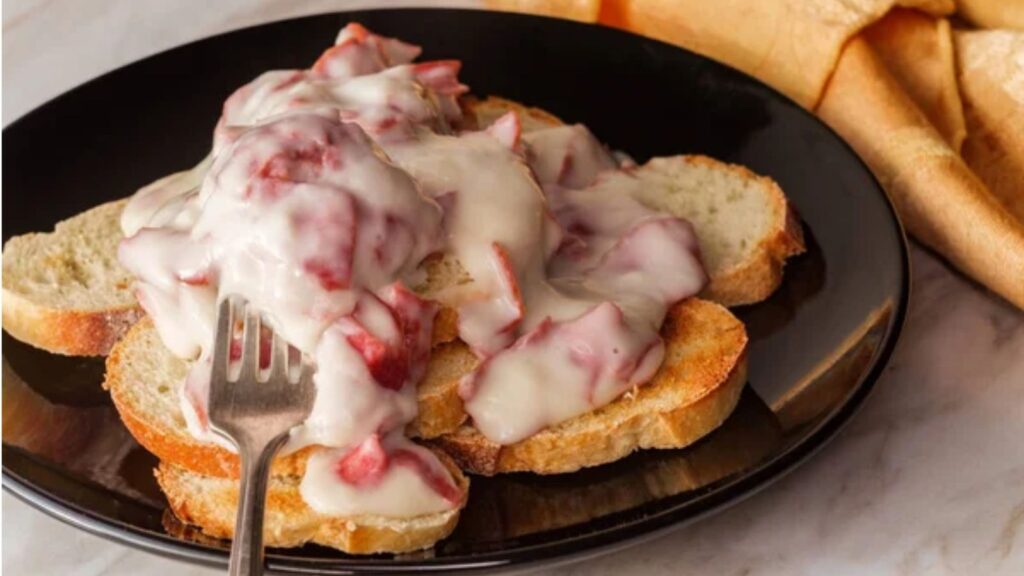
Commonly known as ‘Sh*t on a Shingle’ (SOS), chipped beef on toast consists of thinly sliced dried beef in a creamy white sauce poured over toast. It became popular for its simplicity and for using inexpensive dried beef, which had a long shelf life and could easily feed a family.
4. Depression Cake
Also called ‘wacky cake’ or ‘war cake’, this dessert is made without eggs, butter, or milk – ingredients that were often too expensive or unavailable during the Depression. Instead, it uses vinegar and baking soda for leavening. The result is a surprisingly moist chocolate cake that became a Depression-era favorite.
5. Potato Pancakes
Potato pancakes are a thrifty way to use up leftover mashed potatoes. Simply mix the potatoes with flour, onions, and a bit of salt, and fry until crispy on the outside to make a delicious savory pancake.
6. Mock Apple Pie
During the Great Depression, when fruit was scarce and expensive, people got creative by making ‘mock’ apple pie. Ritz crackers were combined with sugar, cinnamon, and lemon juice to mimic the taste and texture of apples.
16 American Foods That Are Banned in Other Countries
7. Cornmeal Mush
Made by boiling cornmeal in water or milk, cornmeal mush could be served hot or left to cool and solidify, then sliced and fried for a crispy meal. Cornmeal was a cheap, versatile ingredient, and this recipe became a staple breakfast for many families.
8. Beans and Rice
A classic combination that remains popular today, beans and rice were affordable, shelf-stable ingredients that could be combined to create a nutritious dish. Beans provided protein while rice added bulk, creating a filling meal for little money. The dish can be seasoned with whatever spices or sauces are on hand to add extra flavor.
9. Egg Drop Soup
Egg drop soup was made by whisking beaten eggs into a pot of boiling broth or water. The eggs would cook in the liquid, creating a light, protein-rich soup with limited ingredients.
10. Vinegar Pie
Vinegar pie might not sound like the tastiest dish, but it was a clever way to recreate the tartness of lemon pie without expensive ingredients. Made with sugar, vinegar, water, and flour, this pie was a popular dessert when fresh fruits were off the menu.
11. Hot Water Cornbread
Hot water cornbread was a no-frills side dish that paired perfectly with soups or stews. A mixture of cornmeal, boiling water, and salt was fried into small patties to make this inexpensive bread substitute.
12. Dandelion Salad
Foraging became a crucial skill during the Depression. Dandelion greens could be gathered from yards and fields for free, providing fresh greens when store-bought produce was a luxury. The nutritious green leaves were either served raw in salads or sautéed for a heartier dish.
13. Mayonnaise Sandwiches
When butter was in short supply or too expensive, mayonnaise became a popular sandwich spread. A mayonnaise sandwich was a quick, cheap meal made with, you guessed it, just bread and mayonnaise.
14. Milk Toast
Milk toast was a simple comfort food made by soaking toasted bread in warm milk. This would sometimes be sweetened with sugar or sprinkled with salt. The milk-soaked toast was soft enough for infants and people with dental problems to eat.
15. Peanut Butter Bread
This quick bread was made with flour, baking powder, and peanut butter, and didn’t require yeast. It was a protein-packed alternative to traditional bread and was often eaten with jam, butter, or just on its own as a filling snack.