Dropping off a bag of donations at Goodwill feels like a simple way to help others while clearing out your home. But according to reports, one common mistake could prevent your donations from ever reaching the people they’re intended to help.
Instead of ending up on Goodwill’s shelves, some donated items may be collected by unauthorized organizations or even discarded altogether. Here’s what every donor should know before leaving their next donation.
Fake Donation Bins Are Fooling Well-Meaning Donors
One of the biggest mistakes people make is dropping donations into bins they assume belong to Goodwill. According to a report by The Sun, Christopher Baker, CEO of Goodwill of Silicon Valley, warned that fake donation bins have become a growing problem in many communities.
These bins often display logos or branding that closely resemble legitimate charities, making it difficult for donors to tell the difference. Someone trying to do a good deed may unknowingly leave clothing and household items with organizations that have no connection to Goodwill.
Your Donations May Never Benefit Local Families
When donations end up in unauthorized collection bins, they may never support the charitable programs people intended to help. Baker told The Sun that some of these items may ultimately be sold elsewhere, shipped overseas, or even discarded instead of supporting local nonprofit services.
For many donors, that’s the exact opposite of what they hoped their generosity would accomplish.
Why It Matters
Organizations like Goodwill rely heavily on donated goods to fund job training, employment assistance, and other community programs. Every donated item that reaches an official donation center helps generate funding that stays within the local community.
When donations are diverted elsewhere, those nonprofit programs lose valuable resources that help people find work, build skills, and achieve greater financial independence.
Watch Where You Drop Off Donations
According to Baker, donation bins located in random parking lots, vacant lots, street corners, or near schools deserve a closer look before you leave anything behind.
Instead of assuming every collection box belongs to a charity, take a few moments to verify who operates it. Legitimate organizations typically provide clear contact information, websites, and details about how donations are used.
Donate Directly to Goodwill Locations
One of the easiest ways to avoid confusion is by bringing donations directly to an official Goodwill donation center or retail store. Staff members can accept your items in person, answer questions about acceptable donations, and ensure everything enters the proper donation system.
Many Goodwill organizations also provide searchable donation center locators on their local websites.
Look for Clear Organization Information
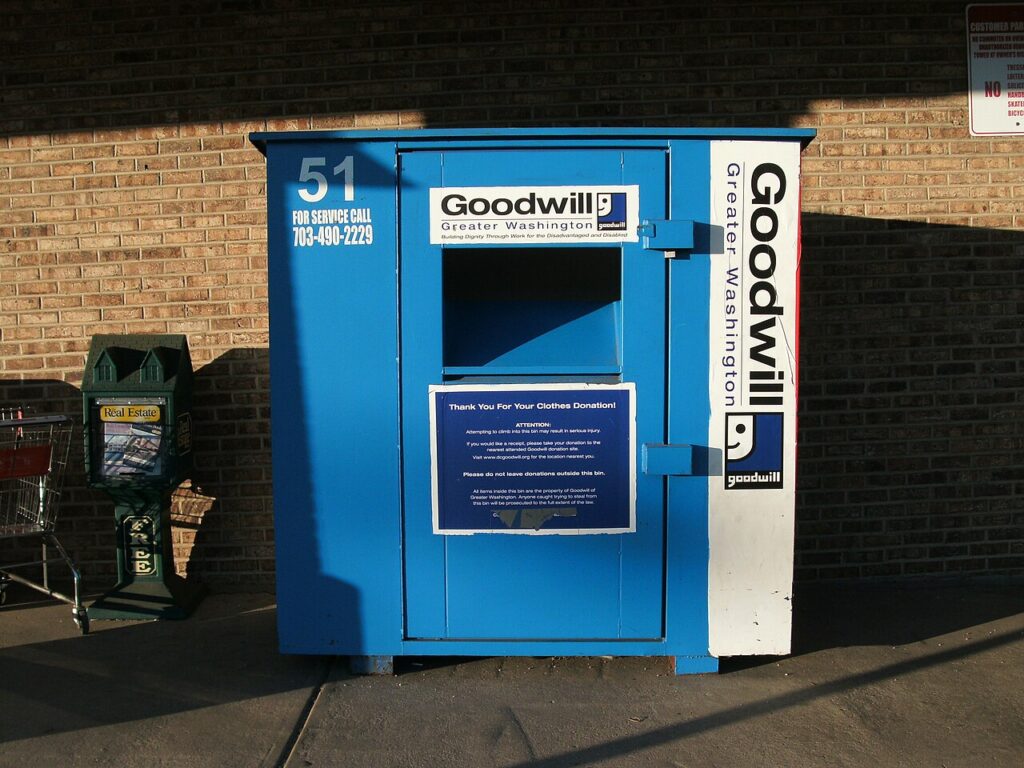
Official donation bins generally display the full name of the nonprofit, contact information, and other identifying details. If a collection bin looks poorly labeled, lacks contact information, or seems out of place, it’s worth taking a moment to verify its legitimacy before donating.
A quick check can help ensure your items actually benefit the organization you intended to support.