Some of the prettiest plants in the garden can also cause the biggest headaches. The issue isn’t always the same. Some plants spread through underground roots, others produce seedlings everywhere, and vigorous vines can quickly grow beyond the trellis or fence where they were originally planted.
A few also come with toxicity concerns that are easy to overlook when you’re focused on how beautiful they are. These 10 plants aren’t necessarily ones every gardener needs to avoid, but they’re worth understanding before giving them a permanent spot in the garden.
Wisteria
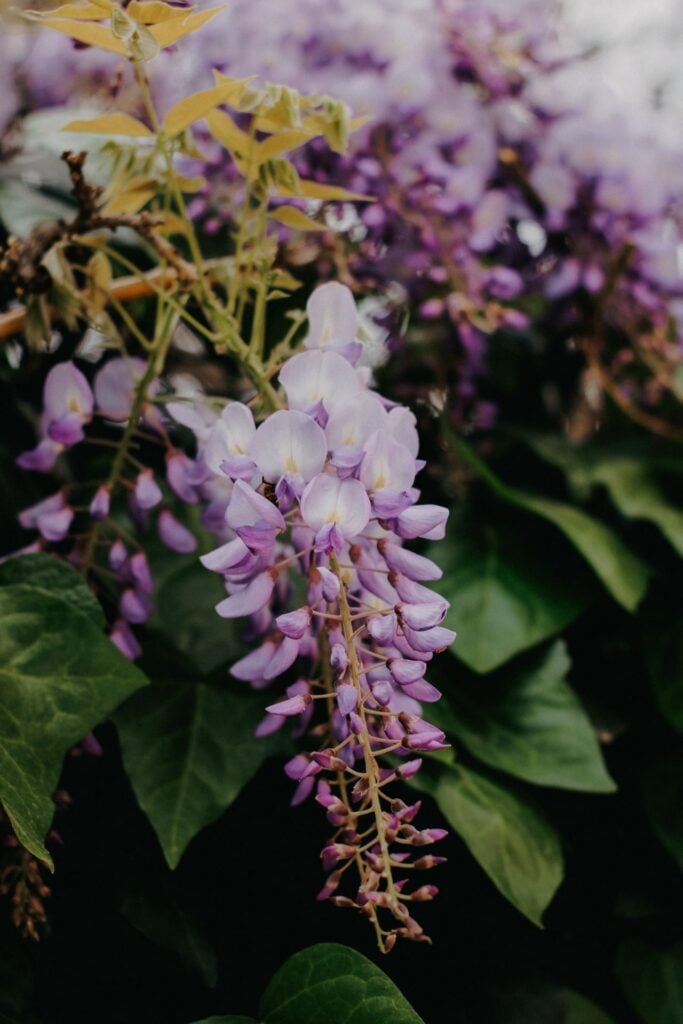
Few flowering vines make a statement quite like wisteria. Its long clusters of purple, pink or white flowers are beautiful, but the vines grow quickly and can become thick, woody and extremely heavy.
Without regular pruning, wisteria can overwhelm fences, trellises and other supports. Chinese and Japanese wisteria are also considered invasive in parts of the United States, so it’s important to know which type you’re planting.
Mint
Mint is one of those herbs that seems harmless when it’s first planted. It smells wonderful, has plenty of uses in the kitchen and is easy to grow, but that easy growth can quickly become the problem.
Mint spreads through underground runners that can travel into surrounding garden beds and compete with nearby plants. Growing it in a container is one of the easiest ways to enjoy mint without letting a small patch turn into a much bigger one.
English Ivy
English ivy can beautifully cover a wall, fence or shady patch of ground. Once established, however, it can spread beyond its intended area and climb trees and structures.
Thick patches can be difficult to remove and may require repeated cutting and pulling as new growth appears. English ivy is also considered invasive in many areas, making it especially important to check local recommendations before planting it.
Trumpet Vine
With its large orange, red or yellow flowers, trumpet vine can completely transform a fence, arbor or trellis. Hummingbirds love the flowers, but the plant’s aggressive growth can quickly become difficult to control.
Trumpet vine can spread through underground suckers and send up new shoots away from the original plant. It also grows rapidly above ground, so regular pruning is usually needed to keep the vine from taking over its surroundings.
Related: Perennial Flowers That Pop Up Every Blooming Season
Running Bamboo
Running bamboo is appealing when you want a tall, lush privacy screen without waiting years for it to fill in. The same rapid growth that makes it attractive can also make it extremely difficult to contain.
It spreads through underground rhizomes that can travel beyond the original planting area and produce new shoots elsewhere. Once those rhizomes are established, removing them can require considerable work, which is why it’s important to understand the difference between running and clumping bamboo before planting.
Morning Glory
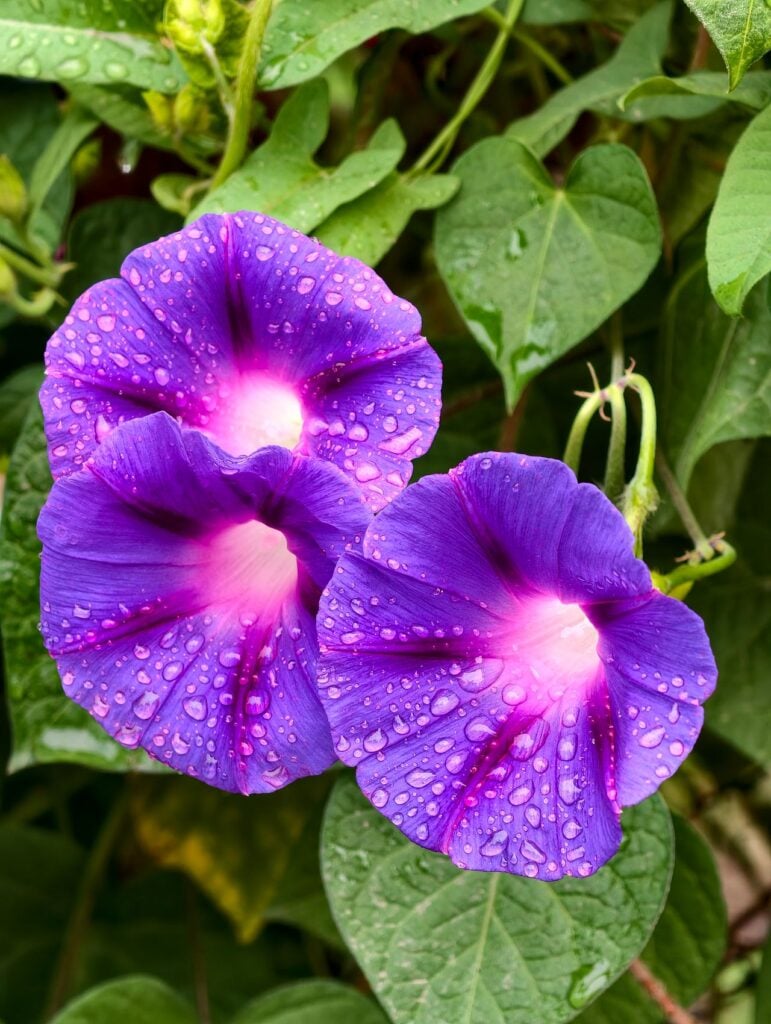
Morning glories can cover a fence or trellis with colorful trumpet-shaped flowers in a relatively short amount of time. Depending on the type, however, they can grow aggressively and produce enough seeds to keep new plants appearing around the garden.
“Morning glory” refers to several different plants, and not all behave the same way. Knowing exactly which species you’re planting can help you determine how readily it spreads or reseeds in your area.
Lily of the Valley
With tiny white bell-shaped flowers, lily of the valley looks like a delicate plant that would stay neatly tucked into a shady corner. Instead, it spreads through underground rhizomes and can eventually form dense patches that move into surrounding areas.
There is another concern beyond its spreading habit: all parts of lily of the valley are poisonous if eaten. Its red berries can be particularly concerning in gardens accessible to young children or pets.
Foxglove
Tall flower spikes covered in pink, purple, white or yellow blooms make foxglove a favorite for cottage-style gardens. The downside is that all parts of the plant contain compounds that are toxic if ingested.
Foxglove can also reseed when growing conditions are right, allowing new plants to appear beyond the original planting spot. Its combination of beautiful flowers, toxicity and ability to reseed makes placement especially important.
Bradford Pear
Bradford pear trees became popular for their masses of white spring flowers, rounded shape and colorful fall foliage. The problems often become more apparent as the tree matures, when its branch structure can make it vulnerable to splitting during storms and strong winds.
Bradford pear is a cultivar of Callery pear, which has also become invasive in many parts of the United States. Some states have restricted or discouraged Callery pear trees, so gardeners should check local guidance before planting one.
Periwinkle
Periwinkle, also known as vinca, produces blue-purple flowers over glossy green foliage and can quickly cover an empty patch of ground. Unfortunately, it doesn’t always stop growing where you want it to.
Its trailing stems can root as they spread, eventually creating dense mats that are difficult to contain. Common and bigleaf periwinkle have become invasive in parts of the United States, so check local recommendations before using either as a ground cover.
Other Topics You Might Like
- 13 Gardening Antiques Collectors Love and Often Pay Up For
- I Stopped Buying Fertilizers After Years of Gardening and Started Using This Instead
- Some of the Best Gardening Tips I Ever Got That Break All the Rules
- 9 Vintage Gardening Tools Hiding in Grandma’s Potting Shed— Some Could Be Worth a Small Fortune