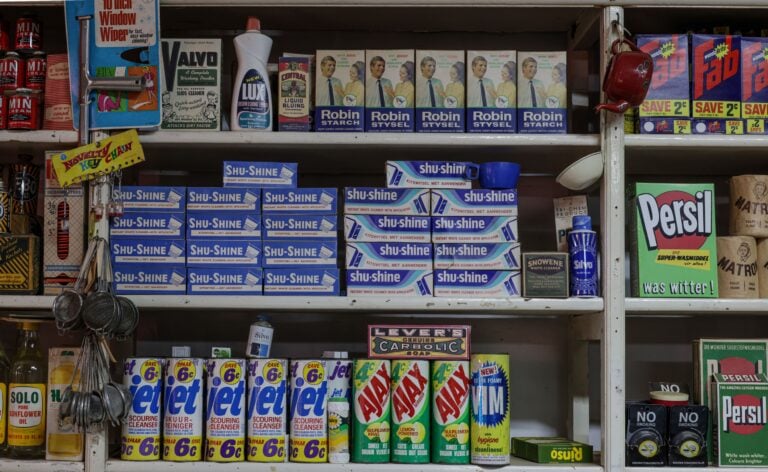
The kitchen section is one of my favorite places to browse at the thrift store. You can find everything from old cast iron and vintage dishes to baking pans and utensils for a fraction of what you’d pay for them new.
But some items can look perfectly clean on the outside while hiding damage that’s much harder to see, and wooden kitchenware is one category worth looking at especially carefully.
Wood is porous, which means it can absorb moisture, oils, odors and whatever else it has come into contact with over the years. Cracks and deep scratches can also make an older wooden item harder to thoroughly clean.
Here are five wooden kitchen finds you may want to leave behind.
Wooden cutting boards
A beautiful old cutting board can be tempting, especially when it’s made from thick, solid wood. The problem is that you usually have no idea how it was used or cared for before it reached the thrift store.
Deep knife marks, cracks, dark spots, warping and lingering odors are all reasons to put one back. Those little crevices can be difficult to clean, and moisture that has worked its way into the wood can cause even more problems over time.
Wooden spoons
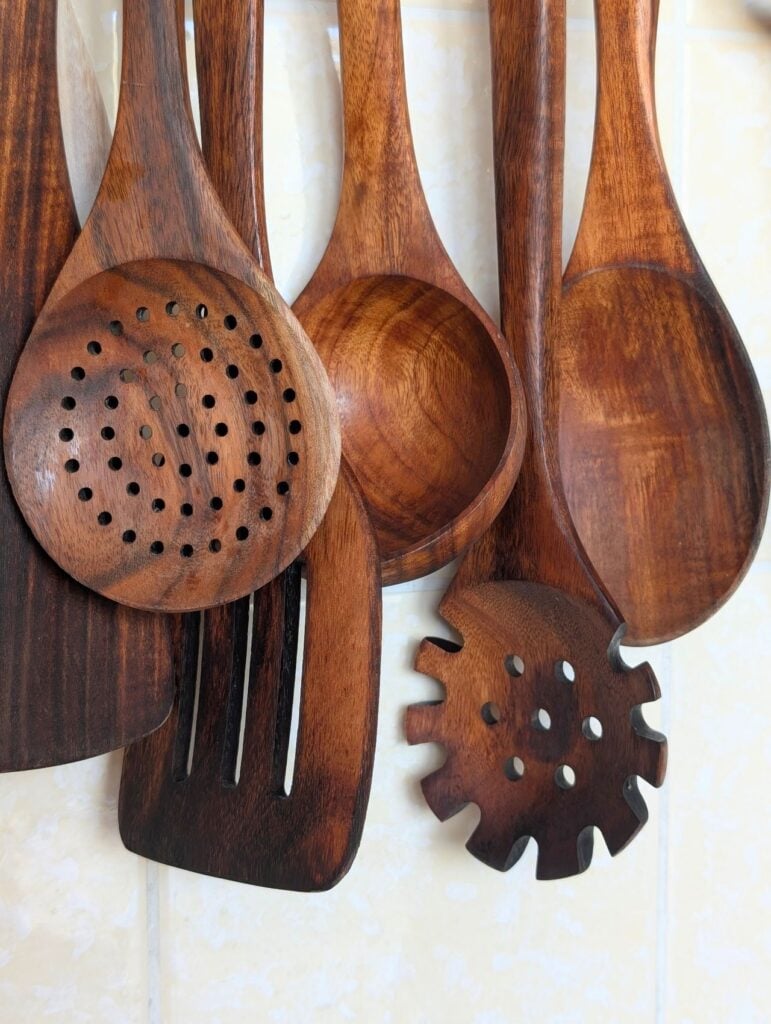
Wooden spoons are inexpensive to buy new, so this thrift find may not be worth taking a chance on.
An older spoon may have spent years stirring sauces, soups, and other foods while being washed and dried repeatedly. If the wood is cracked, splintering, badly stained or has an odor that won’t go away, it’s probably reached the end of its useful life.
Wooden salad bowls
Those big vintage wooden salad bowls can be gorgeous, and they’re exactly the kind of thing I’d normally stop to look at while thrifting. But condition matters much more than appearance.
Check closely for cracks, rough patches, dark discoloration and areas where the finish has worn away. A bowl that’s been repeatedly exposed to food, oils, and moisture may have absorbed more over the years than you’d expect.
Wooden spatulas
Like wooden spoons, spatulas get a lot of direct contact with food and cooking oils. They can also develop tiny cracks and rough spots after years of heat exposure and repeated washing.
A spatula that looks fine from a distance may feel completely different once you pick it up. Run your hand over it and look closely at the edges, handle, and any worn areas before deciding it’s worth bringing home.
Wooden rolling pins
Vintage rolling pins are one of those thrift store finds that’s hard to resist, especially the older solid-wood styles. If you’re buying one purely for display, condition may matter less, but using it for food preparation is a different story.
Look for cracks, splits, discoloration, odors or signs that moisture has damaged the wood. If you don’t know its history and the surface is in questionable condition, it may be better suited for kitchen decor than rolling out your next batch of cookies.