
Working from home has its advantages. There’s no commute, you can spend your lunch break at home, and you might have a little more flexibility throughout the day. But that doesn’t mean you’re sitting around with hours of free time to cook, clean, and take care of everyone else.
One woman questions why her husband expects her to prepare dinner every night just because she works from home, even though they both have demanding full-time jobs.
And when she shared the details of their arrangement on Reddit, many people felt the problem went well beyond who was responsible for making dinner.
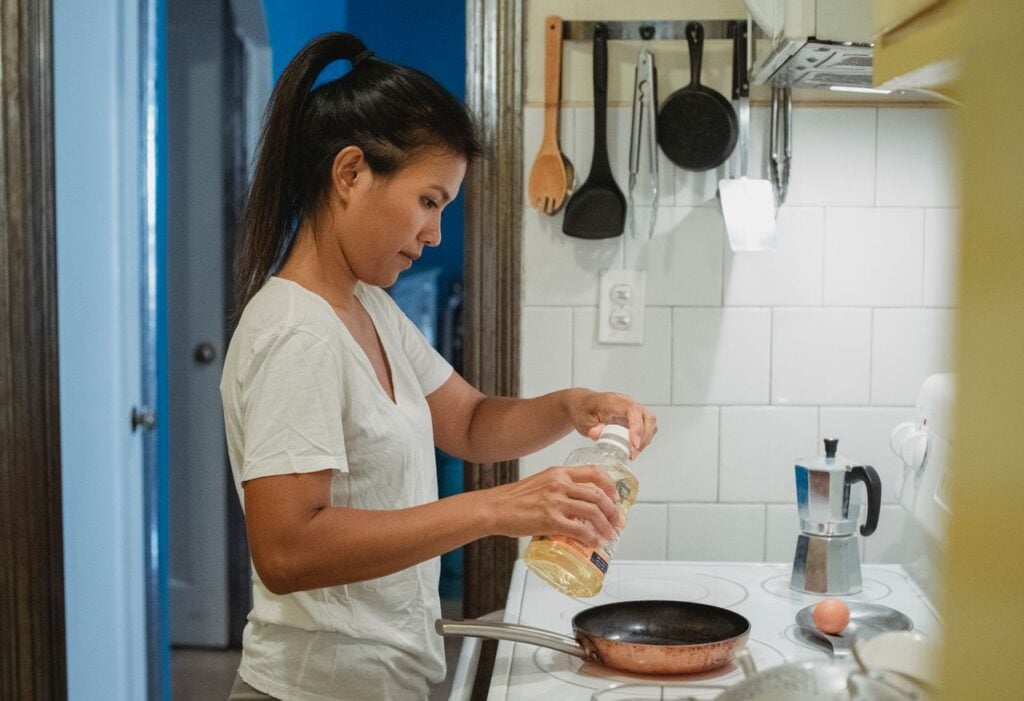
Both Spouses Work Full-Time, but Dinner Is Her Responsibility
In a Reddit post, a woman explained that she and her husband have a blended family with four children living at home, including a 10-month-old baby. She’s also six weeks pregnant.
Both work full-time in management positions. She works remotely in healthcare management from 8 a.m. to 5 p.m., while her husband works on-site in supply chain management and has a 20-minute commute each way.
Despite their similar work schedules, her husband believes she should prepare dinner every night.
He argues that his job is more physically demanding because he spends much of the day walking between warehouses. Since his wife works from home and has more flexibility, he believes cooking should fall primarily on her.
But she doesn’t see it that way.
Her workday is filled with meetings, deadlines, and management responsibilities. She also cares for their baby before work, during her lunch break, and after work. Childcare covers the remaining working hours.
On top of that, she handles most overnight feedings and wake-ups, manages household bills, tracks appointments, shops for groceries, and handles much of the family’s planning and organization.
She’s Also the Family’s Main Breadwinner
The woman says she earns nearly twice her husband’s salary and pays a larger share of their household expenses.
She doesn’t believe earning more should excuse her from household responsibilities. However, she questions why she’s expected to take on the traditional duties of a stay-at-home wife while also working full-time and contributing most of the household income.
Her husband considers himself traditional and believes his wife should be the primary caregiver, handle most of the cooking, and even prepare his plate at dinner.
According to the woman, they didn’t discuss these expectations before they got married.
She acknowledged that her husband does contribute around the house. He washes dishes and baby bottles most weeknights, puts their baby to bed on most evenings, and spends time caring for the baby.
Still, she feels the responsibilities are uneven overall, particularly when it comes to managing the household and making sure everyone has what they need.
Reddit Users Questioned His Traditional Expectations
Many readers questioned why the husband expected a traditional division of household duties when his wife was also the family’s primary earner.
A recurring point was that working from home is still working. Being physically present in the house doesn’t automatically mean someone has the time or energy to prepare meals, manage chores, and care for children throughout the day.
Others questioned why the husband’s physically demanding job should carry more weight than his wife’s management responsibilities, especially when she’s also pregnant and caring for an infant.
The expectation that she should prepare his dinner plate also drew criticism. For many readers, that detail reinforced the larger concern that her husband viewed certain household responsibilities as automatically belonging to his wife.
Some Think the Older Children Should Help With Dinner
While much of the discussion focused on the couple’s expectations, others pointed out that other household members could help.
The family includes children ages 20, 19, and 13, all old enough to help with meal prep.
Several readers suggested creating a weekly dinner schedule so one person doesn’t carry the responsibility. Each adult child could prepare dinner one night a week, while the younger child could help with age-appropriate tasks.
The woman later acknowledged that the older children needed to contribute more. She explained that both adult children work two jobs and one also attends school, but agreed they could still help around the house.
The Disagreement Goes Beyond Cooking Dinner
The woman made it clear that she doesn’t mind cooking. What bothers her is the assumption that it should automatically be her responsibility because she’s the wife.
She believes household duties should be divided according to each person’s overall workload, including employment, childcare, household management, and how much time each partner has to rest.
The situation also raises a familiar issue for working families. Cooking dinner is only one part of running a household. Someone also has to plan meals, buy groceries, remember appointments, manage schedules, and make sure everything gets done.
When one person handles most of those tasks, the workload can become overwhelming, even if the other partner helps with individual chores.
For this family, sharing dinner responsibilities might be a practical place to start. But the larger issue is whether both spouses can agree on a division of responsibilities that reflects the lives they’re actually living, rather than traditional roles they never agreed to in the first place.