Every plant owner knows that little bit of worry before a trip. You’re looking forward to getting away, but then you look around the house and start wondering how your plants are going to manage without their usual watering schedule.
I’ve come home to a few sad, droopy plants over the years, so I started doing the same few things before every vacation. None of them take much time, but they help the soil hold moisture longer and keep plants from drying out while I’m gone.
Most houseplants can handle a week away better than you might expect. The trick is giving them the right conditions before you walk out the door instead of trying to make up for missed care once you return.
Here’s what I do before heading out of town so I can enjoy my trip without spending the whole time wondering how my plants are doing.
Give Plants a Deep Watering Before Leaving
A thorough watering is one of the first things I do before leaving. Watering plants deeply gives moisture a chance to reach the roots instead of leaving just the top layer of soil wet.
For indoor plants, I water slowly until I see some water drain from the bottom of the pot. I let the excess drain away and empty the saucer afterward so the roots aren’t left sitting in water. Outdoor containers can also benefit from a good soaking, with morning or evening being a better time than the hottest part of the day.
Move Plants Out of Direct Sunlight
A sunny window can be great for a houseplant during normal days, but it can also dry out the soil faster while you’re away. Before a trip, I move plants that sit in intense sunlight a little farther from the window.
Bright, indirect light is usually a good middle ground for many plants. They still get the light they need, but they’re less likely to burn through their available moisture while nobody is home.
Related: 13 Houseplants That Thrive on Neglect
Group Plants Together
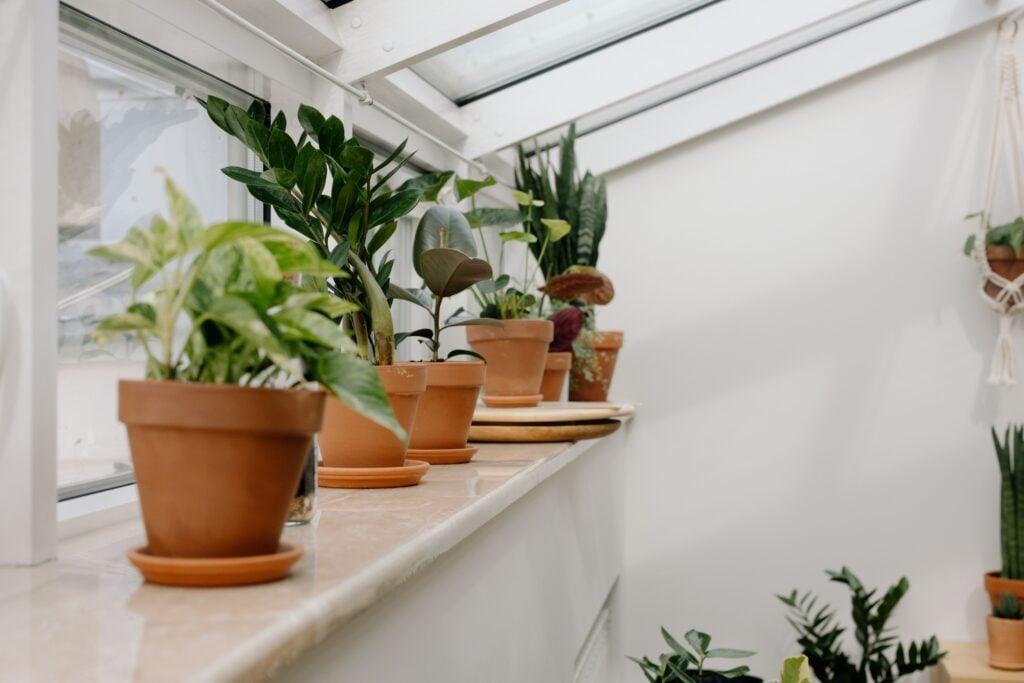
Putting several plants together is another easy trick I use before leaving. Plants release moisture through their leaves, so keeping them close can create a more humid little area than they would have on their own.
I usually put them in a spot with filtered or indirect light rather than lining them up in a sunny window. A shallow tray of water nearby can also add some humidity, though the pots themselves shouldn’t sit directly in the water unless they’re set up for it.
Use Self-Watering Pots
Self-watering pots can make things much easier if your plants tend to dry out quickly. The reservoir holds extra water, and the plant can draw moisture from it as needed instead of depending on someone to water it every few days.
Watering globes and watering spikes are other options. They slowly release water into the soil and can be handy for medium and larger plants, especially if you’re going to be gone for several days.
Related: 12 Low-Maintenance Houseplants for Rooms With Little Natural Light
Add Mulch to the Soil
Mulch isn’t limited to outdoor garden beds. A thin layer on top of houseplant soil can slow down evaporation and help the pot stay moist for a little longer.
Coconut coir, sphagnum moss, bark, and small decorative pebbles can all work as a top layer. I wouldn’t pile it on thick, though. A light covering is enough to help slow moisture loss without making the pot feel overly wet.
Try a Simple Watering Wick
A watering wick is one of those simple ideas that doesn’t require much equipment. You can use a piece of cotton string or rope, with one end sitting in a container of water and the other end placed into the plant’s soil.
As the soil dries, water can slowly travel along the wick and into the pot. This setup can work well for smaller plants, though it’s smart to test it before your trip so you know how quickly the water is moving.
Use the Bathtub Method
For a trip of about a week, I’ve seen the bathtub method work well for plants that need more moisture. After watering them, you can place the pots in a bathtub on top of a damp towel or another surface that allows them to take up some moisture.
Some people put a shallow amount of water in the tub and set the pots inside, but this only works for plants and containers that can handle that setup. The pots need drainage holes, and you don’t want the plants sitting in deep water for days because overly wet soil can cause its own problems.
Related: 10 Striking Houseplants That Pop With Bright Neon Color
Set Up a DIY Drip System
If you have a lot of plants to care for, a simple drip setup can take some of the work off your plate. One inexpensive option is a plastic bottle filled with water and fitted with a cap that has a few tiny holes.
Turn the bottle upside down and place it into the soil so water can slowly seep out. The flow rate can vary quite a bit, so test it a few days before leaving to make sure the bottle isn’t emptying too quickly or keeping the soil soaked.
For longer trips, a proper drip system connected to a timer can give you more control over the watering schedule.
Use Plastic Bags for Small Plants
A clear plastic bag can work like a small humidity tent for some smaller houseplants. After watering, place a few sticks or skewers around the pot to keep the plastic away from the leaves, then loosely cover the plant.
The bag helps trap moisture and slow down water loss from the soil and leaves. Keep the plant out of direct sunlight, though, because a sealed plastic bag sitting in a sunny window can become much too hot.
Avoid Fertilizing Right Before a Trip
I skip fertilizer right before leaving for vacation. Feeding a plant can encourage new growth, and new growth can mean the plant needs more water and care while you’re gone.
For a short trip, there’s no real need to give your plants an extra feeding right before you leave. I usually wait until I get home and return to my normal routine instead. Skipping fertilizer for a little while gives me one less thing to worry about.
Check for Pests Before You Leave
A small pest problem can turn into a much bigger one when nobody is around to spot it. Before leaving, I take a quick look under leaves, around stems, and across the surface of the soil.
Spider mites, aphids, and fungus gnats are a few common problems worth checking for. If I see signs of pests, I’d rather deal with them before leaving than come home to an infestation that’s had a week or two to spread.
Use Timers for Grow Lights
If your plants depend on grow lights, a timer can keep their schedule going while you’re away. It saves you from having to rely on someone else to turn the lights on and off every day.
A timer can give plants a regular light and dark cycle, with many setups running for roughly 12 to 16 hours before switching off. The right schedule depends on the plants and the type of grow light you’re using, so I stick with the routine they already know rather than making a big change right before a trip.
Move Outdoor Pots to Shadier Areas
Outdoor containers can dry out much faster than plants growing in the ground. Before leaving, I move potted plants into partial shade or another protected area where they’re less exposed to hot sun and drying wind.
A spot beneath a tree, awning, or covered patio can help keep the soil from drying out as quickly. I still make sure the plants get enough light for their needs, since moving a sun-loving plant into deep shade for an extended period can create a different problem.
Related: The Cutest Heart-Shaped Houseplants That Look Like Living Hearts
Trim Plants Lightly Before Leaving
Before a trip, I remove dead, yellow, or damaged leaves and clean up anything that clearly needs to go. This keeps the plant from spending energy on foliage that is already past its best.
I don’t give my plants a major haircut right before vacation, though. Heavy pruning can put extra stress on a plant, which is the last thing I want right before leaving it unattended.
Ask Someone to Check on Them
Sometimes having a friend or neighbor stop by is still the easiest option, especially if you’re going to be gone for more than a week. One or two visits can be enough for plants that need regular watering.
I like to group plants according to their watering needs and leave clear instructions. That way, the person helping doesn’t have to guess which plant needs a full watering and which one prefers to dry out between waterings.
Consider a Plant-Sitting Service
If you have a large collection of houseplants, a plant sitter can take some of the pressure off. Plant-sitting services are available in some areas and may offer watering, basic plant checks, and other routine care while you’re away.
This can be especially useful for people with rare plants or a collection that needs more attention than a quick visit from a friend. Before booking someone, I’d make sure they know what types of plants you have and what kind of care each one needs.
Leave Clear Instructions
If someone else is taking care of your plants, clear instructions can prevent a lot of confusion. Rather than writing “water as needed,” I prefer to say which plants need water, how much they usually get, and how often they should be checked.
Labels on the pots can help too, especially if you have several plants that look similar. A quick demonstration before leaving can also make things easier for whoever is helping, and it gives you some peace of mind while you’re away.
Other Topics You Might Like
- If a neighbor’s tree falls on your home in California, who is responsible?
- Need to Block a Neighbor’s View of Your Yard? Here’s How to Do It Without Starting a War
- If a fence falls between neighbors in California, who is responsible for repairs?
- If You Spot These Vintage Garden Peices at a Garage Sale, Grab Them Fast