I grew up watching my mom sew, and she always took good care of her supplies. Her sewing machine, sharp scissors, spools of thread, and little boxes of buttons and needles were everyday tools she used to make clothes and fix things around the house.
Back then, nobody thought much about collecting old sewing supplies because they were meant to be used. Today, some of those same items attract collectors who appreciate their age, craftsmanship, unusual designs, or connection to earlier generations.
You might have a few of these tucked away in a drawer, sewing basket, or box inherited from a relative. Here are 15 vintage sewing items worth checking before you decide what to keep, sell, or give away.
Vintage Singer Sewing Machines
Vintage Singer machines are known for their sturdy construction and distinctive designs, with some models dating back to the late 1800s and early 1900s.
The Singer Featherweight 221 is especially popular with collectors, particularly when it comes with its original case, attachments, manuals, and decals.
Vintage Buttons
A jar of old buttons may look like leftover sewing supplies, but certain examples attract collectors because of their materials and designs. Glass, mother-of-pearl, bone, and early plastic buttons can draw interest, especially when they have unusual shapes, detailed patterns, or identifiable makers.
Antique Velvet Pincushions
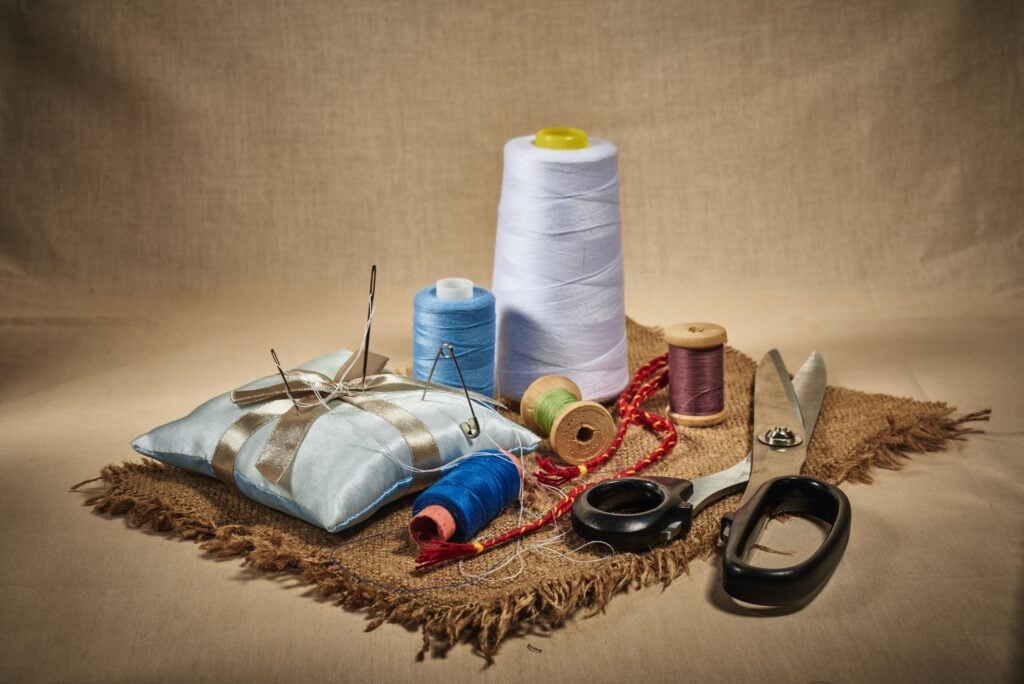
Older velvet pincushions came in many shapes and styles, from simple cushions to decorative pieces with wooden, ceramic, or metal bases. Examples with fine stitching, unusual forms, or original embellishments can interest collectors, particularly if the fabric and structure remain in good condition.
Related: 13 Vintage Gardening Items That Collectors and Gardeners Seek Out
Sterling Silver Thimbles
Antique sterling silver thimbles often feature engraved patterns, decorative details, and maker’s marks that help identify their origins. Collectors look for clear silver markings, appealing designs, and pieces with minimal damage or wear.
Related: Vintage Furniture That Buyers Snatch Up on the Resale Market
Wooden Thread Spools
Wooden thread spools have a distinctive look, with aged timber, faded labels, and thread colors that reflect sewing fashions from earlier decades. Some collectors seek particular brands, rare labels, or matching sets, while others use old spools as decorations in sewing rooms and craft spaces.
Victorian Pincushions
Victorian-era pincushions often featured velvet, silk, lace, and other decorative fabrics, making them as attractive as they were useful. Pieces shaped like flowers, animals, or miniature household objects can draw extra attention, especially when their original details are intact.
Wiss Sewing Scissors
Some collectors value older Wiss scissors for their sturdy steel construction and reputation as dependable sewing tools. Look for clear maker’s markings, smooth movement, intact blades, and minimal rust; larger tailor’s shears often attract vintage-tool collectors.
Sewing Needle Cases
Vintage needle cases came in a range of materials, including wood, metal, and early plastics, with some featuring decorative patterns or engraved details. Their small size made them easy to store in sewing baskets or carry in a pocket, and unusual designs or well-preserved examples can interest collectors.
Retractable Tape Measures
Older retractable tape measures sometimes came in decorative cases shaped like animals, flowers, and other familiar objects. Examples with working mechanisms, readable markings, and intact cases may attract more interest than damaged pieces with missing parts.
Antique Spool Holders
Vintage spool holders kept thread organized and within easy reach while sewing, with designs meant to sit on a worktable or attach to a machine. Complete holders with their original components can be worth checking, especially if they have distinctive metalwork, woodwork, or maker’s marks.
Sewing Birds (Bird Clamps)
Sewing birds were small clamps, often made of brass or cast iron, that could attach to a table to hold fabric while sewing. Their bird-shaped designs make them unusual finds, and examples with intact clamps, clear details, and little damage tend to attract more interest.
Darning Eggs
Darning eggs stretched socks and other knitted garments while mending holes with thread. Many were made from wood, and older examples with smooth finishes, distinctive shapes, or original handles can interest collectors of traditional household tools.
Related: These Vintage Lamps Could Be Worth Thousands
Hem Gauges
Hem gauges helped home sewers measure fabric and keep hems even, with older versions made from metal, cardboard, or early plastics. Though they may look ordinary, gauges with readable markings, original parts, or uncommon designs may be worth researching before you discard them.
Vintage Sewing Patterns From the 1940s–1960s
Sewing patterns from the 1940s through the 1960s offer a glimpse of the dresses, skirts, suits, and other clothing people made at home during those decades. Complete patterns, with their original envelopes, instruction sheets, and all pattern pieces, are often more desirable to collectors and sewing enthusiasts.
Related: 10 Valuable Vintage Stamps Worth Checking Your Collection For
Mid-Century Sewing Boxes
Sewing boxes from the 1950s and 1960s often featured wooden construction, compact shapes, and compartments for keeping supplies organized. Teak- or walnut-made examples can interest collectors and vintage home decorators, especially when the hinges, drawers, and original fittings remain intact.