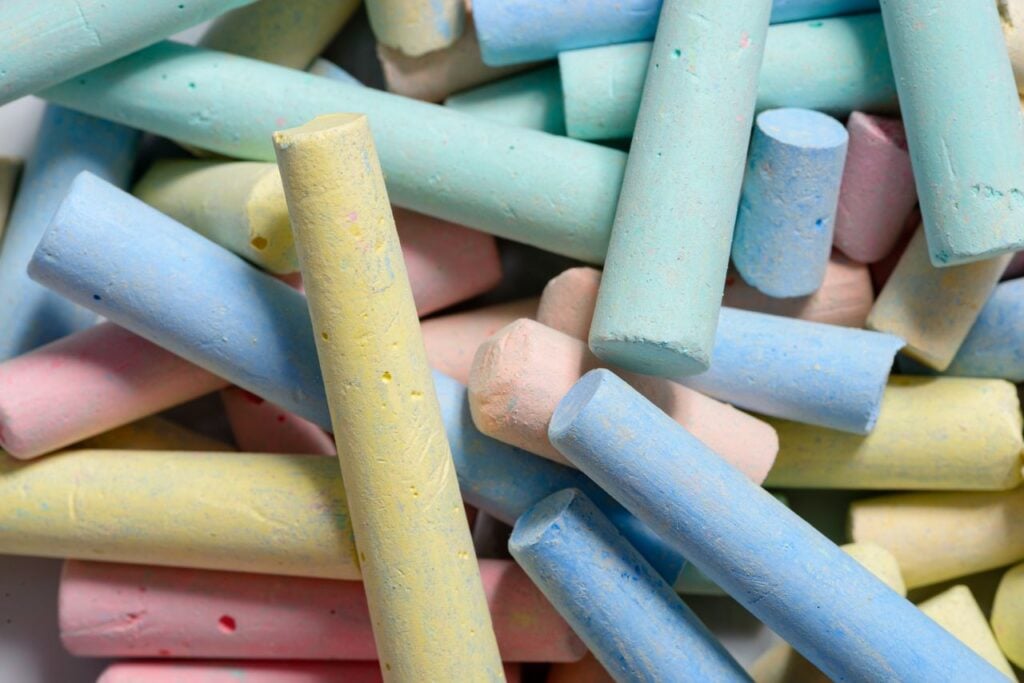
You probably have a few pieces of chalk sitting in a drawer, garage, or leftover bucket of sidewalk toys. Most of us don’t think much about chalk unless the kids want to draw on the driveway.
But chalk can actually come in handy for several little jobs around the house. From tackling greasy stains to simplifying DIY projects, there are some pretty clever reasons to keep a few pieces around.
Remove Grease Stains From Clothing
If you get a little cooking oil or grease on your shirt, rub plain white chalk over the spot before washing. Chalk can absorb some of the oil, making the stain easier to treat with laundry detergent afterward.
Keep Silver Jewelry From Tarnishing
A few pieces of chalk in your jewelry box may help absorb some excess moisture that contributes to tarnishing. Wrap them in a small piece of breathable fabric so you don’t end up with chalk dust all over your jewelry.
Make Hanging Picture Frames Easier
Getting a picture frame in just the right spot can take several tries, especially when you’re working with multiple frames. Rub a little chalk on the back hanger, press the frame against the wall, and use the transferred mark to help identify where the nail should go.
Mark Furniture Placement Before Moving Anything
Before dragging your couch or dresser across the room, use chalk to mark where you want everything to go on a suitable floor surface. It’s an easy way to test a new layout without moving heavy furniture back and forth, and you can wipe the marks away afterward.
Related: Banana Peels Might Be the Most Underrated Natural Boost for Your Garden
Cover Small Marks on Walls
If you have a tiny scuff or scratch on a white wall, a little white chalk may help make it less noticeable until you can touch up the paint. It’s only a temporary fix, but it can be useful when you don’t have matching paint on hand.
Keep Tools a Little Drier
Metal tools can rust when stored in damp places, especially garages and sheds. Placing a few pieces of chalk in a toolbox can help absorb moisture, but proper dry storage is still the best way to protect your tools.
Make Your Own Sidewalk Paint
Those little broken pieces of chalk don’t have to go in the trash. Crush them into a fine powder, mix with a little water, and let the kids use the mixture as homemade sidewalk paint.
Label Storage Containers
Chalk can label certain glass jars, metal containers, or chalkboard-painted surfaces. You can write what’s inside and wipe it away when you change the contents, although the marks may rub off easily on some materials.
Related: 10 Things That Don’t Belong in Plastic Storage Containers
Help Absorb Oil From Certain Leather Items
If you notice a fresh oil spot on a leather bag or accessory, a little plain chalk powder may help absorb some of the grease. Test it on an inconspicuous area first, since chalk can leave residue or affect the finish on delicate leather.
Make a Temporary Guide for DIY Projects
Whether you’re hanging shelves, arranging wall decorations, or measuring where something should go, chalk can help you mark your work area. It’s especially handy on unfinished wood and other surfaces where pencil marks may be difficult to see.
Related: I Stopped Using Dryer Sheets in the Dryer—Here’s Where I Use Them Instead
Help Prevent a Metal File From Clogging
If you use a metal file for DIY projects, rubbing a little chalk into its teeth before filing certain soft metals can help reduce the buildup of metal shavings. This old workshop trick can make the file easier to clean afterward.
Make Temporary Garden Markings
Chalk can come in handy when you’re planning where to place pots, garden beds, or outdoor decorations. Use it to mark measurements on concrete or other suitable outdoor surfaces, then wash the marks away when you’re finished.
Mark a Safe Distance Around Outdoor Projects
When you’re painting, working with tools, or setting up an outdoor project, chalk can help you mark off an area you want people to avoid. Just remember that a chalk line is only a visual reminder, not a substitute for supervision or a physical safety barrier around hazards such as fire pits.