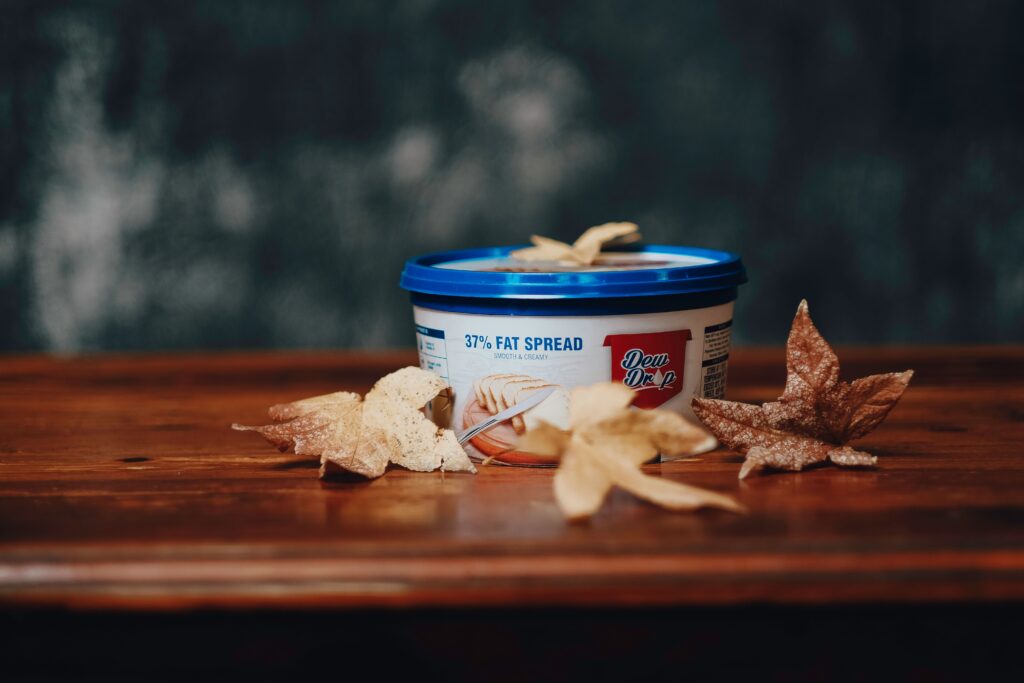
Growing up, I don’t remember my mom ever throwing away an empty butter tub. She would wash it, let it dry, and stack it with the others under the kitchen sink until she found another use for it.
I used to think she was just keeping every container she could get her hands on. Now I see how handy that habit was: she saved money, cut down on waste, and had plenty of containers for everyday household jobs without buying more storage supplies.
If you have empty butter tubs piling up in your kitchen, here are 14 ways to put them to use.
Start Garden Seedlings
Empty butter tubs can make inexpensive containers for starting herbs, flowers, and vegetable seedlings. Poke drainage holes in the bottom, add potting soil, and give young plants a place to grow before transferring them to larger pots.
Related: 15 High-Performing Vegetables for Raised Bed Gardening
Store Leftovers
Butter tubs are handy for storing leftover soup, pasta, casseroles, and side dishes. Their lids make them easy to stack in the refrigerator, saving space while keeping food covered.
Freeze Homemade Meals
If you cook in batches, butter tubs can hold individual portions for the freezer. Label each one with the meal and date, and leave room for food to expand as it freezes.
Organize Small Hardware
Use separate tubs for nails, screws, bolts, washers, and other small pieces that tend to get mixed together. My mom did this with her household supplies, and it made finding the right piece much easier.
Corral Craft Supplies
Buttons, beads, ribbon, googly eyes, and sewing supplies can quickly take over a craft drawer. Put them in separate butter tubs and label the lids so you can find what you need without emptying everything onto the table.
Related: 12 Grandma Hobbies That Help You Relax and Clear Your Mind
Use as Paint Containers
For small touch-up jobs, pour a little paint into a clean butter tub instead of using a full-size paint tray. If the container is compatible with the paint, you can snap the lid on between uses to help keep the leftover paint from drying out.
Pack Snacks for the Road
Butter tubs work well for carrying crackers, pretzels, popcorn, grapes, and sliced fruit on a drive. They’re reusable and sturdy, though it’s best to use food-safe containers and keep perishable snacks chilled.
Store Pet Treats
Keep dog biscuits, cat treats, or other dry pet snacks together in labeled butter tubs. The containers make it easy to grab a serving without having to search through an open bag in the pantry.
Keep Hair Accessories Organized
Bobby pins, hair ties, barrettes, and clips are easy to lose in bathroom drawers. A butter tub gives them one place to stay, whether you keep it on a shelf, in a bedroom drawer, or in a travel bag.
Make a Simple Planter
A friend once painted an empty butter tub and turned it into a colorful planter for succulents. Add drainage holes before planting, and place a small saucer underneath to catch excess water.
Store Homemade Scrubs or Body Butter
Clean butter tubs can hold small batches of homemade sugar scrubs or body butter. Use containers that are suitable for cosmetic storage, keep water out of the mixture, and label each one with its ingredients and preparation date.
Related: How To Clean Years of Built-Up Grease Off Baking Sheets Without Scrubbing for Hours
Organize Kids’ Treasures
Kids often collect rocks, shells, stickers, tiny toys, and all sorts of little things they consider treasures. Give each child a butter tub for their collection so those small items don’t end up scattered across the house.
Create a Car Organization Kit
Keep a butter tub in a secure spot in your car to hold small items such as spare change, hand sanitizer, lip balm, hair ties, and charging cables. You can also use one to gather a few basic supplies, though anything temperature-sensitive should be taken indoors when you leave the vehicle.
Related: 15 Valuable Dimes You Could Find in Your Spare Change Toda
Store Garden Seeds
Keep seed packets together in a clean, dry butter tub between planting seasons. Label the container by year or plant type, and store it somewhere cool and dry so the seeds are less likely to be affected by moisture or heat.
Other posts you might like:
- Banana Peels Might Be the Most Underrated Natural Boost for Your Garden
- I Stopped Using Dryer Sheets in the Dryer—Here’s Where I Use Them Instead
- Stop Throwing Away Orange Peels — Some Call Them Trash, Others Call Them Kitchen Gold
- Simple DIY Fixes for the Most Annoying Problems Around the House
- 15 Incredible Ways to Repurpose Used Coffee Grounds