Cleaning out a grandmother’s home can be emotional. Along with the photographs, furniture, and keepsakes, there are often stacks of dishes; some carefully wrapped in newspaper, others packed into boxes, and plenty that have been sitting untouched in a china cabinet for decades.
When nobody in the family wants another set of dishes, donating everything can seem like the easiest solution. But before those boxes head to the thrift store, it’s worth assessing. Turn them over, check the markings, see whether sets are complete, and look for any potentially valuable types hiding in the stack.
Vintage Pyrex Bowls
Grandma’s everyday mixing bowls may be more interesting than the formal china sitting beside them. Vintage Pyrex has a strong collector following, and patterns such as Gooseberry, Butterprint, Pink Stems, Lucky in Love, and other scarce promotional or short-lived designs can command considerably more than ordinary pieces.
Hand-Painted Porcelain Plates
Before assuming an old floral plate is simply another decorative dish, flip it over and examine the back for a maker’s mark or artist’s signature. Hand-painted porcelain from makers including Pickard, Limoges, Rosenthal, and Lenox can be collectible, with condition, artist, subject matter, decoration, provenance, and rarity all influencing what someone may pay.
Full China Sets
A large china set can be easy to dismiss when nobody in the family wants to host formal dinners anymore, but completeness can make certain desirable patterns much more interesting to buyers. Look for recognizable makers such as Lenox, Noritake, Haviland, and Mikasa, especially discontinued patterns with matching serving pieces, platters, gravy boats, bowls, and tureens.
Ornate Serving Platters
That enormous platter Grandma pulled out once a year for Thanksgiving may deserve a closer look before it reaches the donation box. Large platters from makers such as Wedgwood, Spode, Johnson Brothers, and Minton can be collectible, particularly in sought-after transferware patterns, unusual colors, or designs people need to complete an existing dinner service.
Teacups and Saucers
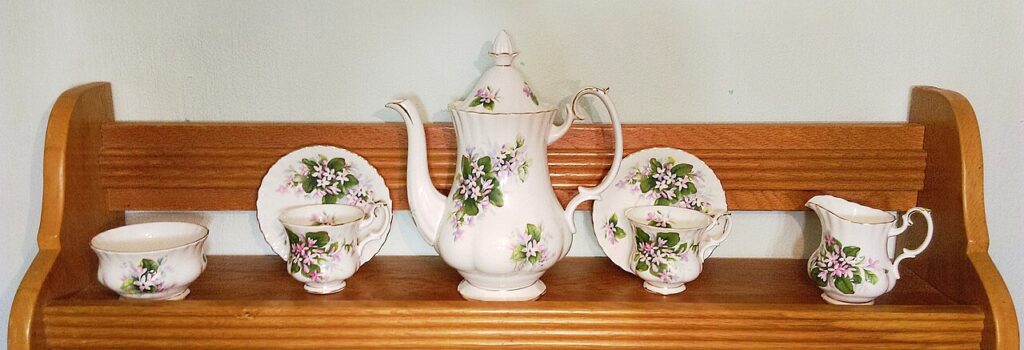
It’s tempting to lump an entire cabinet of floral teacups together, but individual sets can vary considerably in desirability. Look for matching cups and saucers from makers such as Royal Albert, Shelley, Paragon, and Royal Doulton, paying particular attention to unusual shapes, elaborate gilding, hand-painted decoration, and harder-to-find patterns.
Depression Glass Plates and Bowls
Those translucent pink, green, blue, or amber dishes tucked into the back of the cabinet could date to the Depression era, when inexpensive pressed glassware became widely available. Some patterns and colors from makers such as Hazel-Atlas, Jeannette, Anchor Hocking, and Federal Glass are much harder to find than others, so identifying the exact pattern and color is important before estimating value.
Decorative Soup Tureens
A big covered soup tureen may seem impractical today, which is exactly why it can be tempting to donate one without researching it. Complete examples with their original lid, underplate, and ladle can be particularly appealing, especially when they’re from recognizable makers such as Herend, Wedgwood, Johnson Brothers, or Ridgway.
Cake Stands and Pedestal Plates
Pedestal cake stands weren’t necessarily everyday dishes, so some spent decades being brought out only for birthdays, holidays, and special occasions. Older examples in fine china, Depression glass, crystal, or decorative glass from makers such as Fostoria, Royal Albert, Lenox, and Mosser are worth identifying before you give them away.
Covered Butter Dishes
A butter dish may look insignificant beside an entire dinner service, but smaller specialty pieces can sometimes be exactly what collectors are missing. Matching lids and bases are especially important, so intact examples from desirable china, glass, or silver patterns deserve a closer inspection before being separated from the rest of a set.
Vintage Pitchers
Don’t overlook the pitcher sitting on top of the stack simply because you’ve seen similar ones countless times. Vintage Fiesta pitchers, Fenton glass, Hall China, Weller pottery, Depression glass, hand-painted porcelain, crystal, ironstone, and sterling examples can all be of collector interest, depending on the specific maker, age, color, pattern, and condition.