
Dropping a bag off at Goodwill doesn’t necessarily mean you’ll see those same clothes, dishes, or household items hanging on the racks a few days later. Goodwill receives an enormous variety of donated goods, and not everything is suitable for a traditional thrift store sales floor or finds a buyer there.
But that doesn’t mean everything that doesn’t sell simply gets tossed in the trash. Goodwill says donated goods can move through several different channels, including traditional stores, ecommerce, outlet stores, reuse markets, recycling, downcycling, and other diversion programs. The exact process can vary because individual Goodwill organizations are locally operated and set many of their own policies.
Some Donations Head Straight to the Sales Floor
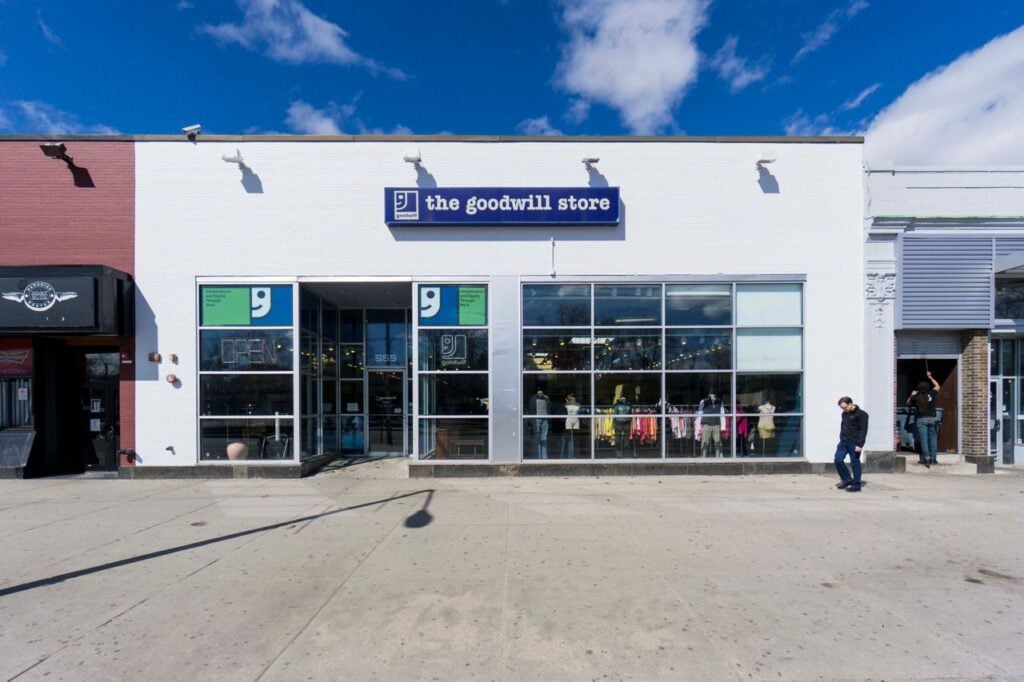
The most straightforward path is the one most of us expect. Clothing, housewares, electronics, books, décor, and other usable items can be sorted, priced, and offered for sale at a local Goodwill store.
Those sales are an important part of Goodwill’s model because local organizations use revenue from donated goods to help fund employment, training, and other community programs.
Some Items Can Be Sold Online Instead
The thrift store isn’t Goodwill’s only retail channel. Depending on the item and the local organization, donated goods may also be offered through e-commerce rather than being placed in a neighborhood store.
This gives certain donations another chance to find a buyer beyond shoppers who happen to visit one location. Goodwill says its combination of traditional stores, outlet stores, and e-commerce helps keep donated goods in circulation longer.
Related: Online Thrifting Is Booming—and Goodwill’s Online Marketplace Is Proof
Unsold Items May Get Another Chance at a Goodwill Outlet
If you’ve ever been to a Goodwill Outlet, commonly called “the bins,” you’ve probably noticed that it works very differently from a typical Goodwill store. Merchandise is often presented in large bins, and many locations sell certain goods by weight rather than pricing every piece individually.
These outlets can provide another sales opportunity for donations that didn’t sell through Goodwill’s other retail channels.
Clothing Doesn’t Necessarily Become Trash Because It Doesn’t Sell
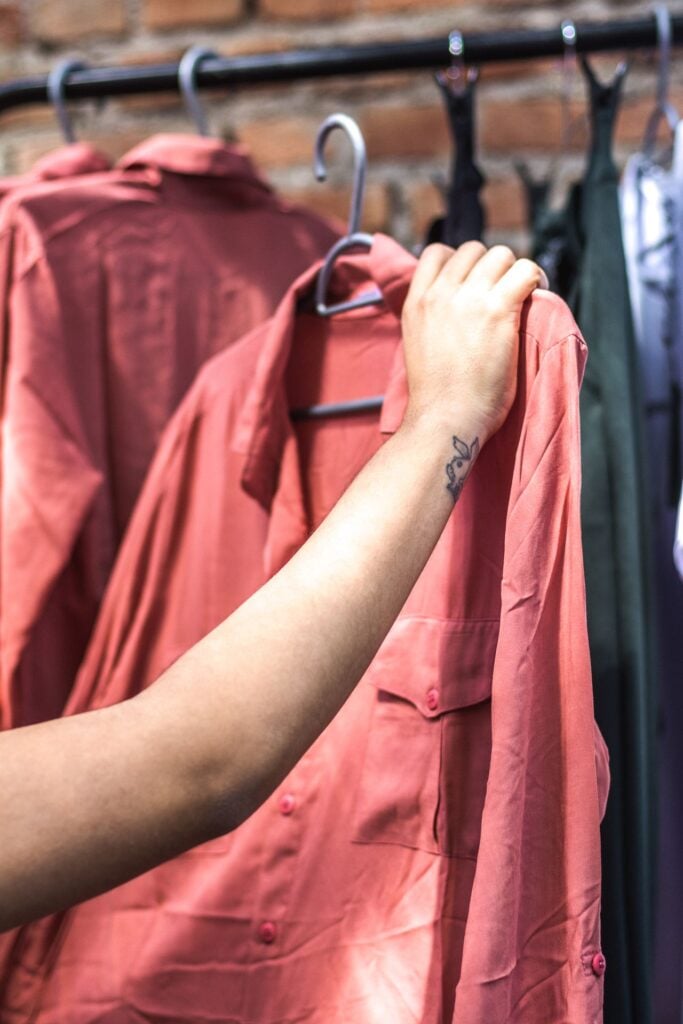
This is where the life of a donated T-shirt or pair of jeans can get more complicated. If clothing doesn’t sell through Goodwill’s retail channels, the material itself may still have uses.
Goodwill says unsold goods can be sorted for recycling, reuse markets, downcycling, or export. The organization is also working on ways to turn more unwearable textiles into useful materials, rather than treating an unsellable piece of clothing as having no remaining value.
Some Textiles Can Become Something Completely Different
A shirt doesn’t necessarily need to remain a shirt to have another useful life. Goodwill identifies downcycling into products such as rags, insulation, and carpet fibers as one of the options being developed or used for textiles that can’t continue circulating as clothing.
Goodwill is also working with partners on fiber-to-fiber recycling, which aims to recover textile material so it can become raw material for new textiles. Availability varies, so donors shouldn’t assume every local Goodwill offers the same textile recycling options.
Electronics Can Have Their Own Recycling Path
Electronics present a different challenge because an outdated or unusable computer isn’t the same as an unwanted sweater. Some Goodwill organizations participate in programs designed specifically to recover or recycle electronics.
One major example is Dell Reconnect, a partnership that has helped Goodwill organizations keep hundreds of millions of pounds of electronics out of the waste stream over the past two decades. However, Goodwill advises checking locally before donating computers and other electronics because acceptance policies differ.
Some Donations Shouldn’t Have Been Dropped Off in the First Place
There is an important difference between something that doesn’t sell and something that isn’t appropriate to donate. Broken, heavily soiled, recalled, banned, or unsafe products may not be suitable for resale.
Goodwill specifically asks donors not to bring broken or soiled goods or products that have been recalled or don’t meet current safety standards. It also recommends checking with your local organization before donating because accepted items vary by location, particularly for mattresses, furniture, computers, and other difficult-to-handle goods.
Related: Goodwill Doesn’t Want You to Donate These Items
Leaving Donations Outside Can Create an Entirely Different Problem
A perfectly usable bag of clothing can become unusable after sitting outside overnight in the rain. That’s one reason Goodwill specifically asks people not to leave donations unattended outside a collection center or retail store.
If you arrive after the donation center has closed, it’s better to bring the items back when staff is available. Keeping donations clean, dry, and protected gives them a much better chance of being reused or resold.