If your grocery total feels higher every time you reach the checkout, that feeling usually comes from more than just rising prices. A lot of extra spending slips in through small decisions that barely register in the moment. A quick add-on in the aisle, a snack tossed into the cart near the register, or a “special price” that doesn’t really save much once you look closer.
Most grocery overspending doesn’t come from one big purchase. It builds quietly through everyday habits. Those small choices, repeated over time, are often what push your weekly bill higher than expected.
1. Buying Pre-Cut Produce
Pre-sliced fruit, chopped onions, and cubed butternut squash are convenient, but you’re paying a premium for a few minutes of prep work. Whole produce almost always costs less. If you can spare the time at home, you’ll save noticeably over the course of a year.
2. Letting Free Samples Convince You
A tiny sample can lead to a full-size purchase you never planned on. Stores know that once you taste something, you’re more likely to toss it into your cart. If it wasn’t on your list, it probably doesn’t belong there.
3. Buying Out-of-Season Produce
Strawberries in winter. Asparagus in late fall. When produce is out of season, it’s usually more expensive and often less flavorful. Shopping with the seasons almost always means better prices and better taste.
4. Not Checking What You Already Have
How many times have you bought another jar of pasta sauce, only to find two in the pantry? Skipping a quick check of the fridge and pantry before shopping leads to duplicates and wasted food.
5. Walking In Without a List
No list usually means no plan. And no plan means extra spending. A simple list keeps you focused and prevents random items from sneaking into your cart.
6. Buying Bottled Water
Unless your tap water is unsafe, bottled water is one of the biggest markups in grocery stores. A reusable bottle and a simple filter cost far less over time.
7. Grabbing Refrigerated Drinks by the Checkout
That cold soda or tea near the register is priced for convenience. Often, one single bottle costs nearly as much as a multi-pack in the beverage aisle.
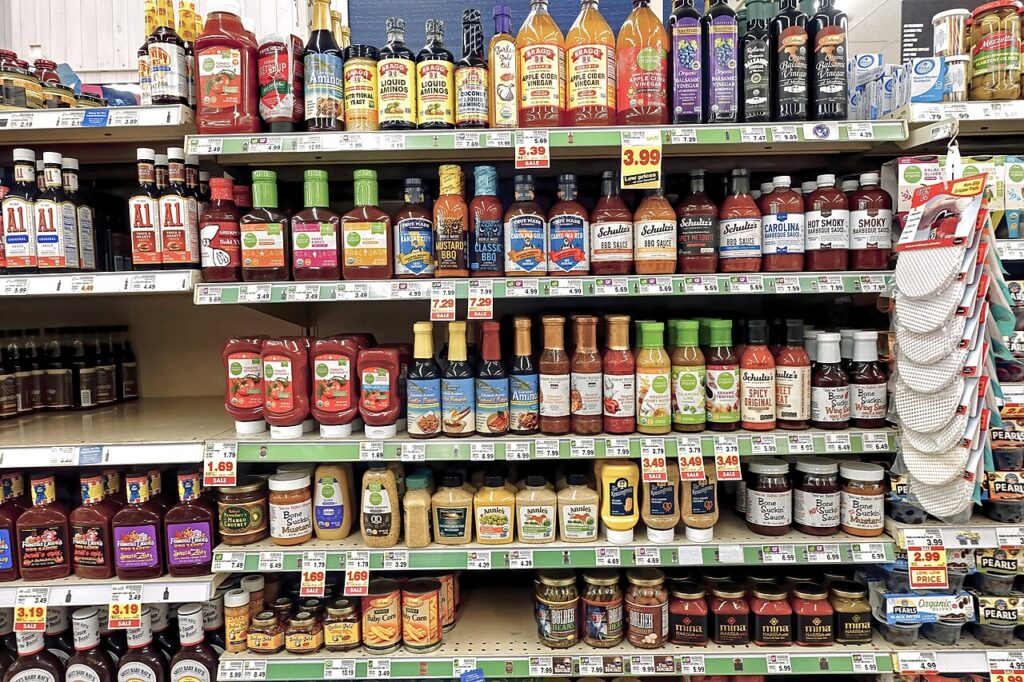
8. Only Looking at Eye-Level Shelves
Stores place the most expensive items right where you naturally look. Cheaper alternatives are often on the top or bottom shelves. A glance up or down can save you money.
9. Paying More for Brand Names
Store brands frequently come from the same manufacturers as national brands, just without the marketing budget. In many cases, the ingredient lists are nearly identical.
10. Buying Small Packs of Diapers
If you regularly purchase diapers, small packages are costing you more per unit. Buying in bulk from warehouse stores or during sales significantly reduces the overall cost.
11. Purchasing Oversized Spice Containers
That giant container of paprika might look like a deal, but spices lose potency over time. If you don’t use them quickly, you’re paying for flavor that fades before you ever finish it.
12. Not Buying Certain Staples in Bulk
On the flip side, some items are cheaper in larger quantities: coffee, rice, pasta, and canned goods. If you use them consistently, stocking up during sales can lower your average grocery bill.
13. Falling for Checkout Lane Impulse Buys
Candy bars, chips, gum, magazines, and checkout lanes are designed to encourage last-minute purchases. These small extras add up more than you think.
14. Picking Up Fresh Flowers Every Week
Grocery store bouquets are convenient, but they often don’t last long. If flowers are a frequent purchase, you may be paying for something that fades quickly.
15. Buying Magazines at Full Price
A single issue at the register often costs nearly as much as a monthly subscription. If you love a publication, subscribing almost always makes more financial sense.
16. Shopping While Hungry
When you’re hungry, everything looks necessary. Shopping on a full stomach helps you stick to what you actually need.
17. Ignoring Coupons and Store Discounts
Many stores offer digital coupons and loyalty discounts, but only if you take a minute to look for them. Skipping these savings leaves money on the table.