I’ve been thrifting long enough to know how easy it is to convince yourself that something is a good deal simply because it’s cheap. A $6 blazer, a $20 solid wood table, or a designer handbag for a fraction of retail can feel almost impossible to leave behind, especially when you know what those things would cost new.
For the longest time, I thought that was what being a good thrifter looked like. I was paying less, so obviously I was saving money. But eventually, I started noticing how many of my “great finds” were sitting around waiting to be repaired, cleaned, refinished, or altered. Some of them eventually ended up right back in the donation pile.
That’s when it clicked: something isn’t a bargain if I can’t actually use it. Changing the way I think about that one thing has probably saved me more money thrifting than finding another 50%-off sale ever could.
Cheap Doesn’t Automatically Mean It’s a Good Deal
When something costs $5 instead of $50, it’s easy to focus on the $45 you supposedly saved. But if you wouldn’t have purchased the item otherwise, or it sits unused once you bring it home, you didn’t save $45; you simply spent $5 on something you didn’t need.
That might not seem like much until it happens repeatedly. A $4 basket, $6 shirt, $8 lamp, and $5 piece of décor can quickly add up to $20 or $30 spent on items that eventually become clutter.
Related: 12 Things You Should Never Do While Thrifting
I Stopped Buying Things Just Because They’re a Good Brand
Finding an expensive or recognizable brand at a thrift store can give you tunnel vision. You see the label, remember what it costs new, and suddenly overlook the stain, the broken zipper, the awkward fit, or the fact that you don’t particularly like it.
Now I try to ignore the label for a moment and ask whether I would still want the item if I didn’t recognize the brand. If the answer is no, knowing that it originally sold for $200 doesn’t make the thrift store price a better deal.
I Look at the Flaw Before the Price
A tiny flaw doesn’t automatically make something a bad purchase, but I’ve learned there’s a big difference between a quick fix and a project. A loose button or superficial scratch is one thing; moth holes, a broken zipper, deep water damage, missing hardware, or a major stain can turn a bargain into something that requires considerably more money and effort.
I used to look at the potential first and convince myself I could deal with whatever was wrong later. Now I look closely at the problem before getting excited about the price.
I Ask Whether I Will Actually Fix It
This is probably the biggest change I’ve made. Instead of asking whether something can be fixed, I ask whether I am realistically going to fix it.
That $10 handbag might technically be repairable, but if replacing the zipper requires a professional repair that costs several times what I paid for the bag, I need to factor that into the purchase. The same applies to furniture that needs refinishing, clothing that requires alterations, lamps that need rewiring, and all those other “easy projects” that have a way of sitting untouched for months.
Related: How to Clean Wood Furniture
I Stopped Shopping for My Fantasy Self
Thrift stores are especially good at convincing me that I’m about to become a completely different person. Maybe I’ll start wearing elaborate vintage dresses, finally learn to sew, refinish that enormous dresser, or suddenly need twelve beautiful wine glasses for all the dinner parties I’m apparently going to start hosting.
I’ve gotten much better about shopping for my actual life instead. If I can’t picture myself using something soon, I don’t let the low price convince me that someday is a good enough reason to bring it home.
I Consider the Real Cost of a Thrift Store Find
The number on the price tag isn’t necessarily what an item will ultimately cost you. A $15 chair that needs $40 worth of fabric and supplies isn’t really a $15 chair, just as a $10 dress that requires $30 in alterations isn’t really a $10 dress.
That doesn’t mean I never buy projects; I still love a good thrifted makeover. The difference is that now I consider the additional money, supplies, and time before buying rather than figuring all of that out after I’ve already brought something home.
I Check Clothing Much More Carefully
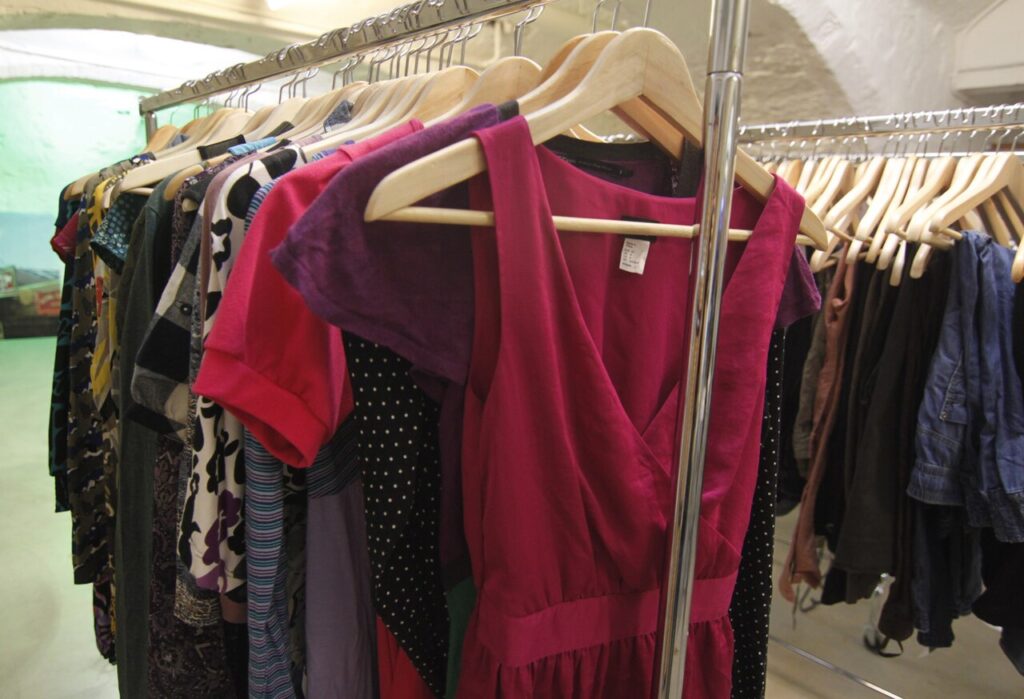
Clothing has taught me this lesson more than once because tiny problems can be surprisingly difficult to spot under thrift store lighting. Before buying, I check the underarms, collar, cuffs, seams, hems, buttons, zippers, and fabric for stains, stretching, tiny holes, or excessive wear.
Wool and cashmere get an especially careful inspection because a few small moth holes can easily hide in the fabric. A beautiful sweater for a few dollars isn’t much of a bargain if I discover damage once I get it home and realize I’ll never wear it.
I Ask Where It’s Going Before I Buy It
This rule has helped tremendously with home décor. Instead of simply thinking, “That’s cute,” I ask myself exactly where I’m going to put it when I get home.
If I already know the perfect spot, that’s a good sign. If I’m mentally walking through every room trying to invent a reason to own it, that’s usually my clue that I’m buying it because it’s inexpensive and interesting; not because I actually need or love it.
I Don’t Buy Something Just Because It’s Only a Few Dollars
Small purchases are probably the easiest to justify when spending at a thrift store because no individual item feels expensive. It’s easy to say, “It’s only $3,” several times during the same shopping trip without realizing you’ve accumulated $30 worth of things you never intended to buy.
I’ve become much more selective about these inexpensive finds. Something being cheap isn’t enough anymore; I still need a reason to bring it home.
I’ve Learned to Leave Great Finds Behind
One of the hardest parts of thrifting is knowing that there probably isn’t another one in the back. That creates urgency, and it’s easy to convince yourself you’ll regret leaving something behind if another shopper grabs it.
I’ve learned that it’s okay to miss out. There will always be another thrift store, estate sale, garage sale, and interesting vintage find, and I’d rather occasionally think about the thing I left behind than repeatedly declutter things I never should have purchased.
The Question I Ask Before Checking Out
My thrift store rule is pretty simple now: Would I want this if it weren’t so cheap? Can I use it as is? And if something is wrong with it, am I genuinely willing and able to fix it? I also ask myself whether I know where it will go once I get home.
If I have to work too hard to convince myself, I usually already know the answer. I still love thrifting and think buying secondhand can be an incredible way to save money, but I’ve stopped measuring a successful thrift trip by how much I bring home.
Sometimes saving money means finding something amazing for $5 instead of $50. Other times, the best thrift store deal is the thing you put back on the shelf.