Most decorating advice follows the same playbook: stick to neutral colors, avoid mixing styles, keep ceilings white, and choose safe options that appeal to everyone. Martha Stewart has never been afraid to do the opposite.
Over the years, she has filled her homes with choices that many designers once warned against. She mixes antique pieces with modern furniture, layers patterns and textures, paints ceilings in unexpected colors, and embraces bold features that many homeowners would hesitate to try.
What makes it work is that every choice feels purposeful. Her rooms have personality, character, and a sense of confidence that comes from decorating for the people who live there rather than following every trend or rule.
These are the decorating moves Martha Stewart regularly makes that prove great design is often about trusting your instincts instead of playing it safe.
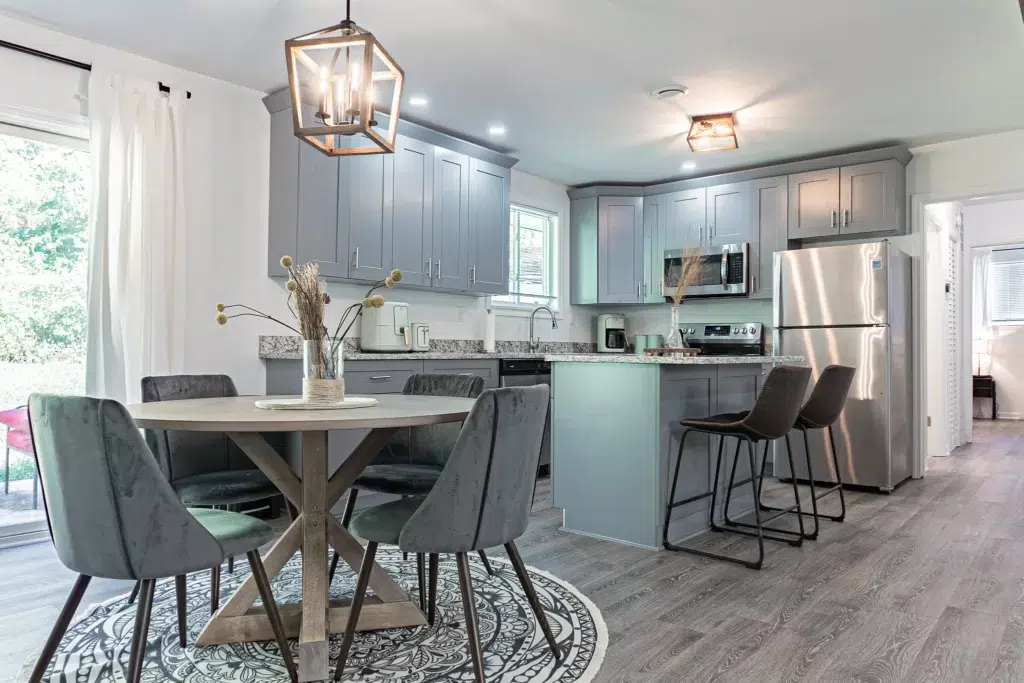
Unconventional Dining Spaces
Formal dining rooms aren’t sacred in Martha’s world. She’s known to swap traditional dining tables for oversized farm tables, bring outdoor furniture inside, or opt for lower, more intimate seating arrangements.
The old rule says dining must feel structured and formal. Martha’s approach prioritizes comfort. The result feels inviting instead of rigid. Meals become experiences, not just events.
Related: Outdoor Living Space Ideas on a Budget
Floor-to-Ceiling Dramatic Drapery
Many designers warn against heavy drapes in smaller rooms. Martha installs them anyway, often stretching fabric from ceiling to floor, even in modest spaces.
Instead of making a room feel cramped, mounting drapery higher than the window frame visually lifts the ceiling and adds softness. The room feels taller and more finished.
Moody Kitchens Instead of Bright White
For years, white kitchens were the safe choice. Martha has embraced navy cabinetry, deep greens, matte blacks, and rich wood tones.
While lighter kitchens photograph well, darker kitchens feel grounded and layered. With the right lighting and hardware, they come across as warm and sophisticated rather than gloomy.
Mixing Antiques with Modern Pieces
Some decorators insist on committing to a single era. Martha rarely does. Vintage mirrors sit beside sleek lighting. Antique chairs pair with modern tables.
That contrast keeps rooms from feeling staged. Mixing old and new adds history, texture, and personality.
13 Rare Antique Finds That May Be Sitting in Your Kitchen Cabinets
Clashing Colors That Somehow Work
Pink with red. Blue with green. Florals beside stripes.
While traditional advice warns against competing colors, Martha balances bold pairings with neutral anchors. Large furniture pieces stay understated, allowing color to energize the space without overwhelming it.
Statement Ceilings
White ceilings are considered safe. Martha often treats the ceiling as a fifth wall, painting it in rich hues or adding wallpaper.
A bold ceiling draws the eye upward and creates unexpected interest, especially in otherwise simple rooms.
Layered Rugs
Layering rugs isn’t just for styled photo shoots. Martha frequently places a patterned rug over a neutral base to add texture and warmth.
It softens hard surfaces and adds dimension to the room without requiring a full flooring overhaul.
Oversized Art
Instead of filling walls with clusters of small frames, she often commits to one large statement piece. Oversized art anchors a room instantly and prevents visual clutter while still delivering impact.
How to Create a Stunning Gallery Wall on Stairs
Mixing High-End with Affordable Finds
Not every piece in her home is rare or expensive. She pairs heirloom pieces with accessible finds. This mix prevents rooms from feeling overly precious and makes good design more realistic and approachable.
Embracing Imperfection
Perfect spaces can feel sterile. Martha embraces slightly worn wood, patinaed metals, and pieces that show age. A little wear adds depth and makes a home feel lived in rather than staged.
Open Shelving
Open shelving intimidates many homeowners because it demands neatness. Martha uses it confidently in kitchens and other spaces. When styled thoughtfully, shelves become part of the decor rather than hidden storage.