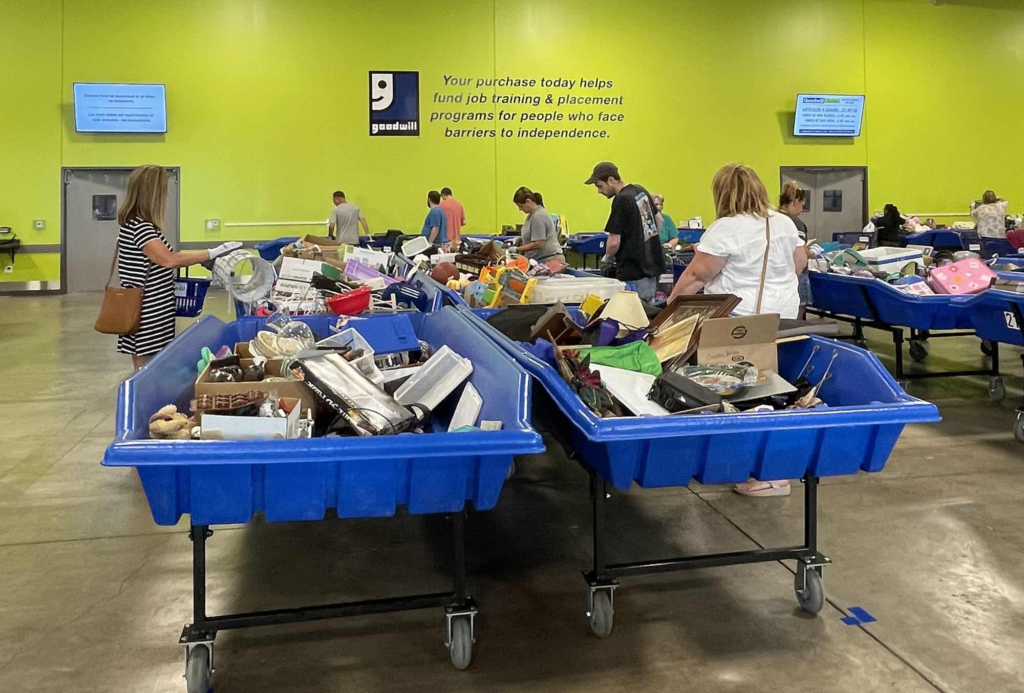
The Goodwill Outlet, often called “the bins,” can be one of the best places to find incredible deals. Shoppers regularly score everything from vintage clothing and brand-name shoes to valuable collectibles for just a few dollars.
But not every item sitting in a blue bin is worth bringing home. Some items come with safety concerns, hidden damage, expensive repairs, or sanitation issues that can quickly turn a bargain into a regret. Before you start filling your cart, here are the items experienced bin shoppers usually leave behind.
Old Baby Gear
Car seats, cribs, high chairs, baby swings, and strollers may seem like fantastic money-saving finds, but they often come with hidden risks. Safety standards change regularly, and unless you know the complete history of an item, it’s impossible to know whether it has been recalled, damaged, or involved in an accident.
Electronics That Can’t Be Tested
Finding a laptop, gaming console, or kitchen appliance in the bins can feel exciting, but proceed carefully. If you can’t verify that it powers on or works properly, you may be paying for something that ends up being nothing more than e-waste.
Shoes With Excessive Wear
Quality shoes can be some of the best finds at the bins, but heavily worn pairs are often more trouble than they’re worth. Cracked soles, damaged insoles, separated glue, or signs of mold can make even expensive brands a poor purchase.
Mattresses, Pillows, and Bedding
Soft furnishings can harbor allergens, odors, mold, bed bugs, and other unwanted surprises. While washing can solve some issues, many experienced thrifters avoid used pillows and mattresses altogether because the risks often outweigh the savings.
Water-Damaged Books
Books are a popular outlet purchase, especially for resellers and avid readers. However, books with water stains, warped pages, mildew, or musty odors can spread mold spores to other books in your home and are often difficult to restore.
Related: 6 Books Thrift Stores Are Always Hoping You’ll Donate
Chipped or Cracked Dishes
A vintage plate or beautiful serving dish may look charming at first glance, but damage matters. Cracks and chips can weaken the piece, harbor bacteria, and increase the chances of it breaking during everyday use.
Opened Beauty and Personal Care Products
Used cosmetics, lotions, skincare products, and toiletries are generally best left behind. You have no way of knowing how old the product is, whether it has been contaminated, or how it was stored before ending up in the bins.
Outdated Media Formats
VHS tapes, blank DVDs, damaged CDs, and obsolete media often take up valuable bin space. Unless you’re a collector or have a specific use for them, many of these items have little practical value in today’s digital world.
Anything With Strong Odors
The bins can sometimes contain items that smell heavily of cigarette smoke, mildew, pet odors, or chemicals. Even when an item looks clean, strong odors can be incredibly difficult to remove and may linger long after you bring it home.
Rusty Tools
Tools are often excellent thrift store finds, but severe rust can indicate neglect and structural weakness. Missing components, damaged cords, or excessive corrosion can also turn a seemingly good deal into an unusable purchase.
Damaged Luggage
Suitcases and travel bags frequently appear at Goodwill Outlets, but not all are worth taking home. Broken wheels, faulty zippers, cracked handles, or damaged frames can make travel frustrating and lead to costly replacements later.
Incomplete Board Games and Puzzles
A board game may look like a bargain until you discover key pieces are missing. Unless you’re willing to count every component before purchasing, incomplete games and puzzles can be a disappointing find.
Furniture With Signs of Pests
Small furniture pieces occasionally make their way into the bins, but always inspect them carefully. Evidence of bed bugs, termites, wood-boring insects, or other pests is an immediate reason to walk away.
Heavily Stained Upholstered Items
Stains on fabric furniture, cushions, or decorative pieces can be difficult to remove and sometimes indicate deeper issues. What appears to be a simple cleaning project could hide mold, odors, or permanent damage.
Anything You Can’t Identify
One of the biggest mistakes new bin shoppers make is buying mysterious items simply because they’re inexpensive. If you don’t know what something is, how it works, or whether it has value, it’s usually better to leave it behind and save your money for items you know you’ll use.