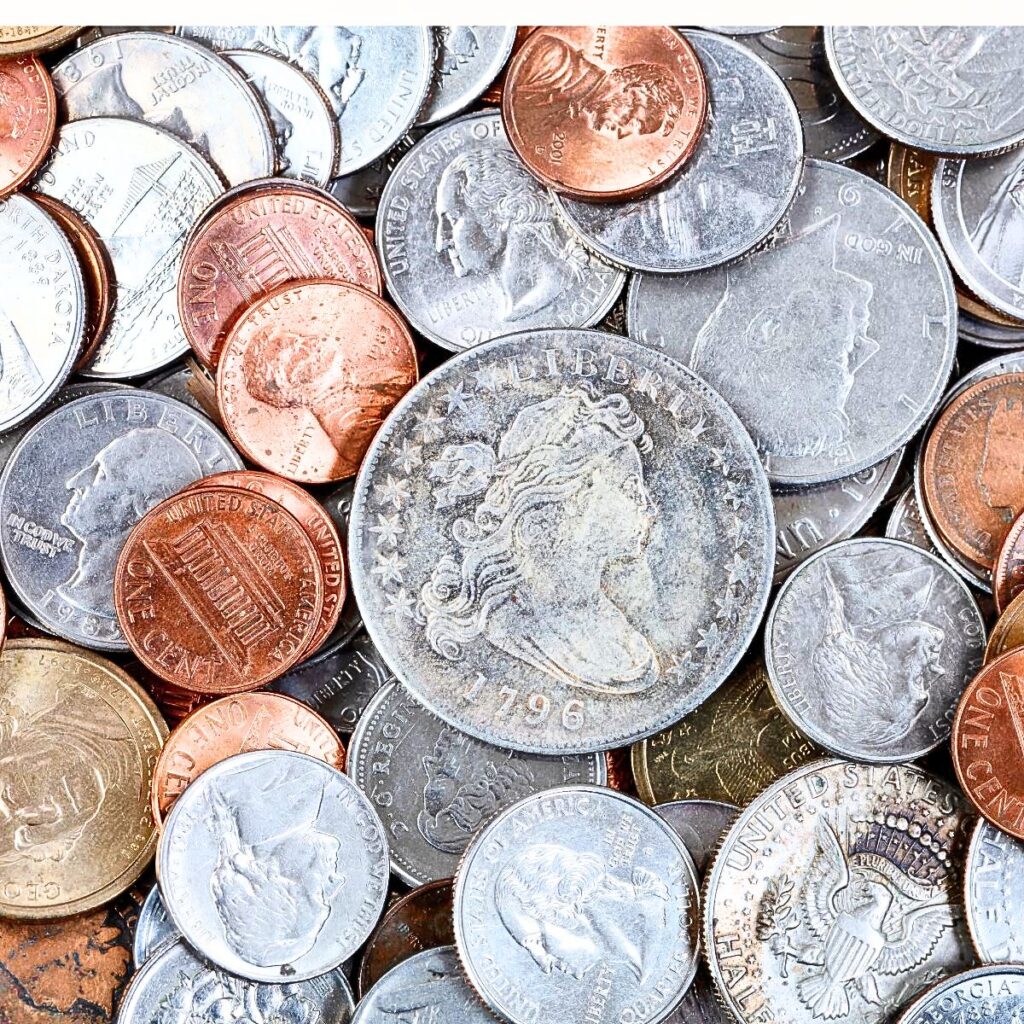
That jar of old coins sitting in a drawer might deserve a closer look before you cash it in. Plenty of older coins are worth little more than face value, but certain dates, mint marks, low-mintage issues, and unusual minting errors can turn an otherwise ordinary-looking penny, nickel, dime, or quarter into something collectors actively search for.
Here are 13 older U.S. coins worth recognizing before you spend, sell, or toss another handful of change into the coin jar.
1916-D Mercury Dime
Only 264,000 examples of the 1916-D Mercury dime were reportedly minted, making it one of the key dates collectors look for in the series. The tiny “D” mint mark is crucial, so authentication becomes especially important because adding or altering a mint mark could make an otherwise common-looking dime appear much more valuable.
1916 Standing Liberty Quarter
The first Standing Liberty quarters featured sculptor Hermon MacNeil’s original Liberty design before changes were introduced to the series soon afterward. That short-lived early design, combined with the coin’s age and scarcity, makes the 1916 issue one collectors may be willing to pay thousands for in better condition.
1921 Walking Liberty Half Dollar
The Walking Liberty half dollar is recognizable by Liberty striding toward the sunrise on the front and an eagle perched on the reverse. Certain 1921 issues are much harder to find than ordinary Walking Liberty halves, and coins retaining strong original detail can command substantial collector premiums.
Related: 10 Rare Half Dollar Coins That Can Be Worth Hundreds—or Even Thousands
1909-S VDB Lincoln Cent
The initials “V.D.B.” for designer Victor David Brenner appeared prominently on the reverse of the earliest Lincoln cents before being removed, creating one of the series’ best-known collectible varieties. The especially desirable version is the 1909-S VDB, so both the San Francisco “S” mint mark and the VDB initials are important details to check.
1937-D Three-Legged Buffalo Nickel
This famous Buffalo nickel variety resulted from excessive die polishing that caused one of the buffalo’s front legs to nearly disappear. Because ordinary nickels can be altered to imitate the error, collectors look for additional diagnostic details before paying a premium for a supposed three-legged example.
Pre-1933 U.S. Gold Coins
Older U.S. gold coins are worth checking even when they aren’t particularly rare because their precious-metal content alone can give them significant value. Certain denominations, dates, mint marks, and scarce varieties can be worth considerably more than their gold value, particularly when found in high grades.
1877 Indian Head Cent
The 1877 Indian Head cent is a date worth remembering because relatively few were produced compared with many other issues in the series. Genuine examples feature Liberty wearing a feathered headdress, and better-preserved specimens with strong details can be especially desirable to collectors.
1932-D Washington Quarter
A Washington quarter might not seem particularly exciting, but the 1932-D came from a reported mintage of only 408,000 coins. Check beneath the eagle on the reverse for the small “D” mint mark, as that Denver designation is the detail that separates this scarce issue from more common 1932 quarters.
1921 High Relief Peace Dollar
The first Peace dollars were produced with a striking high-relief design that gave Liberty and the lettering noticeably greater depth. That ambitious design proved difficult to strike consistently, making well-preserved 1921 examples with strong details especially interesting to collectors.
1914-D Lincoln Wheat Cent
The 1914-D is another Lincoln Wheat penny that can look deceptively ordinary until you notice the date and Denver mint mark. Because valuable examples can be imitated with altered coins, examine the details around the date and “D” carefully before assuming an old penny is the real thing.
Related: Old Pennies That Could Still Turn Up in Your Change
1901 Barber Quarter
Named for U.S. Mint Chief Engraver Charles E. Barber, Barber quarters feature Liberty on the front and an eagle surrounded by stars on the reverse. Certain 1901 examples can be particularly collectible, with condition, mint mark, and surviving detail playing a major role in determining what collectors will pay.
1955 Lincoln Cent Doubled Die Obverse
At first glance, this looks like another old Lincoln Wheat penny, but the dramatic doubling on the front is what makes the 1955 Doubled Die Obverse famous among collectors. Look closely at the date and lettering, where genuine examples display noticeable doubling that shouldn’t be confused with ordinary wear or damage.
1787 Fugio Cent
The Fugio cent stands apart from the rest of this list because of its connection to the earliest years of American coinage, featuring a sundial and the memorable words “Mind Your Business.” The reverse features 13 interlocking links representing the states along with “We Are One,” and genuine surviving examples can be highly collectible depending on their variety and condition.