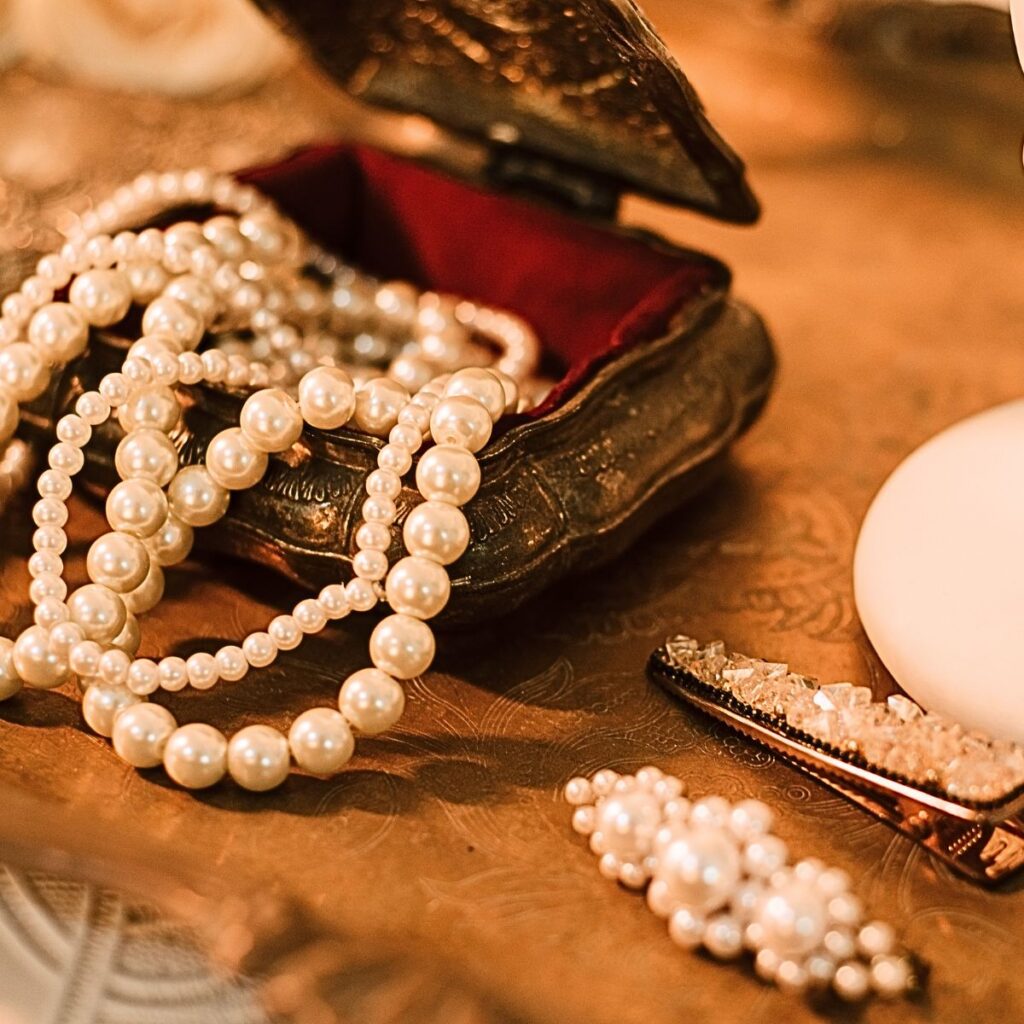
It is easy to glance at a crowded thrift store jewelry case and assume most of what is inside is inexpensive costume jewelry. But mixed among the tangled necklaces, rhinestone brooches, and clip-on earrings can be older pieces from designers and manufacturers that have developed a serious following among collectors.
The name on a piece matters, but it isn’t the only thing that determines value. Age, rarity, condition, original stones, unusual designs, and whether a piece is signed can all make a difference, which is why I always recommend turning jewelry over and checking the back, clasp, and tags before putting it down.
You certainly aren’t guaranteed to find something valuable every time you go thrifting. But if you recognize these 9 vintage jewelry names, you’ll know when an ordinary-looking piece deserves a much closer look.
Eisenberg
Eisenberg actually began as a clothing company before its sparkling accessories became popular enough to take on a life of their own. Earlier Eisenberg Original pieces, sterling designs, large rhinestone brooches, and elaborate figurals can attract collectors, so don’t dismiss an old rhinestone pin simply because the stones aren’t diamonds.
Coro
Coro jewelry is extremely common, which means spotting the name alone doesn’t necessarily mean you’ve hit the jackpot. The pieces worth examining more carefully include older Coro Duettes, CoroCraft Sterling jewelry, Jelly Belly figurals, and pieces from the company’s higher-end Vendôme line.
Weiss
Weiss may not have the instant name recognition of some larger vintage jewelry companies, but its sparkling rhinestone pieces have become favorites among costume jewelry collectors. Black diamond rhinestones, colorful aurora borealis crystals, Christmas tree brooches, and pieces with dark japanned settings are among the designs that can make a Weiss signature worth noticing.
Trifari
Trifari produced enormous amounts of costume jewelry, so not every piece is particularly valuable, but earlier Alfred Philippe designs, Jelly Belly pins, crown brooches, and colorful “fruit salad” pieces can be especially collectible. Look closely for older KTF and Crown Trifari marks, particularly when the piece has detailed construction and all of its original stones.
Miriam Haskell
Miriam Haskell jewelry is known for elaborate combinations of faux pearls, seed beads, flowers, and hand-wired details that can look very different from ordinary mass-produced costume jewelry. Signed pieces are easier to identify, but some of the earliest Haskell jewelry was unsigned, making construction, materials, and provenance especially important when evaluating a possible find.
Schreiner New York
Schreiner pieces are particularly interesting because the company wasn’t afraid to do unusual things with stones, including setting some rhinestones upside down to create a distinctive look. Signed “Schreiner,” “Schreiner New York,” or “Schreiner N.Y.C.” pieces deserve attention, although knowledgeable collectors also recognize unsigned examples through their unusual construction and dimensional designs.
Hobé
Hobé created elaborate jewelry using materials such as semi-precious stones, sterling silver, vermeil, and detailed metalwork, giving many pieces a richer appearance than typical costume jewelry. If you spot the Hobé name on an ornate vintage brooch or necklace, particularly an older sterling or Hollywood-era piece, don’t automatically assume it’s just another inexpensive accessory.
Marcel Boucher
Marcel Boucher brought fine-jewelry experience to costume jewelry, creating detailed pieces that could easily look more expensive than the materials used to make them. Enameled animals, birds, sterling pieces, unusual figurals, and jewelry marked “Boucher,” “Marcel Boucher,” “MB,” or the secondary Marboux name are worth investigating before you leave them behind.
Kenneth Jay Lane
Kenneth Jay Lane embraced costume jewelry rather than trying to disguise it, becoming famous for oversized, glamorous “fakes” worn by some of the era’s most recognizable women. Early K.J.L. pieces from the 1960s tend to attract more collector interest than later mass-market designs, particularly bold animal brooches, oversized earrings, cuffs, and statement necklaces.