A garbage disposal is one of the hardest-working appliances in the kitchen, but it’s also one of the easiest to misuse. While it’s designed to handle small amounts of soft food waste, treating it like a kitchen trash can can lead to clogs, foul odors, expensive plumbing repairs, and even a burned-out motor.
If you want your disposal to last for years, avoid these common mistakes.
Pour Grease or Cooking Oil Down the Drain
Hot grease may look harmless when it’s still liquid, but it quickly cools and hardens inside your disposal and plumbing. That sticky coating traps food particles over time, creating stubborn clogs and unpleasant odors.
Put Eggshells Down the Disposal
Many people believe eggshells sharpen disposal blades, but that’s simply a myth. The gritty shell fragments and thin membranes can collect inside the disposal and pipes, increasing the risk of clogs and jams.
Grind Bones
Small chicken bones may occasionally make it through, but most household garbage disposals aren’t built to handle hard bones regularly. Grinding them puts unnecessary strain on the motor and can damage internal components or leave large pieces stuck inside the unit.
Feed It Fibrous Vegetables
Celery, asparagus, corn husks, artichokes, and similar vegetables contain long, stringy fibers that don’t grind well. Instead, they wrap around the disposal’s grinding components and can eventually jam the motor.
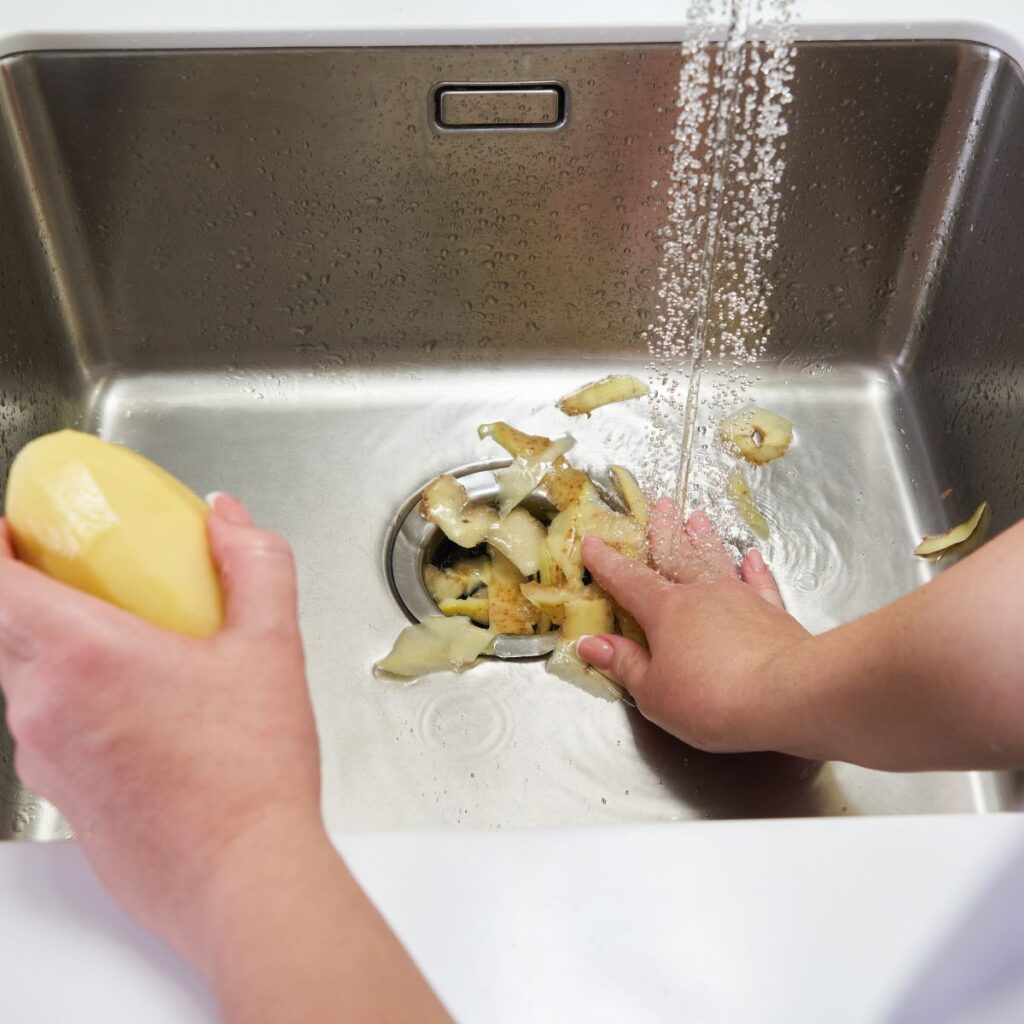
Dump Potato Peels Into It
Potato peels quickly break down into a thick, starchy paste once they’re ground. That paste sticks to both the disposal and your pipes, making clogs much more likely over time.
Wash Pasta or Rice Down the Disposal
Cooked pasta and rice continue absorbing water after they’re discarded. As they expand inside your plumbing, they form sticky clumps that slow drainage and trap other food debris.
Empty Coffee Grounds Into the Sink
Coffee grounds don’t dissolve in water like many people assume. Instead, they settle into a heavy sludge that combines with grease and other debris to create difficult pipe blockages.
Grind Fruit Pits or Large Seeds
Peach pits, avocado pits, mango seeds, and similar items are simply too hard for most garbage disposals. They can jam the grinding chamber, dull internal parts, or even damage the motor.
Put Onion Skins Down the Drain
Thin onion skins often slip through the grinding chamber without breaking apart properly. They can wrap around moving parts or collect in the drain, contributing to slow drainage over time.
Toss Seafood Shells Inside
Shrimp shells, lobster shells, crab shells, and oyster shells are extremely tough and abrasive. They’re difficult for most disposals to grind and can leave behind sharp fragments that contribute to plumbing problems.
Grind Large Amounts of Nuts or Seeds
Nuts release natural oils when they’re crushed, creating a thick paste similar to nut butter. That sticky residue coats the disposal and pipes, making it easier for other food scraps to stick and form clogs.
Stuff Large Food Scraps Into the Disposal
Garbage disposals work best when fed small amounts of food gradually. Dumping an entire plate of leftovers into the unit at once can overload the motor, causing jams or shortening its lifespan.
Put Non-Food Items Down the Disposal
Plastic, twist ties, bottle caps, rubber bands, paper towels, foil, and other non-food items should never go into a garbage disposal. These materials can instantly jam the grinding mechanism or permanently damage the appliance.
Use Hot Water While Grinding Greasy Foods
Running hot water while grinding greasy food can actually make the problem worse by melting grease and pushing it farther into your plumbing before it hardens. Cold water helps keep fats solid, so they’re more likely to be chopped into smaller pieces and flushed through the system.
Forget to Run Water Before and After Using It
A garbage disposal should never be run dry. Always run a steady stream of cold water before turning it on, keep the water flowing while it’s operating, and continue running it for several seconds afterward to help flush food particles completely through the drain.
Other Posts You Might Like
- How to Clean a Couch with a Steam Cleaner
- This Is What People With Clean, Organized Homes Do Differently
- 12 Hidden Habits of People Who Always Have An Immaculately Clean and Organized Home
- 19 Airbnb Cleaning Hacks (Cleaning Secrets for Hosts)
- Grandma’s Best Kept Cleaning Tips That Put Today’s Cleaning Routines to Shame