Raised beds make it easier to control the soil, organize vegetables, and make the most of a smaller garden space, but they certainly don’t keep pests from finding your plants. Aphids, cabbage worms, beetles, and other unwanted visitors can still make themselves right at home.
One way to make a raised bed work a little harder is to mix in plants that attract beneficial insects, act as trap crops, or have strong scents that may make it harder for certain pests to find your vegetables. These aren’t replacements for checking your plants regularly or dealing with a serious infestation, but they’re useful companion plants that can add flowers, herbs, and another layer of pest management to your garden.
Sweet Alyssum
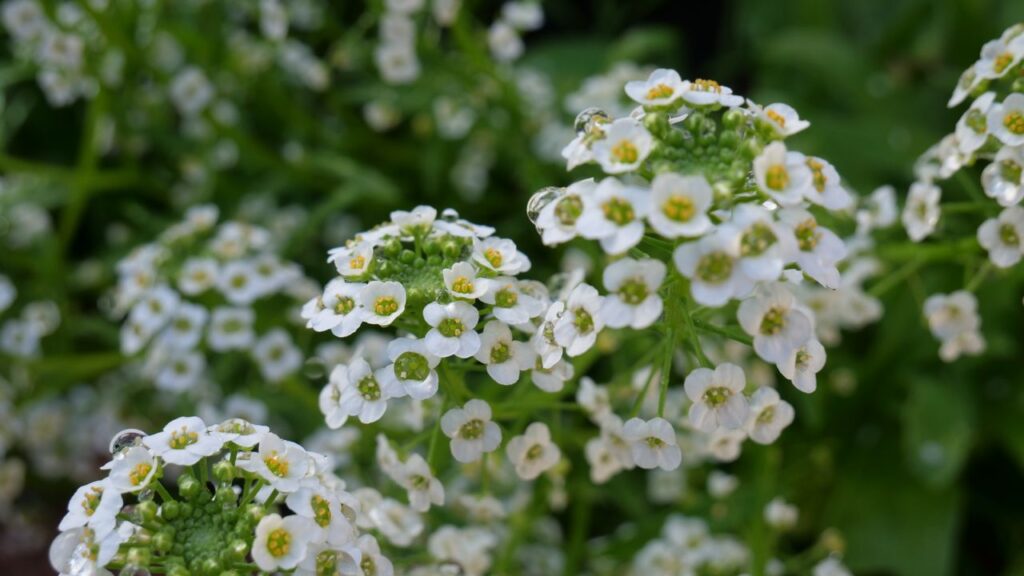
Sweet alyssum might look like nothing more than a pretty border plant, but those tiny flowers can be surprisingly useful around vegetables. The blooms attract hoverflies, parasitic wasps, and other beneficial insects, some of which feed on or parasitize aphids and other soft-bodied garden pests.
Try planting it alongside broccoli, cabbage, kale, cauliflower, lettuce, tomatoes, peppers, and eggplant, or let it spill over the edge of the raised bed where it won’t compete as much with your vegetables.
Nasturtiums

Nasturtiums are one of my favorite plants to work into a vegetable garden because they’re beautiful, edible, and useful. They can attract aphids away from nearby vegetables, essentially functioning as a trap crop, while their bright flowers also bring pollinators and other beneficial insects into the garden.
Plant nasturtiums around cabbage, kale, broccoli, cauliflower, cucumbers, squash, zucchini, tomatoes, and beans. Trailing varieties are especially useful in raised beds because you can plant them near the edge and let the vines cascade over the side, instead of letting them take up precious space inside the bed.
Wall Germander
Wall germander isn’t nearly as common in vegetable gardens as marigolds or nasturtiums, which is exactly what makes it an interesting companion plant to try. This compact, aromatic perennial produces small flowers that attract bees and other beneficial insects, while its strongly scented foliage adds another aromatic plant to the garden.
Because wall germander can become a permanent woody perennial, I’d be more inclined to plant it at the end of a large raised bed or just outside the bed rather than squeezing it between annual vegetables. It can work near tomatoes, peppers, eggplant, squash, and other sun-loving vegetables where it can attract beneficial insects without crowding their roots.
Calendula
Calendula is another flower that deserves more attention in the vegetable garden. Its cheerful orange and yellow blooms attract hoverflies, lacewings, bees, and other beneficial insects, while aphids may sometimes gather on calendula instead of your vegetables, letting it act as a trap plant.
Try growing calendula around tomatoes, peppers, lettuce, kale, broccoli, cabbage, carrots, and beans. It can get fairly bushy when it’s happy, so give it a little breathing room or plant it toward the corners of the raised bed rather than directly underneath vegetables that need plenty of sunlight.
Borage
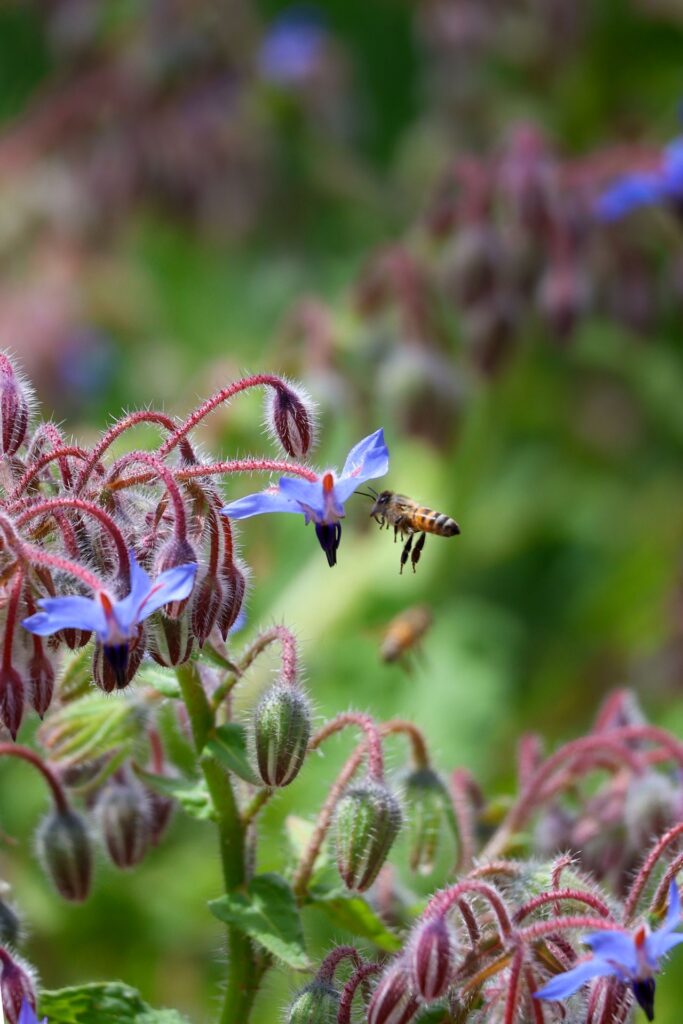
Borage looks almost too pretty to be working as hard as it does in the garden. Its star-shaped blue flowers attract bees and other pollinators, and the plant can also attract beneficial predatory insects that help keep some pest populations in check.
Borage is traditionally grown alongside tomatoes, strawberries, squash, zucchini, cucumbers, and other plants that benefit from more nearby pollinators. Just remember that borage can get surprisingly large, so one plant may be plenty for a smaller raised bed, and planting it near a corner or outside edge can keep it from shading shorter vegetables.
Onions
Onions may not immediately come to mind when you think about pest-control plants, but their strong scent is one reason they’re so commonly mixed into vegetable beds. While they won’t create an invisible force field around your vegetables, aromatic alliums can be useful additions to a diverse companion planting setup and don’t require much horizontal space.
Try growing onions alongside cabbage, broccoli, kale, cauliflower, carrots, lettuce, tomatoes, peppers, and strawberries. They’re particularly convenient around brassicas because their narrow upright growth lets you fit them between larger plants, although you’ll want to leave enough room so mature cabbage and broccoli leaves don’t completely shade them.
Other Topics You Might Like
- 13 Gardening Antiques Collectors Love and Often Pay Up For
- I Stopped Buying Fertilizers After Years of Gardening and Started Using This Instead
- Some of the Best Gardening Tips I Ever Got That Break All the Rules
- 9 Vintage Gardening Tools Hiding in Grandma’s Potting Shed— Some Could Be Worth a Small Fortune