Each year, the Environmental Working Group reviews federal pesticide testing data from the U.S. Department of Agriculture and the Food and Drug Administration to see which fruits and vegetables carry the highest pesticide residues. Those results are published in its Shopper’s Guide to Pesticides in Produce, often called the “Dirty Dozen.”
For 2025, 47 types of produce were tested. The 12 items on this list ranked highest based on overall pesticide levels and how often residues were detected.
This isn’t about cutting fruits and vegetables out of your diet. They remain a key part of healthy eating. The goal is simply to help shoppers make more informed choices, whether that means washing certain items more thoroughly or choosing organic versions when it makes sense.
Here are the 2025 Dirty Dozen.
1. Spinach
Spinach ranks at the very top this year. Testing found it has more pesticide residues by weight than any other produce item analyzed. Its broad leaves can retain chemical residues, making thorough washing especially important.
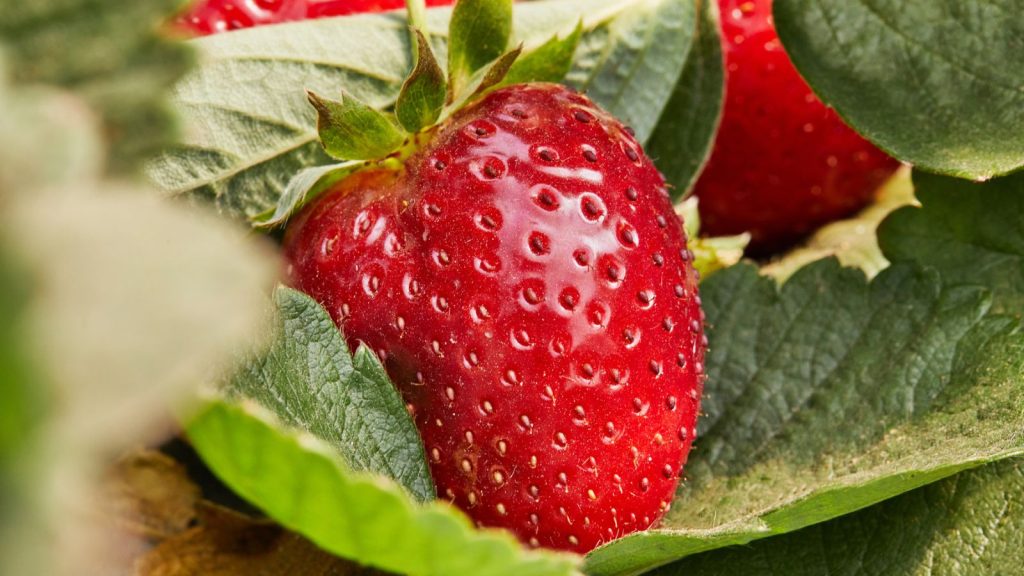
2. Strawberries
Strawberries continue to be a consistent presence on the Dirty Dozen. The average American eats several pounds of strawberries each year, and testing shows that strawberries often carry multiple pesticide residues even after washing.
3. Kale, Collard, and Mustard Greens
These leafy greens remain high on the list. Testing found that more than half of the samples contained pesticides linked to potential health concerns. Like spinach, their textured leaves can hold onto residues.
4. Grapes
Grapes frequently test positive for multiple pesticide residues. Since they are eaten with the skin intact, residue exposure can be higher compared to produce that’s peeled before eating.
5. Peaches
Peaches are especially vulnerable to pesticide absorption due to their thin skin. They consistently rank high for contamination and remain one of the fruits most likely to carry multiple residues.
10 Homemade Organic Pesticides You Can Make With Ingredients You Already Have
6. Cherries
Cherries are another fruit that often shows measurable pesticide contamination. Because they are eaten whole and unpeeled, any residue remains unless carefully washed off.
16 Nostalgic Cherry Recipes That Never Go Out of Style
7. Nectarines
Closely related to peaches, nectarines share many of the same contamination concerns. Their smooth, delicate skin makes them susceptible to residue buildup during growing.
8. Pears
Pears are among the most pesticide-contaminated fruits in this year’s analysis. Multiple residues were detected across conventionally grown samples.
9. Apples
Apples are often treated both during growth and after harvest to preserve appearance and shelf life. Since most people eat the skin, exposure to residue can be higher if not washed thoroughly.
10. Blackberries
Blackberries have appeared on the Dirty Dozen list after being tested more extensively in recent years. Their clustered structure can trap residues, and testing revealed multiple detections of pesticides.
11. Blueberries
Blueberries return to the Dirty Dozen with testing showing traces of several pesticides. Their thin skin offers little protection against chemical exposure.
12. Potatoes
Potatoes join this year’s list as one of the most-consumed vegetables in the United States. Since they grow underground and may be treated during cultivation, pesticide residues were detected in testing.