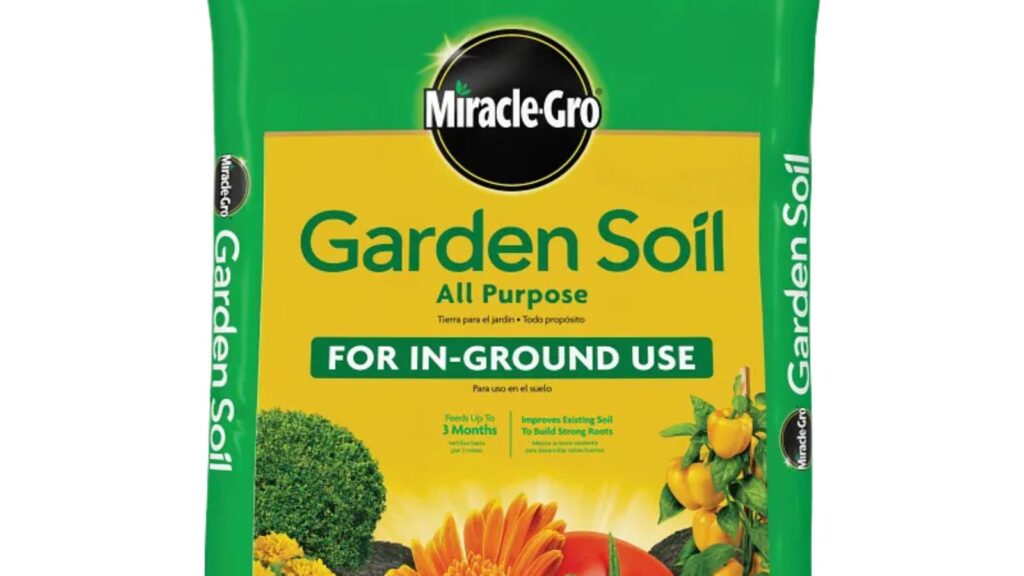
When I first started gardening, Miracle-Gro was one of the first products I bought. It was easy to find, easy to use, and it seemed like what everyone recommended. If a plant needed a boost, a scoop of fertilizer felt like the obvious answer.
For a while, I didn’t think much about what was actually in it. I was more focused on getting bigger plants, greener leaves, and faster growth. Like many gardeners, I assumed plant food was plant food.
That changed after I spent more time learning about soil health and reading conversations from experienced gardeners. I started paying closer attention to fertilizer labels, ingredient lists, and the long-term effects different products can have on the garden.
Some gardeners continue to use Miracle-Gro and are happy with the results. Others prefer different methods. As I learned more about what was inside the product and how it worked, I decided it wasn’t the best fit for the way I wanted to garden.
These are some of the reasons that made me take a closer look at Miracle-Gro and eventually choose other options.
The Heavy Use of Synthetic Fertilizers
One of the biggest concerns I came across repeatedly is that many Miracle-Gro products rely on synthetic fertilizers. These fertilizers deliver nutrients very quickly, which can make plants grow fast at first.
But fast growth isn’t always the same as healthy growth. Rapid growth can lead to softer stems and weaker root systems. Instead of building strong soil over time, the plants become dependent on repeated fertilizer applications.
After learning more about soil biology, I started focusing more on compost, organic matter, and natural soil building instead of relying on quick nutrient boosts.
The Risk of Over-Fertilizing
Another issue with synthetic fertilizers is how easy it is to apply too much. Over-fertilizing can lead to what gardeners call fertilizer burn, where excess salts damage plant roots.
A research project conducted by students at Augustana College found that when plants were exposed to higher concentrations of Miracle-Gro solution, the excess nutrients could actually slow plant growth rather than improve it.
That really stuck with me. It reinforced the idea that more fertilizer isn’t always better.
Concerns About Soil Health
Healthy soil is full of beneficial microbes that help plants absorb nutrients and resist disease. Many gardeners worry that repeated use of synthetic fertilizers can disrupt that natural balance.
Instead of feeding the soil, these fertilizers mostly feed the plant directly. Over time, that can leave the soil itself less healthy and less resilient.
This is one of the main reasons I shifted toward compost, leaf mold, and other natural amendments that improve the soil structure itself.
I Stopped Buying Plants From Home Depot After Years of Gardening and You Might Want To, Too
Environmental Concerns
Another issue I started seeing mentioned frequently in gardening discussions is fertilizer runoff.
Nitrogen-heavy fertilizers can wash into nearby waterways after rain. Fertilizer runoff is one of the leading contributors to water quality problems in the United States. Excess nutrients in water can trigger algal blooms that harm fish and other aquatic life.
While this isn’t unique to Miracle-Gro, it’s something I started thinking about more once I began focusing on sustainable gardening practices.
Peat Moss and Sustainability
Many potting mixes rely heavily on peat moss, including some Miracle-Gro products.
Peat is harvested from peat bogs, which are unique ecosystems that store large amounts of carbon. Harvesting peat can damage these habitats and release stored carbon into the atmosphere.
Organizations like the Royal Horticultural Society have encouraged gardeners to switch to peat-free soil mixes when possible. Since learning more about this, I’ve started using alternatives like coconut coir in my garden.
Limited Nutrient Diversity
Most synthetic fertilizers focus on the three primary nutrients plants need: nitrogen, phosphorus, and potassium.
Those nutrients are important, but healthy soil contains far more than just those three. Natural compost and organic soil blends provide a wider range of micronutrients that plants benefit from over time.
When I started using more compost and natural amendments, I noticed my soil becoming richer and more crumbly year after year.
Reports of Fungus Gnats
One complaint I’ve seen pop up again and again in gardening groups is fungus gnats in bagged potting soil. Several gardeners online have shared experiences like:
- “I bought a bag and suddenly had fungus gnats everywhere.”
- “I opened a bag once and ended up with gnats in all my houseplants.”
Of course, fungus gnats can show up in many types of potting soil, not just one brand. But it’s something I’ve seen mentioned often enough that it made me more cautious about bagged mixes in general.
Some Gardeners Avoid It for Food Crops
Another common opinion I see online is that some gardeners are comfortable using Miracle-Gro for ornamental plants but prefer organic soil for fruits and vegetables.
One gardener in a group discussion put it simply:
“For flowers it’s fine. For food, I’d rather stick with organic soil.”
That perspective is actually pretty common among home gardeners who are trying to grow more naturally.
It Can Get Expensive Over Time
One thing I noticed after a few seasons was how often I needed to keep buying soil and fertilizer products.
When you focus on building healthy soil with compost, mulch, and organic materials, the garden becomes more self-sustaining over time. The soil improves each year rather than needing constant inputs.
That approach ended up saving me money in the long run.
Other Topics You Might Like
- If a neighbor’s tree falls on your home in California, who is responsible?
- Need to Block a Neighbor’s View of Your Yard? Here’s How to Do It Without Starting a War
- If a fence falls between neighbors in California, who is responsible for repairs?
- If You Spot These Vintage Garden Peices at a Garage Sale, Grab Them Fast