The cookware section at a thrift store can be a little overwhelming. Stacks of pots, pans, baking dishes, kitchen gadgets, and small appliances are usually piled up, and while some can be great finds, others aren’t worth bringing home just because they’re cheap.
The trick is knowing what deserves a closer look. Condition, material, construction, brand, and how easily something can be cleaned all matter, especially when you’re buying something that will come into contact with food.
Before you toss that old skillet or heavy baking dish into your cart, inspect it closely. Here’s what to look for when deciding whether secondhand cookware is actually worth buying.
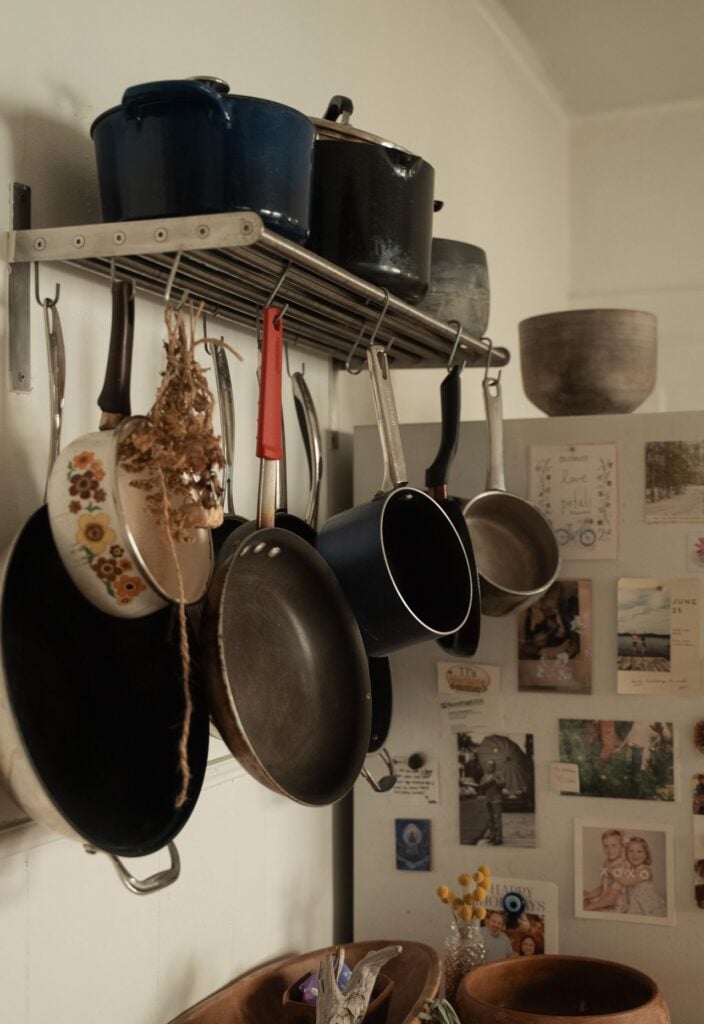
Pick it up and see how it feels
Good cookware often feels sturdy in your hands, so don’t judge a pot or pan solely by how scratched or dated it looks. Check for warping, loose handles, cracks, significant dents, or anything else that could affect performance.
Look for cast iron
Cast iron is one of those thrift store finds that can look much worse than it is. Surface rust and old seasoning may be fixable, but cracks, severe pitting, or major damage are good reasons to leave a piece behind.
Check stainless steel carefully
A good stainless steel pot or pan can have plenty of life left even if it no longer looks brand new. Look at the bottom for warping or separation, make sure handles are secure, and check the cooking surface for significant damage.
Don’t automatically dismiss older bakeware
Heavy baking sheets, roasting pans, and other bakeware may be worth considering if they’re still sturdy and sit flat. A little cosmetic wear is different from a badly warped pan, peeling surface, deep rust, or other damage that could affect its usefulness.
Be cautious with used nonstick pans
A cheap secondhand nonstick skillet isn’t much of a bargain if the cooking surface is scratched, peeling, or badly worn. Since it can also be difficult to know the age and history of older nonstick cookware, this is one category where being especially selective makes sense.
Related: Your Old Nonstick Pan Could Be Ready for the Trash If You See These Signs
Look at the bottom for a maker’s mark
Flip cookware over because the bottom can tell you quite a bit about what you’ve found. A recognizable manufacturer, material information, model number, or other markings can give you something to research before deciding whether the thrift-store price is actually a deal.
Don’t buy something just because you recognize the brand
A familiar name can be a good reason to take a closer look, but it shouldn’t be the only reason something ends up in your cart. A quality pan that’s badly warped or damaged still isn’t necessarily a good purchase, regardless of what it originally cost.
Do a quick price check
Thrift-store pricing can sometimes get surprisingly close to what an item costs new, particularly when a recognizable brand is involved. A quick search can help you compare the secondhand price with new and used versions before assuming you’ve found a bargain.
Make sure all the important pieces are there
Lids, inserts, handles, attachments, and other missing pieces can turn an inexpensive find into something you’ll have to spend more money to complete later. If something is missing, check whether a replacement is readily available and what it costs before buying.
Test small appliances before bringing them home
A stand mixer, food processor, slow cooker, or other countertop appliance can look perfectly fine while having problems you can’t see. If the store allows it, plug the appliance in and test its basic functions, then check the cord, plug, attachments, bowl, lid, and other components for damage.
Be careful with older wooden kitchen items
Wooden spoons, cutting boards, rolling pins, and similar pieces can develop deep cracks, splinters, stains, and other damage over time. If the wood is badly deteriorated or can’t be thoroughly cleaned, leave it behind rather than trying to rescue it simply because it’s vintage.
Think twice about mystery vintage cookware
Old doesn’t automatically mean better, especially when you can’t identify what something is made from or whether it was intended for food use. If you can’t identify the material or determine whether an older piece is safe for cooking, it may be better used decoratively or left at the store.
Decide whether you’ll actually use it
A beautiful vintage casserole dish isn’t saving you money if it becomes another thing shoved into the back of a cabinet. Before buying, ask yourself whether it fills an actual need in your kitchen or whether you’re getting caught up in the excitement of finding something interesting.