Most gardeners can buy a plant, bring it home, and grow it without much thought. But some plants are banned or restricted in parts of the U.S. because they contain controlled substances, pose health risks or have the ability to spread into surrounding ecosystems.
The rules aren’t the same everywhere, and a plant that’s legal in one state may be prohibited or regulated in another. Here are 15 plants that can come with restrictions on growing, selling, possessing or transporting them.
Peyote (Lophophora williamsii)
This small, spineless cactus contains mescaline, a federally controlled hallucinogenic substance. Federal law tightly restricts peyote, although specific exemptions exist for certain religious uses.
Marijuana (Cannabis spp.)
Cannabis laws vary considerably from state to state, with some allowing recreational cultivation, others limiting it to medical use and others prohibiting home growing. Marijuana also remains controlled under federal law, so state legalization doesn’t mean the rules are the same throughout the country.
Coca Plant (Erythroxylum coca)
Coca leaves contain alkaloids that can be processed to produce cocaine. Because coca and its derivatives are federally controlled, importing or growing coca plants in the U.S. is heavily restricted.
Salvia divinorum
Salvia divinorum is a psychoactive plant native to Mexico that can produce powerful hallucinogenic effects. It isn’t prohibited nationwide under federal controlled-substance law, but a number of states regulate or ban its possession, cultivation or sale.
Related: 10 Climbing Plants That Practically Grow Themselves
Khat (Catha edulis)
Khat is a shrub whose fresh leaves contain cathinone, a stimulant classified as a Schedule I controlled substance under federal law. Its legal status can depend partly on the substances present in the plant material, making khat subject to significant federal restrictions.
Kratom (Mitragyna speciosa)
Kratom comes from a Southeast Asian tree and is not currently banned nationwide under federal controlled-substance law. Several states and local jurisdictions have nevertheless prohibited or restricted kratom products, so its legal status depends on location.
Related: 14 Strange and Beautiful Perennials for a More Interesting Garden
Jimsonweed (Datura stramonium)
Jimsonweed contains potent tropane alkaloids and can cause serious poisoning when consumed. The plant grows wild across much of the country, but certain states and local jurisdictions have placed restrictions on its cultivation, sale or possession.
Wild Sugarcane (Saccharum spontaneum)
Wild sugarcane is a large perennial grass that can spread rapidly and form dense stands. Because of its invasive potential, some parts of the country regulate it as a noxious or prohibited plant.
Kudzu (Pueraria montana)
Kudzu can grow rapidly over trees, shrubs and other vegetation, blocking sunlight and overwhelming native plants. It is federally listed as a noxious weed, and additional state restrictions can apply to its sale, movement or cultivation.
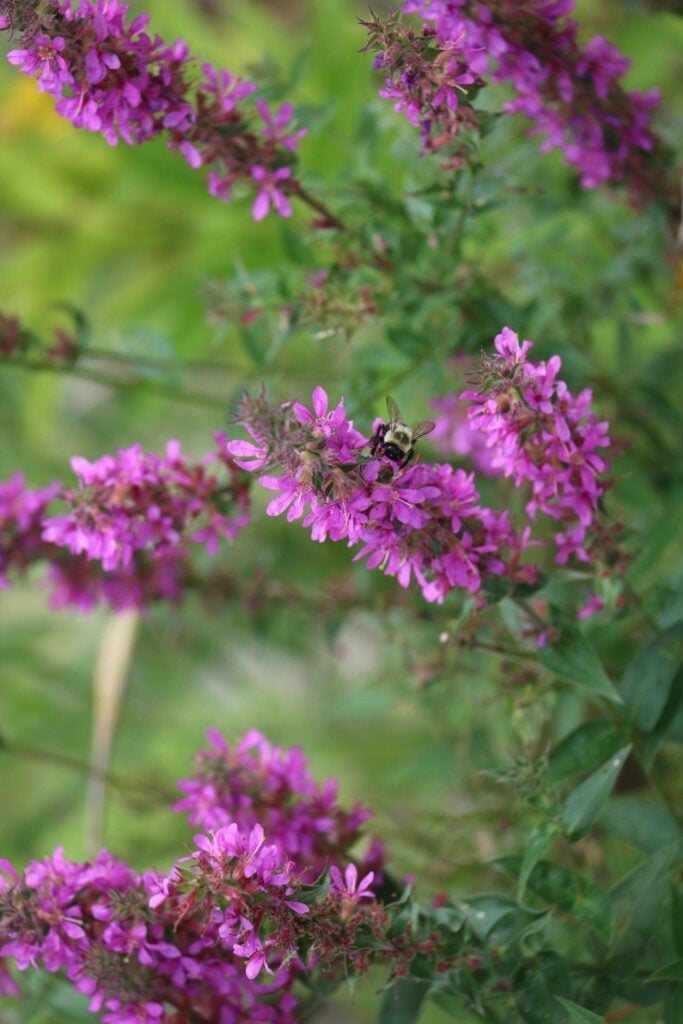
Purple Loosestrife (Lythrum salicaria)
Purple loosestrife may look like an attractive flowering perennial, but it can spread through wetlands and displace native vegetation. Numerous states restrict or prohibit its sale, transport or cultivation to prevent it from becoming established in additional waterways and wetland areas.
Yellow Flag Iris (Iris pseudacorus)
Yellow flag iris is commonly associated with ponds and wet areas, where it can form dense colonies that push out native plants. Its invasive behavior has led some states to classify it as a prohibited, restricted or noxious species.
Giant Hogweed (Heracleum mantegazzianum)
Giant hogweed is an invasive plant whose sap can cause severe skin reactions when sunlight hits affected skin. It is federally listed as a noxious weed, and states may also prohibit its sale, propagation, transport or intentional cultivation.
Water Hyacinth (Eichhornia crassipes)
Water hyacinth is an attractive floating plant that can reproduce quickly enough to form thick mats across ponds, lakes, and slow-moving waterways. Its ability to interfere with aquatic ecosystems has resulted in restrictions or bans on its possession, transport or sale in several states.
Giant Reed (Arundo donax)
Giant reed is a tall perennial grass that spreads readily along rivers, streams and other disturbed areas, where it can replace native vegetation. Some states regulate the plant as an invasive or noxious species and restrict its sale, movement or cultivation.