Decluttering usually starts with the best intentions. We want less clutter, more space, and a home that feels easier to manage, so we fill donation bags with things we no longer use or think we need.
But every now and then, something we happily let go of comes back to haunt us years later. Maybe our style changes, something becomes harder to replace, or we realize an item meant more to us than we thought at the time.
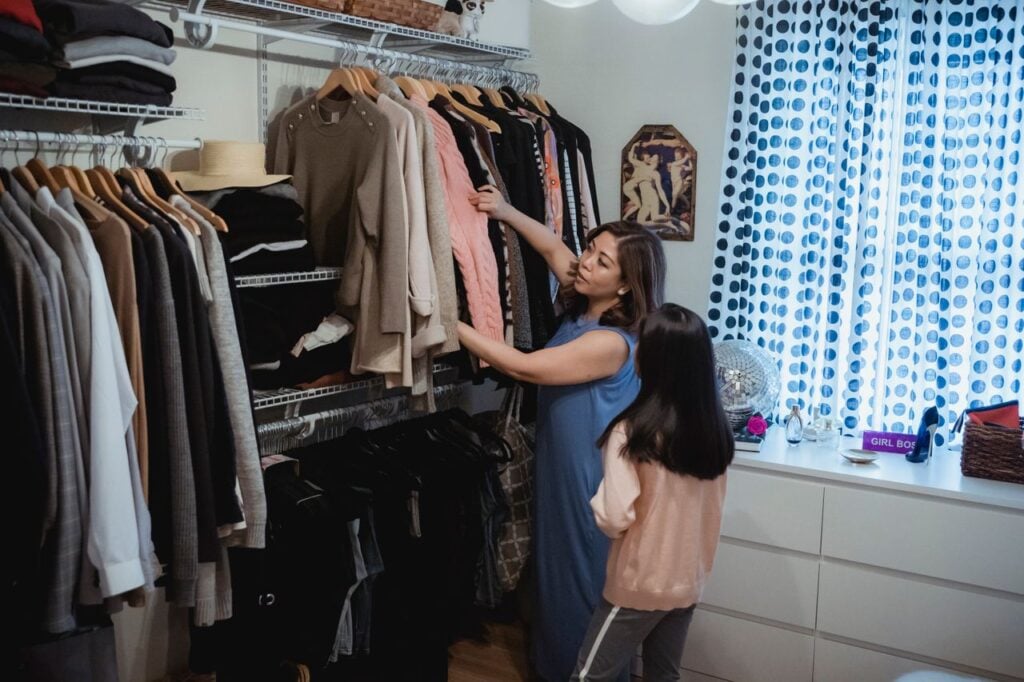
That’s what happened to one woman who recently shared her biggest decluttering regret on Reddit. When she was younger, her mom gave her a collection of beautiful, well-kept clothes from the ’80s and ’90s. Her mother had great taste, but to a teenager in the 2000s, those clothes weren’t exactly what she wanted to wear.
So when she moved, she donated almost everything. Years later, her taste has changed. She now loves shopping vintage and says she’d happily wear most of those clothes today.
Now she’s cleaning out her closet again, and that old mistake is making her second-guess everything.
She had no idea she’d want those clothes someday
That’s what makes decluttering regret so frustrating. We make decisions for the person we are today without knowing what the person we’ll be 10 or 20 years from now might wish we’d kept.
Of course, this is exactly how we end up with closets full of clothes we haven’t worn since 2008. We tell ourselves something might come back in style, we might fit into it again, or we might suddenly need that very specific dress someday.
You can’t keep everything for a future version of yourself you haven’t met yet. But there is a difference between keeping every old T-shirt and hanging onto a few pieces that are unusually well made, hard to replace, sentimental, or genuinely special.
Take another look at the things you can’t replace
Before tossing something into the donation bag, think about how difficult it would be to find again. A basic sweater from a current retailer is very different from your mom’s vintage dress, a beautifully made wool coat, or something passed down through your family.
That doesn’t automatically mean you need to keep it. It just means those pieces deserve a little more thought than something you could replace tomorrow if you changed your mind.
Ask yourself if you’d buy it today
If you saw this exact item while shopping today, would you buy it? This question works because it cuts through many of the reasons we keep clothes.
If you wouldn’t spend money on it now, you’re probably keeping it because you already own it, not because you actually want it.
See whether it’s really as irreplaceable as you think
If you’re stuck on something because you’re afraid you’ll never find another one, look for it. Search Poshmark, eBay, Depop, or other resale sites and see whether the item or something very similar is actually available.
You may discover that the dress you’ve been afraid to donate isn’t as hard to find as you thought. And knowing you could replace something if you desperately missed it can make it much easier to let go.
Be more careful with sentimental clothes
Sentimental clothing is different because you’re not necessarily keeping it for the outfit. You’re keeping your dad’s old sweatshirt, your grandmother’s dress, or something your mom wore because of the person and memories attached to it.
You don’t have to justify keeping something like that by promising yourself you’ll wear it eventually. If it’s meaningful enough to you, that may be reason enough to give it some space.
You don’t have to decide right now
Sometimes the best thing you can do with an item you’re genuinely unsure about is nothing. Put it aside, finish the rest of your closet, and come back to it later.
You could even put your questionable pieces in a box for six months. If you never go looking for them, you’ll probably feel differently about them when you open that box again.
Give yourself a limit for the “maybe someday” clothes
If you love vintage clothing or have pieces you’re genuinely reluctant to part with, give yourself a reasonable amount of space for them. Maybe it’s one storage bin, one section of the closet, or a certain number of hangers.
Once that space is full, something has to leave before you add something else. That lets you keep a few things for the future without allowing “maybe someday” to take over the entire closet.
Think about where you’re donating it
Sometimes the regret isn’t entirely about getting rid of something; it’s wondering what happened to it afterward. If you have a beautiful dress, quality coat, or another piece you know someone would appreciate, you don’t necessarily have to throw it into your regular donation bag.
You could consign it, give it to someone you know, offer it through a Buy Nothing group, or find an organization that specifically needs that type of clothing. Seeing something go to someone who’s excited to have it can make parting with it feel very different.
And sometimes you’ll still regret it
This might be the part of decluttering we don’t talk about enough. You can ask all the right questions, think carefully about what you’re donating, and still occasionally wish you’d kept something.
That doesn’t necessarily mean you made the wrong decision. You made the best decision you could with the life, space, taste, and information you had then.
The woman who donated her mom’s clothes couldn’t have known that years later she’d become someone who loved vintage fashion. And as painful as it is to think about all those great ’80s and ’90s pieces that got away, keeping everything she owns now won’t bring them back.
Maybe the better lesson is simply to slow down when something gives you pause. Most of the stuff filling our closets can probably go without a second thought, but every once in a while, there’s something worth thinking about twice.