Climbing plants are one of the easiest ways to make a garden feel fuller without taking up much ground space. Give the right plant a fence, trellis, arbor, or pergola to climb, and it can quickly turn a bare area into a wall of foliage and flowers.
Some twine around supports on their own, while others use tendrils or aerial roots to work their way upward. If you’re looking for climbers that deliver plenty of growth without becoming another garden chore, these 10 are worth considering.
Clematis (Clematis spp.)
Clematis can look surprisingly elaborate for a plant that does much of the climbing on its own. Its leaf stems naturally wrap around narrow supports, allowing the vine to work its way across trellises, arbors, and obelisks while producing flowers in a wide range of colors and shapes.
Most varieties prefer plenty of sun, rich, well-draining soil, and cooler conditions around their roots. Once you find a clematis suited to your climate and give it something sturdy to climb, it can return year after year in USDA zones 4 through 9, depending on the variety.
Sweet Pea (Lathyrus odoratus)

Sweet peas are an easy choice when you want a climbing flower without committing to a permanent vine. Their delicate tendrils grab onto netting, fencing, and other slender supports while fragrant, ruffled flowers appear in everything from soft pastels to rich jewel tones.
These annuals prefer cooler growing conditions, full sun, and rich soil. Regularly removing faded flowers helps them bloom longer instead of putting energy into seed production.
Climbing Rose (Rosa spp.)
Climbing roses aren’t quite as hands-off as vines that naturally cling to a support, but they can still be remarkably easy once their main canes are trained. Loosely secure the long stems to a fence, arbor, or trellis and the plant can eventually cover a large area with foliage and flowers.
Most perform best with full sun and moist, well-draining soil, although exact needs depend on the variety. Training the long canes horizontally can also encourage more flowering along the stems rather than concentrating blooms near the top.
Climbing Nasturtium (Tropaeolum majus)
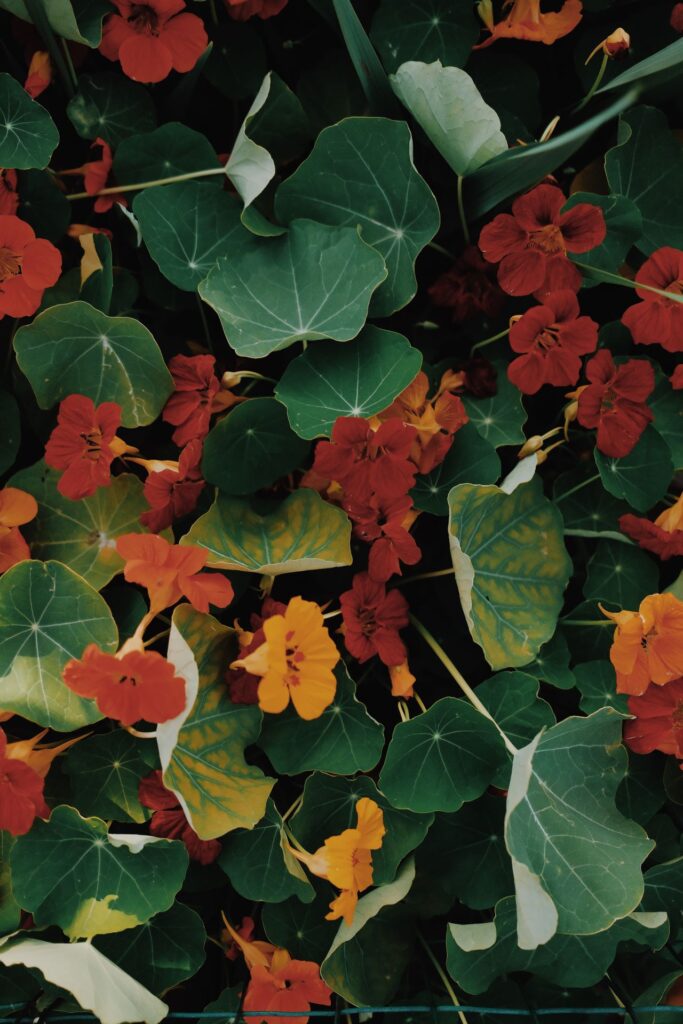
If you want quick results from seed, climbing nasturtiums are hard to beat. Their trailing stems, round leaves, and bright orange, yellow, and red flowers can quickly spill across a trellis, fence, or raised garden bed.
They’re also refreshingly undemanding and don’t need heavily amended soil or frequent feeding. In fact, too much fertilizer can encourage an abundance of leaves at the expense of flowers, making this one plant that’s often happier when you don’t fuss over it.
Related: 15 Easy Perennial Flowers to Grow
Wisteria (Wisteria spp.)
Few climbing plants make a statement quite like mature wisteria, with long clusters of flowers hanging over pergolas and arbors. It’s a vigorous grower that can become large and heavy, so the most important thing you can do from the beginning is provide an exceptionally strong support.
Wisteria likes full sun and well-draining soil, and established plants can grow with impressive enthusiasm. It does require pruning to control its size, however, and some species can be invasive, so choose a variety appropriate for your area before planting.
Honeysuckle (Lonicera spp.)

Honeysuckle doesn’t need much encouragement to start wrapping itself around a fence, railing, or trellis. Its twining stems can cover a support relatively quickly, followed by tubular flowers that are particularly attractive to hummingbirds and bees.
Depending on the variety, honeysuckle can grow in full sun or partial shade and is hardy across a wide range of climates. Give it well-draining soil and prune occasionally to keep growth where you want it.
Related: 14 Wildly Unusual Perennials You Don’t See in Many Gardens
Morning Glory (Ipomoea purpurea)
Morning glory is the kind of plant you grow when you want a bare trellis covered without waiting several years for it to happen. The fast-growing vines readily twine around fences, poles, and supports, producing heart-shaped foliage followed by trumpet-shaped flowers.
It actually performs well in poor to average soil and doesn’t require rich garden beds to take off. Morning glories can also reseed readily, so removing spent flowers before seeds mature can help prevent them from appearing in more places than you intended.
Passionflower (Passiflora incarnata)
Passionflower may have some of the most complicated-looking flowers in the garden, but the vine itself is an enthusiastic climber. Tendrils latch onto fences and trellises, helping the plant climb with little assistance.
Give it plenty of sun, well-draining soil, and room to spread. Depending on the species and climate, the vine may die back during cold weather and return from the roots when conditions warm again.
Black-Eyed Susan Vine (Thunbergia alata)
Black-eyed Susan vine is perfect for gardeners who want a lot of color from a relatively simple annual. Its stems readily twine around string, mesh, and lightweight trellises, filling them with yellow, orange, or apricot flowers with distinctive dark centers.
Plant it in full sun and well-draining soil and it can continue flowering from midsummer into fall. Pinching the young stems encourages fuller growth, but otherwise it doesn’t take much effort to get an impressive display.
Climbing Hydrangea (Hydrangea anomala subsp. petiolaris)
Climbing hydrangea isn’t the fastest plant on this list, especially during its first few years, but patience pays off. Once established, aerial rootlets allow it to cling and climb with little help, eventually producing white lacecap flowers and attractive peeling bark.
It’s also a useful option for areas where sun-loving vines may struggle, since it can handle partial shade. Give it rich, moist, well-draining soil and enough time to establish, and it can eventually become a substantial long-lived climber.
Other Topics You Might Like
- 13 Gardening Antiques Collectors Love and Often Pay Up For
- I Stopped Buying Fertilizers After Years of Gardening and Started Using This Instead
- Some of the Best Gardening Tips I Ever Got That Break All the Rules
- 9 Vintage Gardening Tools Hiding in Grandma’s Potting Shed— Some Could Be Worth a Small Fortune