A cast-iron skillet is one of those kitchen tools that can stick around for decades. With regular use and basic care, the cooking surface can improve over time, making it great for everything from vegetables and pancakes to cornbread and searing.
Cast iron is tough, but that doesn’t mean it can’t be damaged. A few everyday habits can lead to rust, weakened seasoning, stuck-on food, or simply disappointing results.
Here are nine mistakes you’ll want to avoid if you want your cast-iron skillet to stay in good shape.
Overheating the Skillet
Cast iron holds heat extremely well, so you don’t need to crank the burner to high to heat the pan. Instead, give the skillet time to preheat gradually, since excessive heat can burn food and make temperature control much harder.
Forgetting About the Seasoning
Seasoning creates the protective cooking surface that helps prevent rust and makes food less likely to stick. If your skillet looks dull, patchy, or dry, apply a thin layer of oil and reseason it to restore the surface.
Related: How to Properly Reseason and Restore Your Cast Iron Pan
Cleaning It the Wrong Way
You don’t need to soak a cast-iron skillet for hours or aggressively scrub it every time something sticks. Wash it without leaving it submerged in water, remove stubborn food with a pan scraper or other appropriate cleaning method, and avoid unnecessary scrubbing that wears away the seasoning.
Putting It Away While It’s Still Damp
Even a small amount of moisture left behind can eventually cause rust, so don’t put cast iron back in the cabinet while it’s wet. Dry the skillet thoroughly after washing and store it somewhere dry rather than in an area that regularly collects moisture or humidity.
Being Afraid to Use Metal Utensils
You don’t have to reserve wooden and silicone utensils exclusively for cast iron. A properly seasoned skillet can generally handle metal spatulas and other metal cooking utensils, but avoid aggressively gouging or scraping the cooking surface.
Crowding Too Much Food Into the Pan
Packing every available inch of the skillet can trap moisture and make it harder for ingredients to brown properly. Cook in batches when needed so food has room to develop the crisp edges and caramelization cast iron does so well.
Expecting Delicate Foods to Never Stick
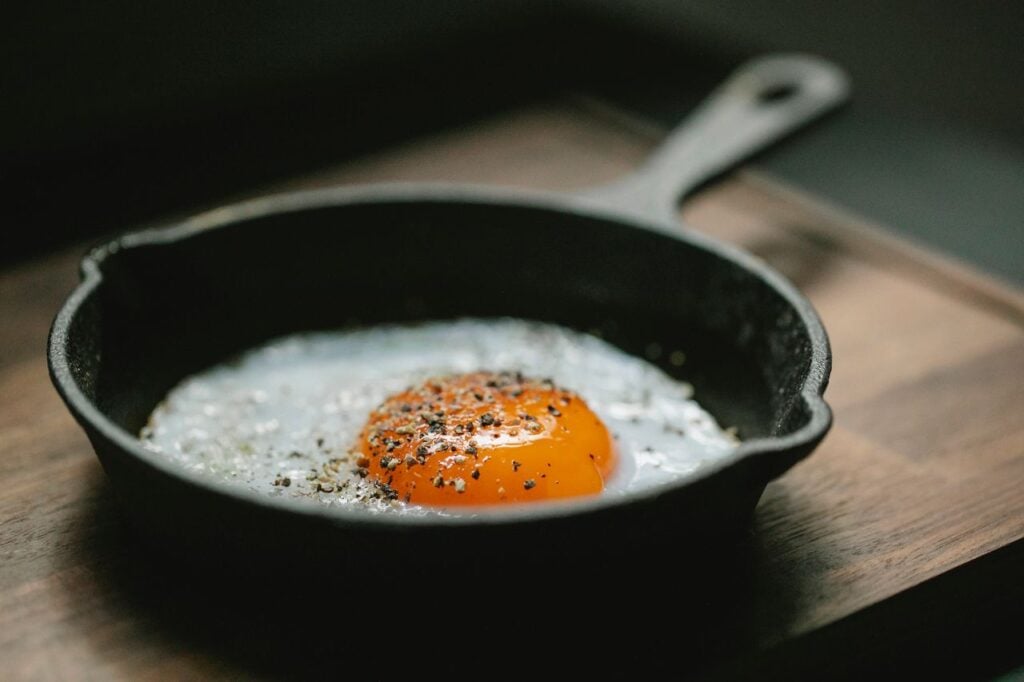
Eggs and fish aren’t automatically off-limits, but they can be less forgiving in a newer or poorly seasoned skillet. A well-seasoned surface, enough cooking fat, and proper temperature control make a big difference when cooking foods prone to sticking.
Related: How to Remove Rust From Cast Iron Grill Pan
Simmering Acidic Foods for Too Long
Tomatoes, wine, citrus, and other acidic ingredients can be cooked in cast iron, particularly when the skillet has a strong layer of seasoning. Long cooking times are more likely to affect the seasoning or give food an unwanted metallic flavor, so another type of cookware may be better for recipes that need to simmer for an extended period.
Leaving Leftovers in the Skillet
Once dinner is over, transfer leftover food to an appropriate storage container instead of putting the entire skillet in the refrigerator. Leaving food in cast iron for long periods can expose the seasoning to moisture and acidic ingredients and make the skillet harder to clean and dry properly.