Cucumber plants grow quickly, so when those big green leaves suddenly start turning yellow, the change can be hard to miss. Sometimes it’s a simple watering problem, but yellow leaves can also point to hungry plants, pests, disease or trouble happening below the soil.
The location and appearance of the yellowing can provide useful clues. Before pulling the plant or reaching for fertilizer, take a closer look at what your cucumber is trying to tell you.
The Plant Is Getting Too Much or Too Little Water
Cucumbers like consistent moisture, and yellow leaves can appear when that balance gets thrown off. Soil that repeatedly dries out can stress the plant, while constantly saturated soil can deprive the roots of the oxygen they need.
Check the soil instead of watering on a schedule. If it’s dry several inches down, the plant may need a thorough watering; if it’s consistently soggy, improve drainage and let the soil lose excess moisture before watering again.
Related: 9 Water-Saving Tips That Can Put More Money Back in Your Budget
The Plant May Be Running Low on Nutrients
Cucumbers grow fast and produce heavily, which means they need a steady supply of nutrients. Yellowing leaves can sometimes indicate a nutrient deficiency, particularly when the yellowing follows a noticeable pattern across older or newer leaves.
Nitrogen deficiency commonly shows up as overall yellowing that begins with older leaves, while other nutrient problems may cause yellowing between the veins or affect newer growth first. Instead of adding fertilizer blindly, consider a soil test if the problem is widespread or keeps returning.
Something May Be Feeding on the Leaves
Turn over a yellow cucumber leaf and take a close look. Aphids, spider mites and other sap-feeding pests can damage foliage and cause leaves to become pale, stippled, curled or yellow.
Cucumber beetles can create additional problems because they feed on the plants and can spread disease. Check the undersides of leaves, stems and flowers regularly so a small pest problem doesn’t have time to become a much larger one.
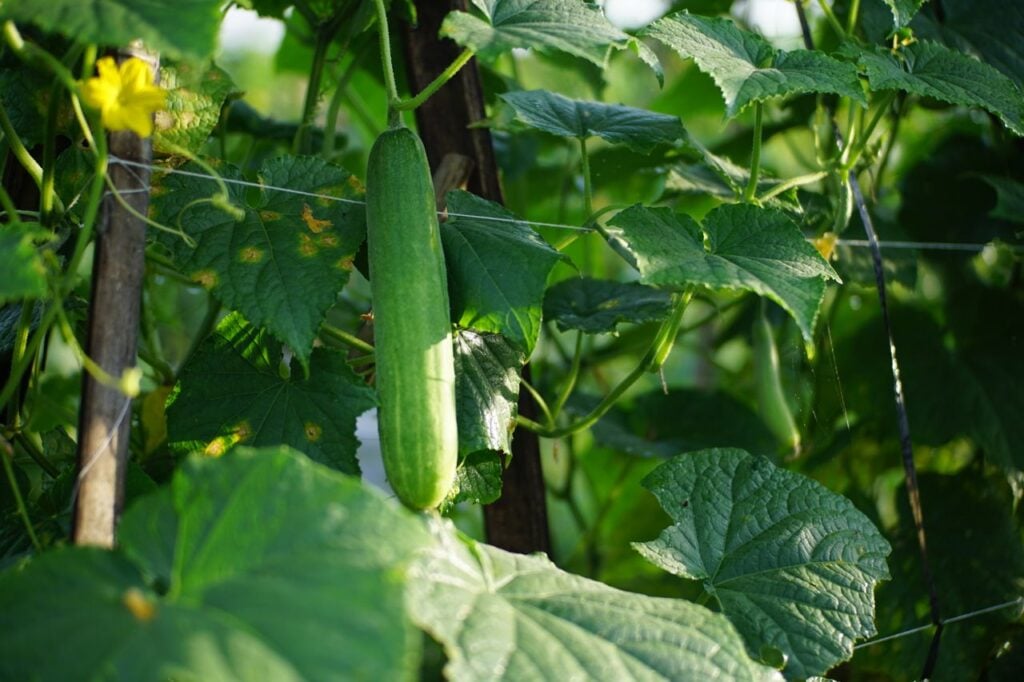
Yellow Spots Could Point to Disease
Disease-related yellowing often looks different from the gradual fading associated with watering or nutrient problems. Downy mildew, cucumber mosaic virus, bacterial wilt, and other cucumber diseases can produce yellow patches, mottling, wilting, or damaged areas that spread across the foliage.
Look at the entire plant, not just one leaf. Yellowing accompanied by unusual spots, distorted growth, wilting, powdery growth or rapidly declining foliage deserves closer attention.
The Roots May Be Struggling
Sometimes yellow leaves are the first visible sign of an unseen problem. Compacted soil, poor drainage, and damaged or unhealthy roots can interfere with the plant’s ability to take up water and nutrients even when plenty are available in the soil.
This is especially worth considering when the ground remains wet long after watering or rain. Cucumbers perform best in loose, well-draining soil where their roots have access to both moisture and oxygen.
The Plant May Not Be Getting Enough Sun
Cucumbers are sun-loving plants and generally perform best with plenty of direct sunlight. Plants growing in too much shade can become weaker and less productive, and foliage may appear pale rather than the healthy green you’d expect.
Pay attention to whether nearby plants, fences or structures have begun shading the vines as the season progresses. A location that seemed sunny early in the year can become much shadier once surrounding plants fill out.
Intense Heat Can Stress the Plant
Plenty of sunlight is good for cucumbers, but extreme summer heat can stress them, especially when high temperatures combine with dry soil. Leaves may wilt during the hottest part of the day, develop scorched areas or begin yellowing if the stress continues.
Keep the root zone consistently moist during hot weather and consider mulch to slow moisture loss from the soil. Temporary afternoon wilting isn’t necessarily a problem if the leaves recover later in the day, but persistent wilting and yellowing deserve attention.
Related: 23 Beautiful Perennials That Keep Coming Back for Another Show of Blooms
Older Leaves May Simply Be Reaching the End
Not every yellow cucumber leaf means the plant is in trouble. As cucumber vines mature, some of the oldest leaves near the base can naturally yellow and decline while newer growth remains green and vigorous.
A couple of aging lower leaves on an otherwise healthy, productive plant usually aren’t as concerning as yellowing that is rapidly moving through the vine. Remove badly damaged or diseased foliage when appropriate and continue watching the newer growth.