Trees provide shade, shelter wildlife, and make parks and yards more pleasant, but some species come with risks that aren’t always obvious. Certain trees have weak branches, toxic sap, aggressive roots, or parts that can harm people, pets, and livestock.
Knowing which trees grow around your property can help you make safer choices for your yard and outdoor activities. Here are 15 trees and tree-like plants found in parts of the United States that deserve a closer look.
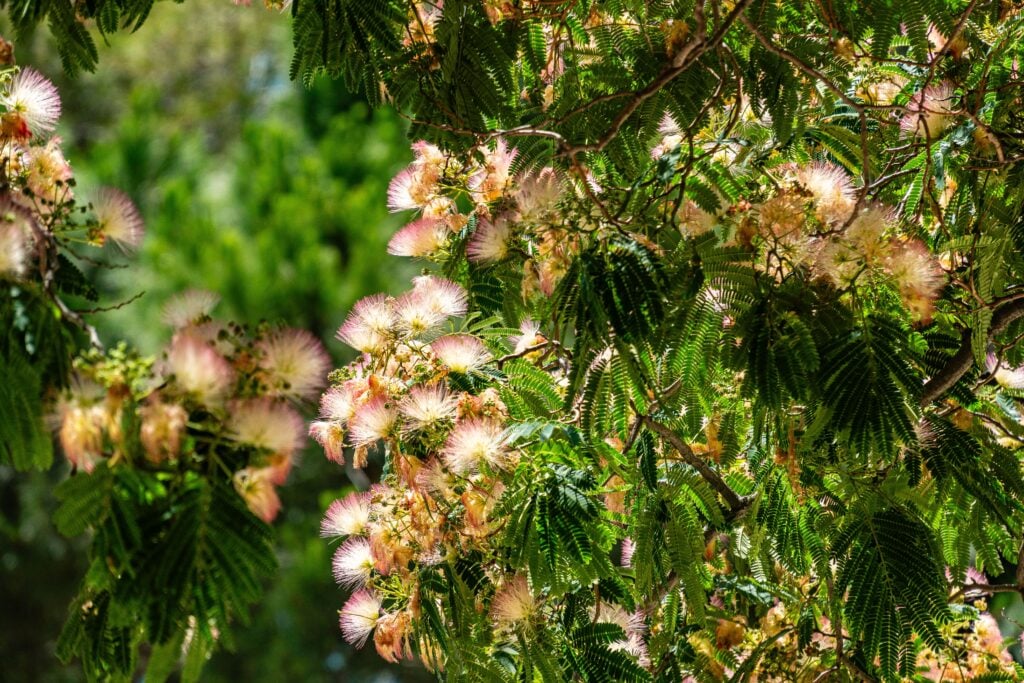
Mimosa Tree
Mimosa trees are easy to recognize by their fern-like leaves and fluffy pink flowers. Their wood can be brittle, and in many warm regions, they spread readily by seed, making them difficult to control.
Related Article: 15 Surprisingly Dangerous Trees Found Across the U.S.
Black Walnut
Black walnut trees release a natural chemical called juglone through their roots and plant material, which can inhibit the growth of certain nearby plants. If you plan to grow vegetables or flowers beneath one, check which plants tolerate black walnut before setting up your garden beds.
Bradford Pear
Bradford pear trees were widely planted for their quick growth and masses of white spring flowers. Their branch connections can be weak, making them prone to splitting in storms, and they’ve become invasive in many parts of the country.
Australian Pine
Despite its name, Australian pine isn’t a true pine and is known for its rapid growth and dense stands in some coastal areas. Its shallow root system can contribute to instability during severe weather, and in parts of the United States it displaces native vegetation.
Related Article: These 8 Popular Trees Are Known for Aggressive Roots—and Costly Repairs
Eastern Cottonwood
Eastern cottonwoods grow quickly and can become enormous shade trees, but their wood may be brittle and large limbs can break during strong winds or storms. Give mature trees plenty of room away from homes, parked vehicles, and frequently used paths, and have a qualified arborist assess damaged or overhanging branches.
Tree-of-Heaven
Tree-of-heaven is an invasive species that can spread through seeds and underground root shoots, making it hard to remove once established. Its aggressive growth can crowd out native plants, and cutting it down without a proper control plan may cause more shoots to appear nearby.
Box Elder
Box elder trees grow quickly, but their wood can be relatively weak, and aging or damaged branches may break in storms. They also attract box elder bugs, which can gather in large numbers around homes and become a nuisance when they enter buildings.
Honey Locust
Wild honey locust trees can produce long, sharp thorns on their trunks and branches, creating a risk of painful punctures for people and animals. Thornless cultivars are available for residential yards, so choose the right variety before planting near a walkway or play area.
Related Article: 8 Trees With Aggressive Roots That Can Lift Pavement and Damage Your Property
Silver Maple
Silver maples grow quickly and provide broad shade, but their wood can be brittle and large limbs may fail during storms. Their spreading roots can also lift sidewalks and driveways, especially when you plant the tree too close to paved areas.
Oleander
Oleander is a common ornamental shrub or small tree in warmer parts of the country, valued for its clusters of flowers and tolerance of dry weather. All parts of the plant contain toxic compounds that can cause serious poisoning if swallowed, so keep clippings away from children, pets, and livestock.
Black Locust
Black locust can spread through root sprouts and form dense growth that crowds out other plants in some areas. Its bark, seeds, and other parts contain toxic compounds, and its thorns can also cause injuries during pruning or removal.
Related Article: 12 Beautiful Flowers That Mark the Arrival of Spring
Ponderosa Pine
Ponderosa pines are tall trees found across parts of the western United States, but their needles can pose a serious risk to pregnant cattle if eaten. Large or unhealthy trees may also drop branches, so livestock owners and property managers should watch for damaged limbs and fallen needles.
Manchineel Tree
Manchineel is considered one of the world’s most toxic trees and grows naturally in parts of southern Florida and the Caribbean. Its sap can cause painful skin and eye irritation; its fruit is poisonous if eaten, and rain can carry irritating sap from the foliage onto people standing beneath the tree.
Poison Sumac
Poison sumac is a woody shrub or small tree most often found in wet areas, such as swamps and damp woodlands. Its sap contains urushiol, the same substance found in poison ivy, which can cause an itchy, blistering rash after skin contact.
Giant Hogweed
Giant hogweed isn’t technically a tree, but its towering stems and large leaves make it worth including among plants that can cause serious injuries. Its sap can react with sunlight and cause severe skin burns or blisters, and eye contact can cause serious injury.
Other Topics You Might Like
- If a neighbor’s tree falls on your home in California, who is responsible?
- Need to Block a Neighbor’s View of Your Yard? Here’s How to Do It Without Starting a War
- If a fence falls between neighbors in California, who is responsible for repairs?
- If You Spot These Vintage Garden Peices at a Garage Sale, Grab Them Fast