If you’ve spent any time tending garden beds, you already know how quickly bare soil can become a problem. It dries out fast, weeds move in, and plants end up struggling more than they should.
That’s where mulch really earns its place.
A good layer of mulch helps hold moisture in the soil, keeps weeds from taking over, and protects plant roots from extreme heat or sudden temperature swings. Over time, many types of mulch also break down and feed your soil, which means healthier plants without extra effort.
The downside? Buying bags of mulch can add up quickly, especially if you’re covering multiple beds.
The good news is you don’t have to spend much (or anything at all) to get the same benefits. There are plenty of simple, low-cost materials that you probably already have that work just as well.
Here are some cheap mulch ideas that improve your soil, conserve water, and make garden care a whole lot easier.
Compost
Compost is one of the most effective mulch options, especially for vegetable gardens. It creates a protective layer over the soil while also feeding it with nutrients.
As it breaks down, compost improves soil structure and supports healthy plant growth, making it both a mulch and a natural fertilizer.
Shredded Leaves
Shredded or dried leaves are an easy, low-cost way to mulch your garden beds. They slowly decompose, adding nutrients back into the soil over time. This helps improve soil structure while reducing the need for synthetic fertilizers.
Fresh Grass Clippings
Fresh, untreated grass clippings are rich in nitrogen, which makes them especially useful for leafy plants. They help retain moisture and suppress weeds, but they should be applied in thin layers to avoid matting or trapping too much moisture.
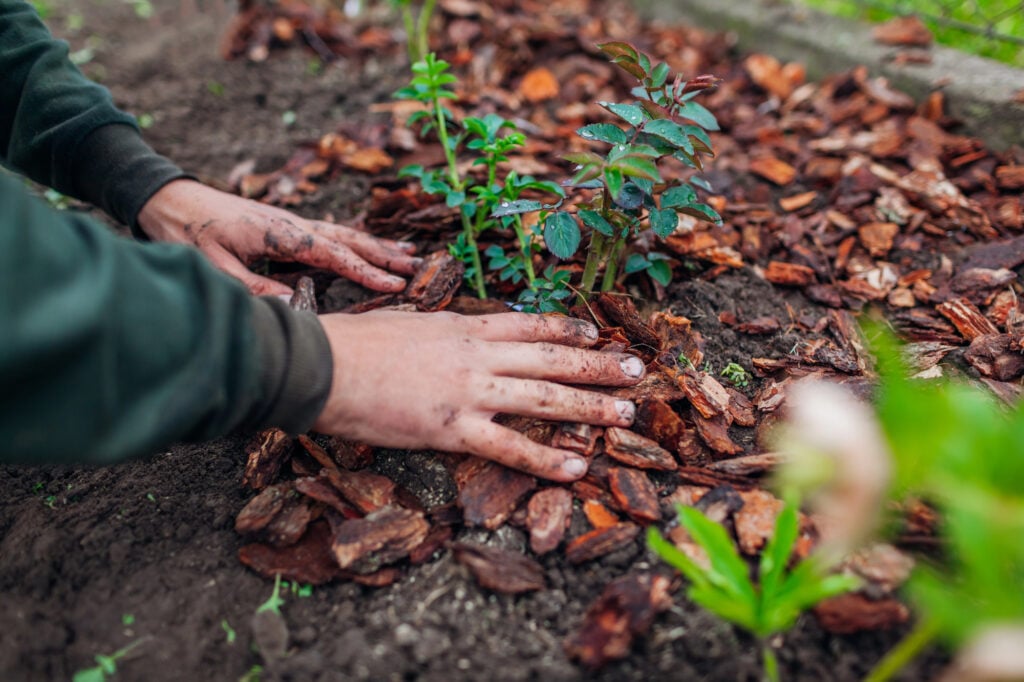
Bark or Wood Chips
Bark and wood chips are longer-lasting mulch options that work well in garden beds. They help control weeds, retain moisture, and gradually improve soil structure as they break down.
Stones and Gravel
Stones and gravel provide a more permanent mulch solution. They are effective at suppressing weeds and are often used in garden pathways or decorative areas. While they can be more expensive upfront, they require little maintenance over time.
Garden Fabric or Burlap
Garden fabric, burlap, or even repurposed coffee bags can act as a barrier to prevent weeds. This option works well around perennials, shrubs, and trees that don’t need frequent replanting, while also helping the soil retain moisture.
Related: 15 Incredible Ways to Repurpose Used Coffee Grounds
Sawdust
Untreated sawdust can be used as mulch in certain areas, such as pathways or around established plants. It should be applied carefully and not too thickly, as it can compact and limit water and nutrient flow to plant roots.
Newspaper
A newspaper is an easy and affordable way to suppress weeds when layered over soil. It can be used under other mulch materials and will gradually break down, thereby improving soil structure.
Pine Needles
Pine needles, also known as pine straw, make a good mulch for certain plants. They break down slowly and add slight acidity to the soil, which benefits plants like blueberries and tomatoes.
Cardboard Boxes
Cardboard is widely available and works well as a base layer for mulch. It helps block weeds and, as it breaks down, improves soil structure. It’s often used beneath other materials, such as compost or leaves.
Other Topics You Might Like
- 13 Gardening Antiques Collectors Love and Often Pay Up For
- I Stopped Buying Fertilizers After Years of Gardening and Started Using This Instead
- Some of the Best Gardening Tips I Ever Got That Break All the Rules
- 9 Vintage Gardening Tools Hiding in Grandma’s Potting Shed— Some Could Be Worth a Small Fortune