I stopped throwing away eggshells once I realized how useful they can be in the garden. Now, whenever I make eggs, I usually set the shells aside instead of putting them straight into the trash.
One of my favorite ways to reuse them is as tiny seed starters. They let you start certain plants without buying a separate tray or a bunch of small plastic pots. Once the seedlings are ready to go outside, you can plant the shells right along with them, where they will slowly break down in the soil.
This works especially well for starting seeds indoors in late winter or early spring. It’s an easy way to give something that would normally become kitchen waste another job before it goes into the compost or trash.
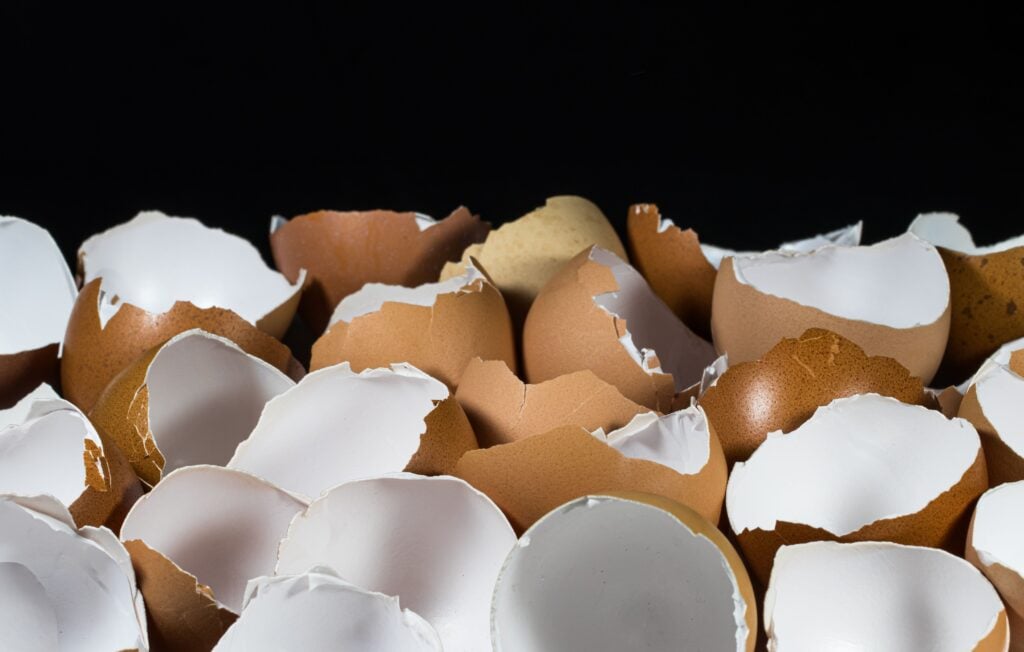
Why I Like Using Eggshells as Seed Starters
There are a few reasons I keep an empty egg carton nearby during seed-starting season.
They cut down on waste.
Instead of buying disposable seed trays for a few small plants, you can reuse something you already have in the kitchen. It won’t replace every type of seed-starting container, but it works well for small seedlings.
They can go into the soil with the seedling.
Eggshells are made mostly of calcium carbonate and will break down slowly in soil. They can add calcium as they decompose, although the shell breaks down much more slowly than a typical seed-starting pot.
They’re free.
If eggs are already part of your regular grocery list, the shells cost nothing extra. All you need is some soil, seeds, and a little time.
Related: 12 Things Eggshells Can Do for Your Garden
What You’ll Need
You don’t need much to make these little planters.
- About a dozen eggshell halves
- A small needle or sharp pin for drainage holes
- Seed-starting mix or light potting soil
- Seeds such as basil, oregano, lettuce, or other small herbs
- A spoon
- An empty egg carton to hold the shells
How I Make Eggshell Seed Starters
Save the Eggshells
When I crack eggs, I try to keep the bottom half of the shell as intact as possible. You don’t need a perfect shell, but a larger opening makes it much easier to add soil and plant the seeds.
I pour the eggs into a bowl like normal, then set the shells aside until I have enough to use.
Rinse and Dry Them
Give the shells a quick rinse to remove any bits of egg that are left inside. This also keeps them from sitting around with food residue while you’re waiting to plant.
Let the shells dry completely before adding soil. I usually leave them out for a while on a clean towel or drying rack.
Make a Small Drainage Hole
Eggshells don’t have natural drainage, so I make a tiny hole in the bottom with a needle or pin. Water needs somewhere to escape, since soggy soil can cause problems for young seedlings.
Go slowly with this step. Eggshells can crack pretty easily, especially if you press too hard.
Add the Soil
Use a spoon to fill each shell with seed-starting mix, leaving a little room at the top. You don’t need to pack the soil down firmly. A loose mix gives young roots room to grow.
I like using a seed-starting mix because it tends to be lighter than regular garden soil. That makes it easier for small seeds and new roots to get established.
Plant Your Seeds
Check the seed packet for planting depth and follow those instructions. Some seeds need a thin layer of soil over them, while others can simply be pressed into the surface.
Small herbs and leafy greens are good choices because they don’t need much room during their early growth. Basil, oregano, lettuce, and similar plants can work well in these tiny containers.
Put the Shells in an Egg Carton
Place each filled shell back into an empty egg carton. The carton keeps the shells from tipping over and makes it easy to move several seedlings at once.
Set the carton somewhere with the light and temperature your seeds need. Keep the soil lightly moist, but don’t let water collect in the bottom of the carton.
Related: 20 Plants That Love Eggshells Around Their Roots
When It’s Time to Transplant
Once your seedlings have grown several leaves and look sturdy enough to handle, you can move them into larger pots or the garden. Check the seed packet for transplanting guidance, since different plants have different needs.
You can plant the seedling with the eggshell still around the roots. Before planting, gently crack the shell in a few places so the roots have an easier path into the surrounding soil. Then place the whole thing into the ground and cover it with soil.
The shell won’t disappear overnight. It can take quite a while to break down, so think of it as a small container that will gradually release its minerals back into the soil.
Other posts you might like:
- Banana Peels Might Be the Most Underrated Natural Boost for Your Garden
- I Stopped Using Dryer Sheets in the Dryer—Here’s Where I Use Them Instead
- Stop Throwing Away Orange Peels — Some Call Them Trash, Others Call Them Kitchen Gold
- Simple DIY Fixes for the Most Annoying Problems Around the House
- 14 Practical Uses for Windex
- 15 Incredible Ways to Repurpose Used Coffee Grounds