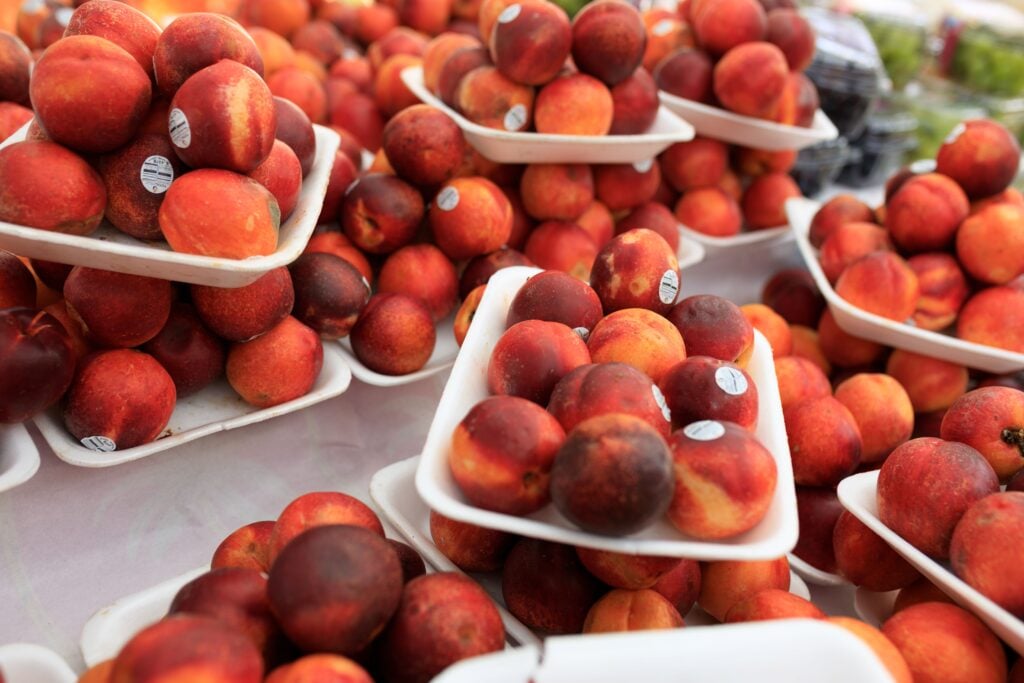
There’s nothing worse than bringing home a basket of firm, juicy peaches and finding half of them soft and bruised a few days later. Peaches can go from barely ripe to very soft in what feels like no time, especially when the weather is hot.
Luckily, a few simple storage changes can buy you more time. Whether you picked them yourself, grabbed a basket at the farmers market, or found a good deal at the grocery store, here’s how to keep your peaches fresh until you’re ready to eat them.
Move Ripe Peaches to the Refrigerator
Once a peach has reached the ripeness you like, put it in the refrigerator. The cooler temperature slows the ripening process, giving you more time to eat it.
Keep ripe peaches in the crisper drawer if you have room. If your refrigerator has a humidity control, a higher-humidity setting can help keep the fruit from drying out too quickly.
Take peaches out shortly before eating if you prefer them closer to room temperature.
Related: 10 Tomato Growing Tricks That Lead to a Garden Full of Fruit
Use a Paper Bag for Peaches That Need a Little More Time
If your peaches are still firm and need a little time to ripen, a paper bag can help. Place the peaches inside and fold the top over loosely.
Don’t seal the bag tightly. Peaches give off moisture as they ripen, and some airflow helps keep that moisture from collecting inside the bag.
Once they reach the ripeness you want, move them to the refrigerator to slow things down.
Keep Peaches Away From Other Ripening Fruits
Peaches produce ethylene, a natural plant hormone that helps fruit ripen. Other fruits, including bananas, apples, pears, avocados, and tomatoes, also produce ethylene.
Keeping all of this produce together can speed things up. If your peaches are already close to ripe, give them some space from other ethylene-producing fruits.
This is especially helpful if you have a large bowl of fruit sitting on the kitchen counter.
Related: The Dirtiest Fruits and Vegetables You’re Probably Eating
Don’t Stack Peaches
A pile of peaches may look harmless, but once they start getting soft, the weight from the fruit on top can cause bruises and pressure spots.
Try keeping peaches in a single layer instead. If you need to refrigerate a lot of them, use a shallow container rather than piling them several layers deep.
Handle them gently, too. A small bruise can turn into a soft spot pretty quickly.
Freeze Extras Before They Get Too Soft
If you have more peaches than you can eat, don’t wait until they’re already mushy to figure out what to do with them. Freeze the extras while they’re still in good shape.
Wash them, remove the pits, and slice the fruit. Spread the slices on a baking sheet and freeze them until solid, then transfer them to freezer bags or another freezer-safe container.
Frozen peaches are great for smoothies, cobblers, crisps, pies, oatmeal, and other baked treats. It’s an easy way to save a good batch of peaches instead of watching them go bad.
Watch for Signs They’re Ripening Too Fast
During hot weather, check your peaches every day or two. A peach that suddenly feels much softer than it did the day before is getting close to ripe.
Wrinkled skin, soft spots, and a strong sweet smell are also signs that the fruit is getting further along. Once you notice these changes, refrigerate the peaches or plan to eat them soon.
A little attention can make the difference between enjoying a perfectly ripe peach and finding a pile of mushy fruit in the fruit bowl.
Related: 14 Fruits and Vegetables You Should Always Wash Before Eating