I used to think Ziploc bags were pretty much limited to leftovers, snacks, and storing food in the freezer. I always had a box of Ziploc storage bags in the kitchen, but I never thought much about using them anywhere else.
That changed once I started finding little ways to use them around the house. Now I keep a few in different rooms because they’re useful for everything from organizing small items to packing for a trip. They’re cheap, easy to store, and sometimes they solve a problem when I don’t have the right container nearby.
Here are some of the ways I’ve been putting Ziploc bags to work that have nothing to do with storing leftovers.
Clean a Shower Head
If your shower head starts spraying unevenly or looks like it has mineral buildup around the openings, a Ziploc bag can help.
Fill the bag with enough white vinegar to cover the shower head, then secure it in place with rubber bands. Leave it for several hours or overnight, then remove the bag and rinse the shower head well.
It’s a simple trick that saves you from having to scrub every little opening by hand.
Keep Paint Brushes From Drying Out
If you’re painting a room and need to take a break, you don’t always have to wash your brushes right away. I’ll wrap the brush or roller and place it inside a sealed bag to keep the paint from drying while I’m away.
For longer breaks, check the paint manufacturer’s instructions rather than leaving the brush sealed indefinitely. For short breaks between coats, though, the bag can save a lot of cleanup.
I’ve used this with my paintbrush set for home projects and paint roller kit, especially when I know I’ll be back to the project later the same day.
Make a Quick Piping Bag
There’s no reason to buy a special piping bag for every little baking project.
If I’m decorating cupcakes and don’t have one handy, I’ll fill a Ziploc bag with frosting, squeeze the air out, seal it, and snip a tiny corner. It works well for simple decorating jobs, and cleanup is as easy as tossing the bag afterward.
Keep Leaks Contained While Traveling
I almost always pack a few extra bags before a trip. They’re great for toiletries, snacks, small items, or anything that might leak inside a suitcase.
They’re also useful for wet swimsuits or dirty clothes after a day at the beach or pool. Instead of putting everything straight back into your luggage, you can seal the damp items inside a bag until you get home.
I usually pair them with a travel toiletry bottles set to keep liquids together and easier to pack.
Crush Crackers, Chips, and Nuts
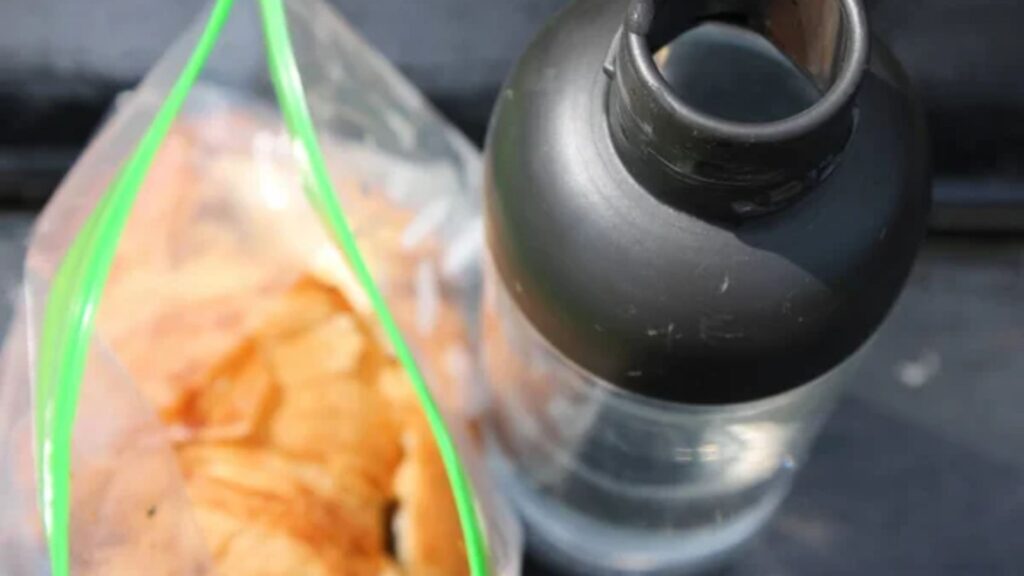
Need crushed crackers for a recipe but don’t want crumbs all over the counter?
Put the crackers, chips, or nuts inside a sturdy bag, seal it, and use a rolling pin to crush them. You can control how fine or chunky you want everything to be, and the mess stays inside the bag.
A wooden rolling pin works well for this. Just make sure the bag is sealed properly before you start pressing down.
Make a Simple Plant-Watering Setup
If you’re going away for a few days, a Ziploc bag can be part of a simple slow-watering setup for certain houseplants.
One option is to fill a bag with water, make a very small opening, and connect it to the soil with absorbent string or cotton twine so water can slowly reach the plant. Test the setup before leaving to make sure it isn’t releasing too much water.
I like using cotton twine string for this because it absorbs water well.
Keep in mind that different plants have very different watering needs, so this works best as a short-term solution rather than a replacement for regular watering.
Make an Ice Pack in a Pinch
There have been plenty of times when I needed an ice pack and didn’t have one in the freezer.
A sealed bag filled with ice can work for a quick cold pack. If you’re making a reusable homemade cold pack, make sure the bag is sealed tightly and place it inside another bag to help prevent leaks.
I prefer having a proper reusable ice pack around, but a Ziploc bag can save the day when you need something quickly.
Organize Small Items
This is probably one of my favorite uses because small things have a way of disappearing into drawers.
I use bags to separate chargers, batteries, office supplies, craft materials, screws, and other little items that would otherwise end up mixed together. I’ll add a label with a fine-tip permanent marker, so I can see what’s inside without opening every bag.
It’s a cheap way to get some order into a junk drawer without buying a bunch of storage containers.
Freshen Up Smelly Items
For small items that have picked up an odor, a sealed bag can help contain the smell while baking soda does its job.
I’ll place something like a pair of shoes or a small gym accessory inside a large bag with a little baking soda, seal it, and leave it overnight. The next day, I shake off the baking soda and clean the item according to its care instructions.
A box of Arm & Hammer baking soda is one of those inexpensive household staples I keep around for things like this.
Protect Recipes While Cooking
I’ve ruined enough recipe cards with splashes and spills that I finally started putting them inside a Ziploc bag while cooking.
Just slide the recipe card or printed page inside, seal the bag, and keep it nearby while you cook. You can still read through the plastic, but sauce, water, and flour won’t land directly on the paper.
I’ll sometimes hang the bag nearby with a magnetic fridge clip set, which makes it easier to keep the recipe at eye level.
Keep Your Phone Away From Splashes
A Ziploc bag can also be useful when you need to protect your phone from splashes. I’ve used this trick near the pool, at the beach, and while cooking.
Put the phone inside the bag, seal it, and you can usually still use the touchscreen through the plastic. It’s handy for keeping cooking splatters or light water exposure away from your phone.
Just keep in mind that a regular storage bag is not a substitute for a waterproof phone case. I wouldn’t rely on it for swimming, underwater use, or situations where the phone could become fully submerged.
If you need proper protection, a waterproof phone pouch is a much safer choice.
Keep Cords and Chargers Together
Cord drawers can get messy surprisingly fast. Instead of throwing everything into one pile, I put individual cords or related accessories into labeled bags.
For example, phone chargers can go in one bag, camera accessories in another, and spare computer cables in another. I sometimes wrap the cords with reusable cable ties first so they don’t turn into a tangled mess.
It makes finding the right cable much less frustrating.
Keep Screws and Small Hardware With Their Projects
This trick has saved me more than once during home projects.
If I take something apart, I put the screws, washers, brackets, and other small pieces into a labeled bag instead of leaving them loose on the counter. I’ll write down what the hardware belongs to right on the bag.
For larger projects, I’ll keep those smaller bags inside a small parts organizer box. That way, the tiny pieces don’t disappear before I’m ready to put everything back together.
Make a DIY Ice Block for a Cooler
Ice cubes melt quickly and can leave everything sitting in a puddle of water. For longer trips, I sometimes make a large ice block instead.
Fill a large storage bag with water, seal it securely, and freeze it flat. Once frozen, it can go into a cooler and stay cold for quite a while. A second bag around it can provide extra protection against leaks.
This works especially well with an insulated cooler bag for road trips, picnics, or long days outside.
Ziploc bags are one of those household items that are easy to overlook because they’re so ordinary. But once I started using them for more than food, I found myself reaching for them all over the house. They’re especially handy for small jobs where I need something inexpensive, disposable, and easy to seal.